CFG Advisory has warned that the fiscal gains from Nigeria’s fuel subsidy removal have been completely eroded by rising debt servicing costs, leaving the Federal Government with little fiscal space to fund development projects or deliver meaningful social interventions.

The advisory firm said the situation undermines the reform narrative around subsidy removal and raises serious concerns about the sustainability of Nigeria’s current fiscal strategy.
The warning was issued at the monthly forum of the Finance Correspondents Association of Nigeria (FICAN), where CFG Advisory presented its 2026 outlook titled “Nigeria 2026 Economic Forecast: The Urgency of Now – Reforms Lead to Productivity-Led Growth.”
Speaking at the event, CFG Advisory’s Chief Executive Officer, Tilewa Adebajo, said the redirection of subsidy savings to debt servicing has effectively neutralised the fiscal relief expected from the reform.
“The entire benefit of fuel subsidy removal is now being absorbed by debt service,” Adebajo said, adding, “This leaves the government with very limited room to address growth, infrastructure, or social protection.”
He noted that Nigeria’s public debt, now estimated at over $100 billion, has reached unsustainable levels and is placing severe strain on public finances.
Adebajo highlighted the structure of the proposed 2026 budget, which allocates ₦15.52 trillion to debt servicing, exceeding the combined allocations to security, defence, education, and health, estimated at ₦14.97 trillion.
“When debt service alone is higher than what you spend on education, health, and security combined, it is a clear signal of fiscal stress,” he said.
CFG Advisory warned that persistent fiscal deficits, excessive spending, and the limited impact of social intervention programmes have intensified frustration among households and businesses.
“The economy is showing classic signs of stagflation, high costs, weak growth, and fragile confidence,” Adebajo said.
The firm also cautioned that Nigeria’s political calendar could complicate economic management in 2026, with election-related pressures likely to weaken fiscal discipline.
“Election cycles tend to slow reforms,” Adebajo warned. “There is a real risk that reform momentum eases just when it is most needed.”
CFG Advisory identified persistent underfunding of capital expenditure as a major structural weakness, noting that capital budgets, traditionally growth drivers, continue to be crowded out by recurrent spending and debt obligations.
The firm referenced warnings from the World Bank and the International Monetary Fund (IMF) over Nigeria’s budget expansion of about 56 per cent year-on-year, urging alignment with realistic revenue assumptions.
“When budgets grow far faster than revenues, the gap is inevitably filled with debt,” the report stated.
To curb rising debt, CFG Advisory recommended urgent fiscal reforms, including asset sales, privatisation, and concessions. It proposed selling down to at least 49 per cent of government stakes in 74 licensed concession assets, which could raise about $50 billion to reduce debt and recapitalise the Nigerian National Petroleum Company Limited (NNPCL).
Despite the challenges, the firm projected GDP growth of around 5 per cent in 2026, single-digit inflation, a monetary policy rate below 20 per cent, and an exchange rate of ₦1,400 to ₦1,500 per dollar.
However, it noted that growth remains below the 8 to 10 per cent threshold needed to significantly reduce poverty.
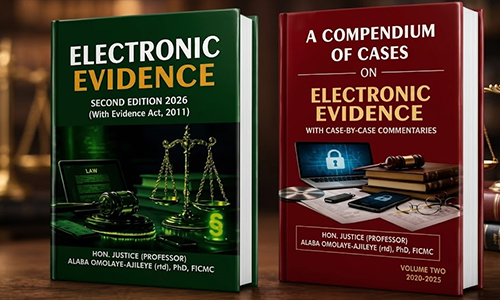
 Interested buyers are encouraged to place their orders and enquiries via:
0704 444 4777, 0704 444 4999, 0818 199 9888
Website: www.alexandernigeria.com
Interested buyers are encouraged to place their orders and enquiries via:
0704 444 4777, 0704 444 4999, 0818 199 9888
Website: www.alexandernigeria.com

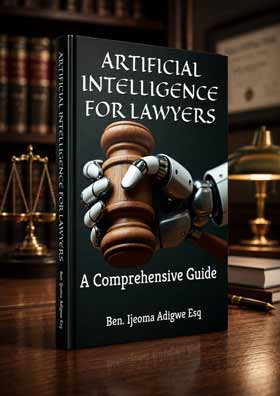 The book also examines Nigeria's legal ecosystem, focusing on the LPELR and NBA AI Guidelines. As a bonus, every purchase comes with a FREE eBook titled: How to Use the AI Features in LegalPedia and LawPavilion.
Ohio Books Ltd praises the publication, stating:
"....this is the only Nigerian book I know of on the topic."
How to Order:
📞 Call, Text, or WhatsApp: 08034917063 | 07055285878
📧 Email: benadigwe1@gmail.com
🌎 Website: www.benadigwe.com
Ebook Version: Access it directly online at https://selar.com/prv626
Authored by Ben Ijeoma Adigwe Esq., ACIarb (UK), LL.M, Dip. in Artificial Intelligence, Director at the Delta State Ministry of Justice, Asaba, Nigeria.
_______________________________________________________________________
The book also examines Nigeria's legal ecosystem, focusing on the LPELR and NBA AI Guidelines. As a bonus, every purchase comes with a FREE eBook titled: How to Use the AI Features in LegalPedia and LawPavilion.
Ohio Books Ltd praises the publication, stating:
"....this is the only Nigerian book I know of on the topic."
How to Order:
📞 Call, Text, or WhatsApp: 08034917063 | 07055285878
📧 Email: benadigwe1@gmail.com
🌎 Website: www.benadigwe.com
Ebook Version: Access it directly online at https://selar.com/prv626
Authored by Ben Ijeoma Adigwe Esq., ACIarb (UK), LL.M, Dip. in Artificial Intelligence, Director at the Delta State Ministry of Justice, Asaba, Nigeria.
_______________________________________________________________________
“Order Justice Omolaye-Ajileye’s Electronic Evidence Books Now” — Essential Guides On Evidence Act, Case Law And Digital Proof