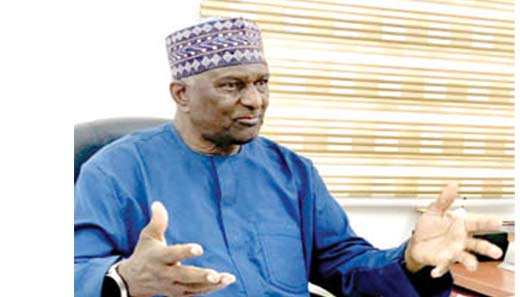
Thirty-five years after the failed Major Gideon Orkar coup attempt to overthrow then-Military President Ibrahim Babangida, former Military Governor of Niger State, Col. Lawan Gwadabe (rtd), has shared a detailed account of his pivotal role in thwarting the plot.

In an exclusive interview with Daily Trust correspondents Andrew Agbese and Clement A. Oloyede, Gwadabe broke his long-standing silence to commemorate the coup’s anniversary and address misconceptions surrounding the event, offering fresh insights into one of Nigeria’s most dramatic political upheavals.
Gwadabe, who served as Niger State’s Military Governor during the April 22, 1990, coup attempt, explained his decades-long reticence, citing a personal vow made during his detention following the 1995 phantom coup allegations. “I promised myself while in prison that the only time I would speak publicly would be right in front of the prison after my release,” he said. Choosing a private life over the limelight, Gwadabe noted that this decision was not a military tradition but a personal choice, driven by a desire for peace and minimalism. “When the beat changes, the dance must change too,” he added, emphasizing his shift to a quieter existence.
Despite his low profile, Gwadabe revealed significant behind-the-scenes contributions to Nigeria’s governance. He advised Presidents Olusegun Obasanjo, Umaru Yar’adua, and Goodluck Jonathan on critical issues, including national security and the Niger Delta crisis. His recommendation to establish the Niger Delta Ministry during Yar’adua’s administration, based on a detailed memo, underscores his ongoing influence, even without public fanfare.
The 1990 coup, led by Major Gideon Orkar, aimed to topple Babangida’s regime and was marked by a controversial broadcast excising five northern states, alienating many Nigerians. Gwadabe’s account sheds light on his proactive efforts to foil the plot. As governor, he leveraged his extensive intelligence network, uncovering the conspiracy as early as February 1990. “I had intelligence about their plans… I compiled detailed reports and sent them to the president and security authorities,” he said, describing his role as both a duty and an act of self-preservation.
Gwadabe’s personal connection to Orkar, a junior officer he mentored, added a layer of complexity. Having served together in the Armoured Corps and shared a rapport from their Nigerian Defence Academy days, Gwadabe sought to intervene directly. In March 1990, he summoned Orkar to Minna, urging him to disclose the plot to Babangida to avert escalation. “I told him, ‘Go to the president and speak the truth about everything you know,’” Gwadabe recounted. He facilitated Orkar’s travel to Lagos, providing new tires and funds, but the meeting never materialized due to Babangida’s scheduling conflicts.
This missed opportunity, Gwadabe believes, triggered panic among the conspirators, prompting them to launch the coup prematurely. “They probably assumed their plan had been discovered,” he said, attributing the coup’s failure to this disruption and Orkar’s divisive broadcast, which alienated potential supporters by targeting northern states. “It was Orkar’s April Fool version, unfortunately coming on the 22nd,” he quipped.
Operating from Niger State, Gwadabe coordinated efforts to alert loyal officers and secure Lagos, the coup’s epicenter. A critical tip came from a Niger State resident in Surulere, who reported unusual tank movements across a Lagos bridge. Gwadabe also received a call from a duty officer at the 242 Recce Battalion in Ikeja, confirming unauthorized tank deployments. “I realized we couldn’t just sit still… I decided we had to take charge from here,” he said, describing his initiative to mobilize loyal forces via telephone communications.
Gwadabe’s actions were driven by the high stakes, including his own safety, as his name was second on the conspirators’ assassination list. Despite this, he prioritized de-escalation over arrests, believing the plot was still in its “embryonic stage.” He clarified that the coup involved both serving and retired officers, with financier Great Ogboru playing a role, but dismissed claims of civilian-led efforts, noting the sabotage of tanks at Dodan Barracks required military expertise.
Gwadabe’s interview also touched on broader themes of patriotism, leadership, and Nigeria’s persistent challenges. He lamented the removal of history from school curricula, calling it a “great disservice” that leaves young Nigerians disconnected from their past. “Patriotism is a spirit… Your country first, second, and third,” he said, urging leaders to emulate the servant leadership of Nigeria’s First Republic figures. He criticized modern leadership for prioritizing “primordial sentiments” over national progress, pointing to the misapplication of funds in the Niger Delta as evidence of systemic failures.
On the coup’s aftermath, Gwadabe expressed no bitterness over Babangida’s failure to credit his role, stating, “He’s our boss, and whatever he does, we believe he’s right.” He also recounted the tragic death of Lt. Col. UK Bello, killed by Major Saliba Mukoro during the coup, and advocated for immortalizing Bello’s sacrifice by naming a military formation after him. “People would start asking, ‘Why is this formation named after him?’ Then the history would permeate,” he said.
[A MUST HAVE] Evidence Act Demystified With Recent And Contemporary Cases And Materials

Available now for NGN 40,000 at ASC Publications, 10, Boyle Street, Onikan, Lagos. Beside High Court, TBS. Email publications@ayindesanni.com or WhatsApp +2347056667384. Purchase Link: https://paystack.com/buy/evidence-act-complete-annotation
______________________________________________________________________ “Enhance Legal Practice With Authoritative Reports” — Alexander Payne Offers Comprehensive Law Reports, Spanning Over A Century Of Nigerian Jurisprudence Interested buyers are encouraged to place their orders and enquiries via:
0704 444 4777, 0704 444 4999, 0818 199 9888
Website: www.alexandernigeria.com
Interested buyers are encouraged to place their orders and enquiries via:
0704 444 4777, 0704 444 4999, 0818 199 9888
Website: www.alexandernigeria.com