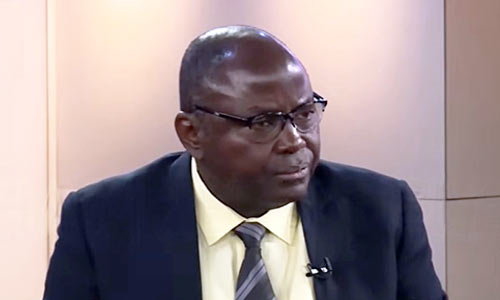
Senior Advocate of Nigeria, Prof. Jibrin Ibrahim Okutepa, SAN, has delivered one of the most sweeping and unsparing assessments of Nigeria’s governance crisis by any serving member of the Inner Bar, declaring that the country’s leadership recruitment process has been captured by corruption, selfishness, and the worship of money, that professors have connived with crooked politicians to install bad leaders, that the legal profession itself has been infested with impunity, and that governors seeking second terms on the basis of “solid foundations” have in reality laid only foundations of poverty, hunger, and suffering.

In a lengthy post on X (formerly Twitter) on Sunday, Okutepa painted a picture of a country whose institutions, from political parties to the judiciary and the legal profession, have been systematically undermined by a culture of impunity, self-interest, and the deliberate preference for incompetence over merit.
Okutepa opened with a characterisation of Nigeria’s leadership recruitment system that was as blunt as it was comprehensive.
“In Nigeria the worst leads the best. The sick leads the healthy. The unintelligent leads the intelligentsia. Some professors connived with crooked politicians to install bad leaders in power. Money is worshipped not God. Corruption is a sure way to get to the top,” Okutepa stated.
The reference to professors conniving with politicians is particularly pointed, coming from a legal scholar who holds a professorial chair himself. The accusation suggests that Nigeria’s intellectual class, rather than serving as a check on political recklessness, has in many cases become complicit in the installation of leaders whose primary qualification is access to money rather than competence, vision, or commitment to public service.
Okutepa described a system in which merit has been entirely replaced by connections and patronage.
“Those who know nothing are preferred to those who know something. What you know does not matter. It is who you know that matters. Everything is by connections. Those we field to play for us are those who have no capacity to score the much needed goals in good governance,” he stated.
He placed responsibility not only on the political class but on ordinary citizens, arguing that the followers themselves have made a deliberate choice to trade their future for immediate material reward.
“The followers preferred to get quick and temporal money today and endure suffering tomorrow. Those who know follow bad roads and foist on the people who cannot help the people but themselves. Selfish interest is more important than the interest of the vast majority of the Nigerian people,” the Senior Advocate stated.
In a coinage that captures the intersection of money and political power that has characterised Nigeria’s democratic experience, Okutepa accused the political system of operating what he called “monitocracy and dollarcracy” rather than genuine democracy.
“We pay lip service to good governance but operate bad governance at its worst level. We preach democracy but we operate monitocracy and dollarcracy. Both the political actors and delegates who have been given power to select the best go for the worst for no other reason than the love of money which is the root of all our evils,” he stated.
The observation carries particular weight in the context of the recently concluded 2027 primary elections across political parties, where reports of vote-buying, delegate monetisation, and the influence of financial power over the candidate selection process have dominated public discourse. Okutepa’s description of delegates who “go for the worst” because of money echoes the widespread concern that direct primaries, which were intended to democratise candidate selection, have instead amplified the role of money in determining political outcomes.
Okutepa reserved some of his sharpest criticism for governors seeking second terms on the basis of claims that they have laid “solid foundations” during their first terms.
“When I see those who have failed in governance seeking for second term in office to build on the so-called ‘solid’ foundation laid in the first term I laughed. What is the solid foundation? Foundation of poverty or hunger,” Okutepa stated.
He posed a series of questions that challenged the substance behind the political rhetoric: “What are these foundations? How many roads were built? How many schools were built? How many hospitals were built? How often are workers paid? What about pensioners? Were they paid as at and when due? What about security of life and property?”
“Honestly Nigerian politicians are truly deceptive and wicked. Why do we have these bad people lord it over us?” he asked.
In what may be the most significant passage of his post for the legal community, Okutepa extended his critique beyond politics to the legal profession itself, warning that impunity and disregard for the rule of law have infected even the institutions that are supposed to serve as guardians of justice and accountability.
“When you speak truth, you are hated by those in power. Those who are in power abuse power with impunity and audacity of arrogance even in the legal profession,” Okutepa stated.
He described the pursuit of justice in Nigeria in vivid terms: “To get immediate justice in Nigeria is like a camel going through the needle. Truth is hated and abhorred by those who are trained to give truth the prominent place in adjudication.”
The Senior Advocate concluded with an expression of personal anguish at the state of the profession he has dedicated his career to: “I feel sad to see darkness overshadowed light even in the legal profession which should and ought to be a profession of light.”
The observation echoes concerns that have been raised throughout the current legal calendar, from Edun SAN’s “Justice for Sale” paper at the NBA Benin Branch Law Week to the Afrobarometer report showing that only 25 per cent of Nigerians trust the courts, to the ongoing controversies over conflicting court judgments and allegations of judicial overreach in politically sensitive cases.
Okutepa painted a picture of a society where collective responsibility has collapsed entirely, replaced by a culture of radical individualism and indifference to the suffering of others.
“Nigeria is at the mercy of its own citizens. Nigerians betrayed Nigeria on the basis of selfishness. Nobody thinks of one another but themselves. The suffering of the vast majority of people is the happiest moment for tiny but powerful cabal,” he stated.
“Nobody is good enough for the self-appointed leaders than imposing themselves on the people. Killings and maiming of Nigerians give joy to those who have murdered the greatness of Nigerians. Nobody thinks of the good of the other. No one cares if Nigerians are not living comfortably,” the Senior Advocate added.
Okutepa concluded with a lament that combined despair with a note of faith: “Nigerians in the midst of an ocean but thirsty for credible leadership. Who will deliver Nigerians from these Nigerians that have destroyed our collective destiny?”
“What kind of society do we build when every institution is infested with impunity and total insubordination to the rule of law and due process and nothing seems to happen to visit such iniquities with sanctions? Terrible I must confess,” he stated.
“God shall deliver us. Today our liberties are completely in jeopardy. Nigerian political parties are the same. No internal democracy. We are suffering and smiling,” the Senior Advocate concluded.
Okutepa’s assessment carries particular weight because of who he is. As a Senior Advocate of Nigeria, a professor of law, and one of the most prominent litigation practitioners in the country, he occupies a position within the legal establishment that gives his words institutional significance beyond personal opinion.
His willingness to extend his critique to the legal profession itself, warning of “darkness” in what should be “a profession of light” and accusing those within the profession of abusing power “with impunity and audacity of arrogance,” suggests a level of frustration with the state of the Nigerian Bar and Bench that goes beyond the usual commentary on political governance.
The post was published on X on Sunday, June 8, 2026.
[A MUST HAVE] Evidence Act Demystified With Recent And Contemporary Cases And Materials

Available now for NGN 40,000 at ASC Publications, 10, Boyle Street, Onikan, Lagos. Beside High Court, TBS. Email publications@ayindesanni.com or WhatsApp +2347056667384. Purchase Link: https://paystack.com/buy/evidence-act-complete-annotation
______________________________________________________________________ “Enhance Legal Practice With Authoritative Reports” — Alexander Payne Offers Comprehensive Law Reports, Spanning Over A Century Of Nigerian Jurisprudence Interested buyers are encouraged to place their orders and enquiries via:
0704 444 4777, 0704 444 4999, 0818 199 9888
Website: www.alexandernigeria.com
Interested buyers are encouraged to place their orders and enquiries via:
0704 444 4777, 0704 444 4999, 0818 199 9888
Website: www.alexandernigeria.com