*As NBA-SPIDEL Webinar Endorses Proposed Public Interest Litigation Bill

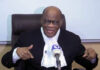
Senior Advocate of Nigeria, Dr Monday Onyekachi Ubani, SAN, has delivered a comprehensive analysis of the doctrine of locus standi in Nigeria, tracing its historical development from the restrictive approach established in Adesanya v. President of Nigeria through the apparent liberalisation in Centre for Oil Pollution Watch v. NNPC and back to the recent Supreme Court decision in Okonjo-Iweala v. Fawehinmi, which he said suggests that “the restrictive philosophy established in Adesanya remains substantially intact,” and calling for constitutional, legislative, procedural, and institutional reforms to expand access to justice through public interest litigation.
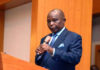
Ubani spoke as the lead presenter at the 9th edition of the NBA Section on Public Interest and Development Law (NBA-SPIDEL) Webinar Series on Saturday, under the theme “The Doctrine of Locus Standi and Its Impact on Public Interest Litigation in Nigeria.” The webinar was hosted under the chairmanship of Associate Prof. Uju Agomoh, with Bulus Atsen, fsi, Vice Chairman of the NBA-SPIDEL Litigation Committee, moderating the session, and Mba Ukweni, SAN, Chairman of the NBA-SPIDEL Litigation Committee, participating alongside senior advocates, academics, and legal practitioners from across the country.
NBA-SPIDEL Chair Agomoh set the tone for the discussion by describing locus standi as “one of the most significant procedural issues in our legal system,” whose application “has often generated vigorous debate regarding its effect on public interest actions and the ability of citizens, civil society organisations, and public-spirited individuals to challenge unlawful conduct and protect collective rights.”
She stated: “Public Interest Litigation remains an indispensable instrument for promoting accountability, defending constitutional values, protecting vulnerable communities, and ensuring that governmental and private powers are exercised within the confines of the law. However, questions surrounding standing continue to shape the extent to which the courts can serve as an accessible forum for the vindication of public rights.”
Ubani traced the historical development of locus standi in Nigeria through the major judicial authorities that have defined the doctrine’s scope and limits.
He began with Olawoyin v. Attorney-General of Northern Nigeria, where the courts insisted on proof of personal injury as a prerequisite for maintaining an action, establishing the foundation for what would become Nigeria’s restrictive standing doctrine.
He then examined the landmark decisions in Adesanya v. President of Nigeria and Thomas v. Olufosoye, which entrenched the restrictive standing doctrine as the prevailing approach in Nigerian jurisprudence. Under the Adesanya framework, a plaintiff must demonstrate that his civil rights and obligations have been, or are in imminent danger of being, adversely affected by the action or omission complained of. Mere interest in a matter of public concern, without a showing of personal injury or the threat of personal injury, is insufficient to confer standing.
Ubani noted that while subsequent decisions signalled a movement toward liberalisation, notably in Gani Fawehinmi v. Akilu and Gani Fawehinmi v. President of Nigeria, the most significant breakthrough came in Centre for Oil Pollution Watch v. NNPC. That decision appeared to open the doors of Nigerian courts to public interest litigants and non-governmental organisations, recognising that certain cases involve rights and interests that transcend the personal circumstances of any individual plaintiff and affect the public at large.
However, Ubani observed that the promise of Centre for Oil Pollution Watch has not been fully realised. The recent Supreme Court decision in Okonjo-Iweala v. Fawehinmi, he stated, “suggests that the restrictive philosophy established in Adesanya remains substantially intact,” indicating that the apex court has not definitively abandoned the requirement of personal injury or direct personal interest as the threshold for standing.
The observation carries particular relevance in the current national context, where the question of standing has featured prominently in the Federal High Court’s controversial judgment ordering the deregistration of five political parties at the instance of the Incorporated Trustees of National Forum of Former Legislators, a case in which Ubani himself questioned whether the plaintiffs had demonstrated a “legally cognisable injury” sufficient to activate the court’s jurisdiction.
Ubani drew comparative lessons from four jurisdictions that have each, through different mechanisms, moved beyond the restrictive standing doctrine that Nigeria continues to apply.
In India, liberal standing was achieved through judicial activism. The Indian Supreme Court, through a series of decisions beginning in the 1980s, developed the concept of “epistolary jurisdiction,” allowing public interest cases to be commenced even by letter to the court, and created a robust framework for public interest litigation that has been credited with advancing environmental protection, workers’ rights, and government accountability.
In Kenya and South Africa, liberal standing was entrenched constitutionally. Both countries’ post-independence constitutions expressly grant standing to any person acting in the public interest, any organisation acting in the interest of its members, and any association acting in the interest of a class of persons. Ubani noted that this constitutional entrenchment has had “visible impact in their development strides.”
Even the United Kingdom, which originated the personal injury test that Nigeria adopted and has maintained, has since embraced the broader “sufficient interest” standard, significantly lowering the threshold for standing in public law proceedings and enabling a wider range of litigants to challenge government decisions.
“Nigeria is behind prevailing global trends,” Ubani observed, making the case that the country’s adherence to the restrictive Adesanya framework places it out of step with the direction of legal development across common law jurisdictions and emerging democracies.
Ubani’s presentation went beyond diagnosis to propose concrete reforms drawn from his doctoral research on the subject. He proposed constitutional, legislative, procedural, and institutional changes aimed at expanding access to justice through public interest litigation.
The most significant proposal endorsed by the webinar was a proposed Public Interest Litigation Bill developed by Ubani, which seeks to eliminate judicial discretion in determining standing for public interest cases and establish clear statutory rules for public interest actions. The bill would create a legislative framework that removes the uncertainty created by the current case-by-case judicial approach to standing and provides predictable, accessible rules for citizens and organisations seeking to challenge unlawful government action or vindicate public rights.
The webinar also endorsed the creation of specialised public interest litigation divisions within the High Courts and Federal High Court, dedicated units staffed by judges trained in public interest law that would handle cases involving environmental protection, human rights, government accountability, and other matters of broad public concern.
Participants described the session as enlightening and engaging, with many requesting copies of Ubani’s doctoral thesis. A strong consensus emerged on several points.
First, that the NBA should intensify advocacy for liberal standing rules that bring Nigeria in line with global best practice and enable citizens, civil society organisations, and public-spirited individuals to challenge unlawful conduct without the procedural barrier of proving personal injury.
Second, that the proposed Public Interest Litigation Bill should receive the support of the organised Bar and be championed through the legislative process.
Third, that the proposed reforms should be implemented in partnership with NBA-SPIDEL, recognising the section’s mandate and expertise in public interest law.
Fourth, that specialised public interest litigation divisions within the court system would provide a more conducive environment for the development of public interest jurisprudence than the current system where public interest cases are distributed among generalist courts.
Participants expressed optimism that such reforms would “strengthen accountability, deepen democratic governance and promote the protection of public rights in Nigeria.”
The webinar’s focus on locus standi resonates far beyond academic legal theory. The question of who has the right to approach the courts to challenge unlawful government action determines the practical scope of judicial accountability in Nigeria. When standing rules are restrictive, government officials, agencies, and institutions can act unlawfully with the knowledge that most citizens lack the legal standing to challenge them. When standing rules are liberal, the courts become a genuine instrument of accountability, accessible to anyone who can demonstrate that a public wrong has occurred, regardless of whether they have suffered a personal injury distinct from the injury suffered by the public at large.
The tension between these two approaches has been on display in multiple recent controversies, from the party deregistration judgment where the standing of the Incorporated Trustees of National Forum of Former Legislators was challenged, to environmental cases where affected communities struggle to meet the personal injury threshold, to governance cases where citizens seek to challenge budgetary irregularities or constitutional violations that affect the entire polity rather than any single individual.
The webinar concluded with a unanimous call for “sustained collaboration among the Bar, Bench, academia and civil society to advance public interest litigation as a vital tool for transparency, accountability and good governance in Nigeria.”
The 9th NBA-SPIDEL Webinar Series was held on Saturday under the chairmanship of Associate Prof. Uju Agomoh, Chair of NBA-SPIDEL.
[A MUST HAVE] Evidence Act Demystified With Recent And Contemporary Cases And Materials

Available now for NGN 40,000 at ASC Publications, 10, Boyle Street, Onikan, Lagos. Beside High Court, TBS. Email publications@ayindesanni.com or WhatsApp +2347056667384. Purchase Link: https://paystack.com/buy/evidence-act-complete-annotation
______________________________________________________________________ “Enhance Legal Practice With Authoritative Reports” — Alexander Payne Offers Comprehensive Law Reports, Spanning Over A Century Of Nigerian Jurisprudence Interested buyers are encouraged to place their orders and enquiries via:
0704 444 4777, 0704 444 4999, 0818 199 9888
Website: www.alexandernigeria.com
Interested buyers are encouraged to place their orders and enquiries via:
0704 444 4777, 0704 444 4999, 0818 199 9888
Website: www.alexandernigeria.com