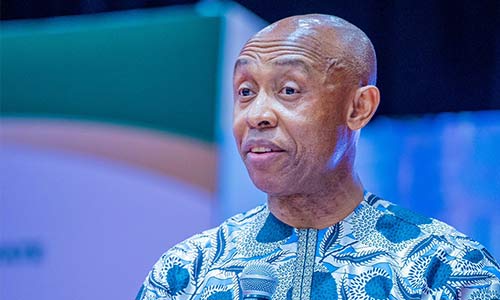
Renowned human rights scholar and former Chairman of Nigeria’s National Human Rights Commission, Prof. Chidi Anselm Odinkalu, has declared that sustainable governance must move beyond physical infrastructure to prioritise people, dignity, and institutional integrity, scoring Abia State Governor Alex Otti high on multiple indices of governance while delivering a sharp challenge to South-East leaders to stop complaining about marginalisation and instead demonstrate the capacity for effective governance that would compel the rest of Nigeria to seek their leadership.

Speaking at the third anniversary lecture of Governor Otti’s administration in Umuahia on Thursday, in a keynote address titled “Governance as Dignity: Three Years of Impact and of Shaping the Future of Abia State and Beyond,” Odinkalu argued that the most significant achievement of the current Abia government is not roads, infrastructure, or urban renewal projects, but the restoration of human dignity, public trust, and the very idea that government can be a virtuous enterprise.
Odinkalu described the period before Governor Otti’s administration in stark terms, borrowing the Spanish term “desgobierno,” which he translated as “ungovernment,” to characterise what he said was nearly a quarter century of governance failure in Abia State.
“For nearly a quarter century, this State was Nigeria’s poster-child for the impossibility of credible government founded on incredible illegitimacy,” Odinkalu stated.
He argued that governance during that era became detached from the will of the people, creating conditions in which public resources were pillaged while accountability mechanisms were weakened or captured. The consequences, he said, were visible in the collapse of infrastructure, declining public services, growing insecurity, and widespread hopelessness among residents.
“Anybody who can steal your mandate can steal anything that they prefer. This governor, because he has a legitimate mandate, has got to account to those who gave him the mandate,” Odinkalu observed, drawing a direct connection between the legitimacy of Otti’s electoral mandate and the accountability that has characterised his administration.
While acknowledging the administration’s visible accomplishments, including over 1,000 kilometres of asphalted roads across the state (a distance he compared to “Aba to Kano plus Okigwe to Uzuakoli”), improved electricity supply, street lighting, healthcare delivery, and education investments, Odinkalu insisted that the deeper significance lies in what he described as the infrastructure of care.
“I want to be very clear: projects matter, but projects will not last if the people do not have and the people do not own them. That is why investment in the people is where it all begins,” Odinkalu stated.
He commended the administration for prioritising social welfare through programmes including health insurance, disability support services, maternal transport schemes, and upgrades of primary healthcare centres.
“The biggest thing in my view that this administration has done is care. A government that cares. The infrastructure of care is self-evident for those who have bothered to look at it,” Odinkalu stated.
He specifically cited the impact of electricity projects and street lighting in Aba on crime reduction and business productivity: “What is the biggest crime-fighting invention that this administration has done? Electricity. As a result of street lighting, crime has crashed in Aba.”
In what may be the most provocative passage of his lecture, Odinkalu turned his attention from Abia to the broader South-East region, challenging leaders to stop using complaints of marginalisation as a substitute for delivering effective governance.
“You cannot be perpetrating ungovernment against your own people and at the same time accusing Nigeria of marginalising them,” Odinkalu declared.
He then issued a direct challenge: “If you cannot manage 29,500 square kilometres, guarantee peace, guarantee safety, guarantee development, guarantee roads, guarantee water, guarantee healthcare, guarantee children go to school, why do you want to manage Nigeria?”
Rather than demanding inclusion through complaints, Odinkalu urged the South-East to demonstrate governance capacity so compelling that the rest of Nigeria would have no choice but to recognise it.
“We can outgovern the rest of Nigeria and start creating a dignified population, a place where things work. Nigeria will tell you, ‘you know what you have done to your place, come and do it for us,'” Odinkalu stated.
The argument effectively reframes the marginalisation debate from one of victimhood and demand to one of performance and demonstration, suggesting that the most powerful case for South-East inclusion in national leadership is not political agitation but visible proof of governance excellence.
Odinkalu described what he called “The Alex Otti Challenge” as a governance template built on three pillars: a clear diagnosis, a coherent strategy, and a value system.
He said Otti’s administration represented proof that legitimate leadership backed by public trust can transform even a state that has suffered decades of governance failure. The combination of electoral legitimacy, strategic planning, and a commitment to accountability had produced results that Odinkalu said could serve as a reference point for broader governance lessons across Nigeria.
Drawing from Nigeria’s 1999 Constitution, Odinkalu argued that government exists primarily to protect and enhance the dignity of citizens. He referenced constitutional provisions requiring government to safeguard welfare, maintain human dignity, and ensure that governmental actions remain humane.
“Human dignity is more than an aspiration; it is a constitutional metric for measuring the performance of government,” the scholar stated, suggesting that citizens should evaluate their leaders not merely by the number of projects completed but by whether governance has enhanced or diminished their dignity.
Looking ahead, Odinkalu identified several strategic opportunities for positioning Abia as a competitive economic hub. These included developing a professional services economy, establishing a regional commercial dispute resolution hub to complement the state’s industrial and commercial aspirations, strengthening the knowledge economy through the state’s growing network of universities and educational institutions, attracting diaspora investment (noting that Abia and neighbouring Imo State account for a substantial share of Nigeria’s annual diaspora remittances), creating a Women’s Legacy Enterprise Fund in honour of the Aba Women of 1929 to support female-owned small and medium enterprises, and deepening regional security cooperation.
“Our women in this part of the world have been central to our narrative. They represent enterprise communities and leadership communities,” Odinkalu stated in advocating for the women’s fund.
Odinkalu concluded with a warning that Abia stands at a historic crossroads as the 2027 election cycle approaches.
“For Abia State, there are two options. To make this experience sustainable and indefinite into the future, or to record it as a minor interregnum in a continuum of habitual ungovernment. The choice is clear,” Odinkalu stated.
He urged citizens to protect the gains already made by supporting enlightened civic participation and responsible leadership, warning against returning to a culture of transactional politics.
“The outcomes announced in elections have profound implications for the lives and fates of real people. We confront a season that will test the will of the state in defending what it now has,” Odinkalu cautioned.
“The smile has returned to the faces of the people and hope appears willing to return from exile. The choice belongs to the people whether they want to return to darkness or sustain purposeful leadership.”
Governor Otti, in his remarks, called for stronger citizen participation in governance and elections, expressing concern over declining voter turnout which dropped from about 57 per cent in 2007 to 27 per cent in the 2023 general elections.
“Participation does not necessarily mean contesting elections, but it means being actively involved in the democratic process,” Otti stated, quoting the philosopher Plato: “Those who refuse to participate in politics eventually end up being ruled by fools.”
The governor commended Odinkalu for what he described as an “excellent and brilliant presentation” that strongly aligned with the philosophy and vision of his administration. He also gave immediate approval for one of Odinkalu’s recommendations, directing the expansion of the State Security Council’s membership to include the Commissioners for Education and Health.
Other discussants at the event, including technology expert Prof. Ndubuisi Ekekwe (who joined virtually), public affairs analyst Dr Bolaji Akinyemi, and Union Bank Director Eileen Shaiyen, noted that Otti’s reforms had positioned Abia to become a credible centre of excellence and a model for other states.
Shaiyen said Abia has the potential to become a commercial and professional services hub if it continued to make the right leadership choices, while Ekekwe commended the administration’s adoption of technology and data-driven systems focused on efficient service delivery.
Secretary to the State Government Emmanuel Meribole described the developments recorded as evidence of a deliberate choice of competence and vision, noting that reforms were anchored on restoring dignity through timely payment of salaries and pensions, respect for workers, improved business climate, and accountability.
[A MUST HAVE] Evidence Act Demystified With Recent And Contemporary Cases And Materials

Available now for NGN 40,000 at ASC Publications, 10, Boyle Street, Onikan, Lagos. Beside High Court, TBS. Email publications@ayindesanni.com or WhatsApp +2347056667384. Purchase Link: https://paystack.com/buy/evidence-act-complete-annotation
______________________________________________________________________ “Enhance Legal Practice With Authoritative Reports” — Alexander Payne Offers Comprehensive Law Reports, Spanning Over A Century Of Nigerian Jurisprudence Interested buyers are encouraged to place their orders and enquiries via:
0704 444 4777, 0704 444 4999, 0818 199 9888
Website: www.alexandernigeria.com
Interested buyers are encouraged to place their orders and enquiries via:
0704 444 4777, 0704 444 4999, 0818 199 9888
Website: www.alexandernigeria.com