*Says “Investigators Must Discover The Truth, Not Build A Case For Conviction”

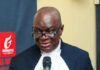
A Senior Advocate of Nigeria, Abdul Mohammed, SAN, FCIArb., has called for stricter enforcement of evidence disclosure rules, improved investigative practices and stronger judicial oversight as essential measures for ensuring the effective administration of criminal justice in Nigeria.
Mohammed made the call in a paper titled “Evidence, Disclosure and the Right to a Fair Trial,” presented at the Workshop on Effective Administration of Criminal Justice, which focused on the central roles of prosecutors, investigators and the judiciary.
In his presentation, he emphasised that the credibility of the criminal justice system depends not merely on the existence of laws, but on the lawful collection of evidence, the timely disclosure of relevant materials to the defence, and the consistent protection of the constitutional right to a fair trial. He identified evidence, disclosure and fair trial as the foundational pillars of criminal justice, arguing that the administration of justice is undermined when investigators resort to improper methods of obtaining confessional statements, or when prosecutors withhold materials capable of assisting an accused person’s defence.
Drawing on judicial authorities, including FRN v. Nnajiofor (2024), FRN v. Akaeze (2024), and Okemini v. C.O.P. (2024), Mohammed underscored the importance of recording interrogations, preserving relevant evidence, and ensuring that accused persons receive the materials necessary to prepare their defence.
He particularly stressed that a prosecutor’s responsibility is not to secure a conviction at all costs. Rather, he said, prosecutors must act as ministers of justice by placing credible evidence before the court and disclosing materials that may weaken the prosecution’s case. He warned that withholding evidence, or providing thousands of pages of documents to the defence shortly before trial, could undermine the fairness of proceedings.
On the role of investigators, Mohammed maintained that they should function as impartial fact-finders whose primary responsibility is to discover the truth, rather than to build a case for conviction. He called for the preservation of both incriminating and exculpatory evidence, proper maintenance of the chain of custody, and strict adherence to safeguards against torture and other unlawful investigative practices.
He also called on the judiciary to play a more active role in protecting fair-trial rights. According to him, judges must ensure that disclosure obligations are fulfilled, exclude evidence obtained unlawfully where required by law, order further disclosure when necessary, and take appropriate action where non-disclosure makes a fair trial impossible.
To strengthen compliance, Mohammed recommended that Attorneys-General introduce mandatory disclosure protocols requiring investigators and prosecutors to certify that witness statements, exhibits, audiovisual recordings of interrogations and exculpatory materials have been disclosed to the defence.
He further advocated the nationwide adoption of a digital evidence management system modelled on Lagos State’s electronic case-file system. Under the proposed arrangement, evidence would be uploaded to a secure portal accessible to both parties under judicial supervision, improving transparency, efficiency and accountability in criminal proceedings.
Other recommendations included stricter judicial sanctions for deliberate breaches of disclosure obligations, continuous training for investigators and prosecutors, and reciprocal disclosure by the defence in appropriate circumstances to promote fairness for all parties.
Mohammed cautioned that public pressure for crime control must not override constitutional safeguards, noting that the effectiveness of the criminal justice system should be measured not by conviction rates alone, but by whether justice is properly administered.
He concluded that Nigeria must move from a culture of concealment to a culture of disclosure, stressing that evidence must be lawfully gathered, relevant materials fully disclosed, and fair-trial guarantees strictly enforced if public confidence in the justice system is to be strengthened. “Evidence is the foundation. Disclosure is the pillar. Fair trial is the roof,” he stated, underscoring the interconnected responsibilities of investigators, prosecutors and judges in building a criminal justice system that Nigerians can trust.
[A MUST HAVE] Evidence Act Demystified With Recent And Contemporary Cases And Materials

Available now for NGN 40,000 at ASC Publications, 10, Boyle Street, Onikan, Lagos. Beside High Court, TBS. Email publications@ayindesanni.com or WhatsApp +2347056667384. Purchase Link: https://paystack.com/buy/evidence-act-complete-annotation
______________________________________________________________________ “Enhance Legal Practice With Authoritative Reports” — Alexander Payne Offers Comprehensive Law Reports, Spanning Over A Century Of Nigerian Jurisprudence Interested buyers are encouraged to place their orders and enquiries via:
0704 444 4777, 0704 444 4999, 0818 199 9888
Website: www.alexandernigeria.com