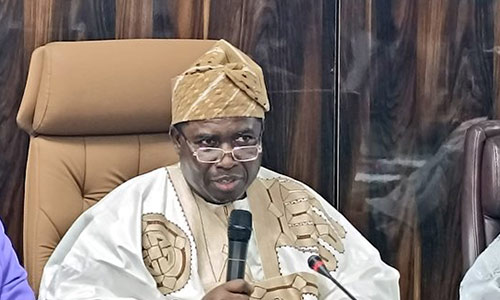
The Independent National Electoral Commission (INEC) has revealed how Lere Olayinka, spokesperson to FCT Minister Nyesom Wike, obtained and subsequently published screenshots containing the voter registration details of Nollywood actor and political aspirant Emeka Ike, disclosing that an investigation by the commission and the Nigeria Police Force traced the leak to an electoral officer in the Abuja Municipal Area Council (AMAC) who shared the restricted data with Olayinka despite the two having never met in person.

INEC spokesperson Mohammed Haruna, speaking in a telephone interview with Premium Times on Thursday, said the AMAC electoral officer who shared the screenshot with Olayinka has been detained by the police and remains under investigation, while three other INEC officials and the daughter of one of the officials were initially quizzed and have been released but ordered to continue reporting to investigators.
The commission maintained that its voter registration database was not hacked or externally compromised, insisting that the incident involved the misuse of authorised access by its own officials rather than a breach of its systems. However, the explanation raises its own set of serious concerns about insider access controls, data protection protocols, and the ease with which sensitive voter information can apparently be extracted from INEC’s administrative systems and shared with political operatives.
Haruna’s account reveals a chain of events involving multiple INEC officials that resulted in a voter’s private registration details reaching a political aide.
According to the INEC spokesperson, the sequence began when Emeka Ike, who is seeking to represent AMAC/Bwari Federal Constituency in the House of Representatives under the Nigeria Democratic Congress (NDC), led protesters to the INEC FCT office on a Friday, alleging that some NDC officials were at the office. The protest drew the attention of INEC’s FCT office staff.
Following the protest, INEC officials at the FCT office checked Ike’s details on the Continuous Voter Registration (CVR) system. One INEC official accessed Ike’s voter registration details on the system and then used her daughter’s phone to take a screenshot of the information displayed on the administrative portal.
The screenshot, containing Ike’s personal voter details including his application number, registration centre, Voter Identification Number (VIN), photograph, name, residential address, polling unit, and date of application, was then shared with the AMAC electoral officer.
The AMAC electoral officer subsequently forwarded the screenshot to Lere Olayinka, despite the two having no prior personal relationship.
Olayinka then posted the screenshots on his social media accounts, using them to criticise Ike by revealing that the actor had only transferred his polling unit to the FCT approximately two weeks before the protest. The post was framed as a challenge to Ike’s political credentials in the AMAC/Bwari constituency.
Haruna disclosed that security operatives initially quizzed four persons in connection with the leak: three INEC officials and the daughter of one of the officials.
The mobile phones of one INEC official and her daughter were seized by investigators.
The AMAC electoral officer who shared the screenshot with Olayinka was taken by the police, specifically by the chief security officer of the INEC chairman, to the Police Special Anti-Robbery Squad (SARS) office for interrogation. The electoral officer remained in detention as of the time of the INEC spokesperson’s interview.
“He’s still with them. He has given his own side of the story, and it tallied with what the minister’s aide confirmed, that they don’t even know each other,” Haruna stated.
The other individuals who were initially quizzed have been released but ordered to continue reporting to the police. “They were there yesterday, and they were there again, and they are supposed to be there today, around one o’clock,” Haruna said.
The police also invited and quizzed Olayinka himself. However, the FCT media aide did not respond to calls or messages seeking comment.
INEC’s spokesperson characterised the electoral officer’s conduct as “overzealousness” rather than a deliberate attempt to compromise the voter registration system for political purposes.
The characterisation is notable because it frames the leak as an isolated incident of poor judgment by an individual official rather than a systemic problem or a coordinated effort to weaponise voter data for political purposes. However, the fact that the leak required the involvement of at least three INEC officials and produced a chain of data transfers from the administrative portal to a political operative’s social media account suggests something more systematic than a single official’s momentary lapse of judgment.
The description of the conduct as overzealousness also fails to address the critical question of motive. Why would an INEC electoral officer who had never met Olayinka in person decide to share a voter’s restricted personal data with a political aide? The word “overzealousness” implies excessive enthusiasm for a legitimate purpose, but sharing restricted voter data with a political operative serves no legitimate INEC purpose.
INEC moved to allay public fears that its voter registration database had been compromised by external actors or hackers.
“The commission has allayed fears that its systems have been compromised or accessed by anyone outside of the commission. INEC maintained that the incident involved the misuse of authorised access by officials rather than an external breach of its systems,” the spokesperson stated.
While the confirmation that no external hack occurred may provide some reassurance about the technical security of INEC’s systems, the insider nature of the breach raises its own set of equally serious concerns.
If INEC officials with authorised access can take screenshots of voter details using personal phones, share them through unofficial channels, and have them reach political operatives within hours, then the approximately 93 million voter records in INEC’s database are vulnerable to insider misuse regardless of how robust the external cybersecurity defences may be.
The incident exposes potential gaps in INEC’s internal data protection protocols, including the apparent absence of restrictions on taking screenshots of the administrative portal, the lack of monitoring or audit trails that would flag unusual access to specific voter records, the ability of officials to use personal devices to capture data from the system, and the absence of controls preventing the lateral sharing of voter information between officials and to external parties.
The leak potentially engages multiple provisions of Nigerian law.
The Nigeria Data Protection Act 2023 regulates the processing, storage, and sharing of personal data. The unauthorised disclosure of a voter’s personal information from a restricted government database could constitute unlawful processing under the Act, exposing both the INEC officials involved and potentially Olayinka to regulatory penalties and civil liability.
Section 37 of the 1999 Constitution guarantees the privacy of citizens, their correspondence, and their communications. The extraction and publication of a voter’s personal details from a government database without consent or lawful justification could amount to a violation of this constitutional right.
The Cybercrimes (Prohibition, Prevention, etc.) Act 2015 may also be relevant if the manner in which the data was accessed and shared is found to constitute unauthorised use of computer systems or data.
Emeka Ike’s lawyers have already threatened legal action against both INEC and Olayinka over the publication of the actor’s voter registration details.
The incident, while involving a single voter’s details, has implications that extend far beyond Emeka Ike’s personal data. It demonstrates that INEC’s voter registration system, which contains the personal details of approximately 93 million registered voters, is vulnerable to insider misuse by officials who can access the data and share it with political operatives.
In the context of the approaching 2027 general elections, where voter data could potentially be exploited for political targeting, voter intimidation, identity manipulation, or other purposes, the ease with which one voter’s details were extracted and published is alarming.
The incident also raises questions about INEC Chairman Prof. Joash Amupitan’s oversight of the commission’s data protection practices. The chairman has faced separate scrutiny over an old social media post that critics said revealed pro-APC sympathies. The revelation that voter data was shared with a political aide aligned with the ruling party through a chain of INEC insiders adds to concerns about the commission’s independence and the security of its systems.
The incident points to several urgent reforms needed within INEC’s data management framework.
First, INEC should implement strict access logging and audit trails for its administrative portal, so that every instance of an official accessing a voter’s record is recorded and can be reviewed.
Second, the commission should prohibit the use of personal devices to capture data from the administrative system, and implement technical controls that prevent screenshots or data extraction from the portal.
Third, INEC should enforce clear data protection protocols with serious consequences for officials who share voter information through unofficial channels, regardless of the stated motive.
Fourth, the commission should review its role-based access controls to ensure that officials can only access voter records within their specific jurisdiction and for documented official purposes.
The AMAC electoral officer remains in police detention. The other INEC officials continue to report to investigators. Lere Olayinka has not publicly commented on the investigation. Emeka Ike’s legal team has indicated that it intends to pursue action over the data breach.
INEC’s assurance that its database was not hacked may be technically accurate, but it provides cold comfort when the commission’s own officials can extract voter data, photograph it on personal phones, and share it with political operatives who publish it on social media, all within hours and apparently without triggering any internal alarm or safeguard.
The system was not breached from outside. It was compromised from within. And that, for the 93 million Nigerians whose data INEC holds, may be the more troubling reality.
[A MUST HAVE] Evidence Act Demystified With Recent And Contemporary Cases And Materials

Available now for NGN 40,000 at ASC Publications, 10, Boyle Street, Onikan, Lagos. Beside High Court, TBS. Email publications@ayindesanni.com or WhatsApp +2347056667384. Purchase Link: https://paystack.com/buy/evidence-act-complete-annotation
______________________________________________________________________ “Enhance Legal Practice With Authoritative Reports” — Alexander Payne Offers Comprehensive Law Reports, Spanning Over A Century Of Nigerian Jurisprudence Interested buyers are encouraged to place their orders and enquiries via:
0704 444 4777, 0704 444 4999, 0818 199 9888
Website: www.alexandernigeria.com
Interested buyers are encouraged to place their orders and enquiries via:
0704 444 4777, 0704 444 4999, 0818 199 9888
Website: www.alexandernigeria.com