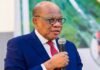
A presidential candidate in the forthcoming Nigerian Bar Association election, Lateef Omoyemi Akangbe, SAN, has responded to the Electoral Committee of the Nigerian Bar Association over its June 12, 2026 press statement on the engagement of service providers, voter authentication framework and electoral communication.

In a detailed letter dated June 15, 2026, addressed to the Chairman of the ECNBA, Akangbe said although he commended the committee for responding to concerns raised by candidates, the press statement, on closer examination, confirmed rather than dispelled several of his earlier worries.
According to him, some portions of the ECNBA statement introduced fresh issues, while others allegedly revealed weaknesses in the committee’s explanations.
Akangbe first faulted the committee’s claim that presidential candidates did not object during the public comment period, which ran from May 11 to May 16, 2026.
He argued that the comment period related only to six shortlisted entities, not the final appointment of the two service providers.
He noted that the assessment session where the shortlisted entities made live presentations was held on May 25, 2026, nine days after the comment window had closed.
According to him, a candidate could not object to an appointment that had not yet been made.
“A candidate cannot object to an appointment that has not yet been made,” he said.
He maintained that his concerns related to the corporate standing, compliance history and track record of the entities eventually appointed, matters which he said came to light only after due diligence was conducted following the announcement of their appointment.
Akangbe also rejected the suggestion that the candidates’ IT consultants endorsed the final selection of the service providers.
He said his IT consultant attended the May 25 assessment session only as an observer and technical adviser to his candidacy, not as a member of the ECNBA evaluation panel.
He said the consultant had no vote, no scoring sheet and no decision-making authority, and did not sign off on or ratify the committee’s final decision.
“Attending a hearing is not the same as delivering the judgment. Defence counsel does not become complicit in a conviction by reason of having been present at the trial,” he stated.
Akangbe challenged the committee to produce any evaluation scoring matrix signed by the candidates’ consultants if it maintained that they had a binding role in the selection process.
On the appointment of Mikrodigital Connect, Akangbe said the committee’s admission that the entity is a business name with a single proprietor remained a serious concern.
He said while the Request for Proposal may not have required limited liability incorporation, that omission was itself a criticism of the procurement document.
According to him, for a national election involving over 80,000 legal practitioners, the entity entrusted with the integrity of the ballot should have met more rigorous institutional requirements.
He also disagreed with the committee’s position that the unlimited liability of a sole proprietor offered stronger protection than limited liability incorporation.
Akangbe said a personal judgment against an individual of undisclosed means was not robust protection for the NBA in the event of a data breach, catastrophic failure or disputed election requiring indemnification.
He said no capitalisation floor, professional indemnity insurance, performance bond or guarantee had been disclosed by the committee.
“Unlimited liability is a legal concept. It is not, by itself, money,” he stated.
On Mikrodigital Connect’s annual returns, Akangbe said the concern was not merely whether the Corporate Affairs Commission could strike off the entity, but what six consecutive years of statutory default revealed about its institutional discipline.
He said the entity, registered in November 2019, allegedly did not file annual returns until the evening of May 31, 2026, a development he described as a governance red flag.
He argued that the late regularisation could suggest ignorance of statutory obligations, disregard for compliance, or dormancy until the election engagement emerged.
Akangbe further questioned whether the technical personnel who impressed the committee during the assessment session were employees, contractors, freelancers or associates of the proprietor, noting that the service agreement was with Mikrodigital Connect as a business name.
He said the NBA had not been given assurance that the same team seen on May 25 would be contractually bound to deliver the election on July 20, 2026.
On Thanelinc Nigeria Limited, Akangbe said the ECNBA’s statement did not clearly confirm that the company was registered with the Nigeria Data Protection Commission as a Data Protection Compliance Organisation.
He said the committee’s use of phrases such as “where applicable” and “NDPC registration or DPCO status” appeared carefully hedged.
According to him, if Thanelinc had a current NDPC registration certificate, the committee should simply publish the registration number.
He said the committee should also clarify what “DPCO status” meant if it was not relying on a formal NDPC registration certificate.
Akangbe also faulted the committee’s reliance on Thanelinc’s presentation as evidence of track record.
He said a presentation was not the same as a track record, adding that a track record should consist of prior engagements of comparable scope, successfully completed and verifiable by reference to the bodies that engaged the entity.
He said the committee had not named any prior election of comparable scale conducted or supported by either service provider.
On the proposed use of National Identification Number as an additional voter authentication layer, Akangbe said the committee failed to communicate the outcome of its alleged assessment to the candidates after the matter was discussed at the May 25 meeting.
He said even if the committee merely agreed to “look into” the proposal, it had an obligation to communicate its decision within a reasonable time.
He noted that the voters’ register was frozen on May 27, 2026, and the Step-by-Step Electronic Voting Guide was later published without any mention of NIN.
According to him, candidates only discovered that the NIN layer had been abandoned when they read the published guide.
Akangbe acknowledged that some practical objections to NIN authentication, including concerns about married women whose records had not been updated and diaspora members without current NIN records, were valid.
However, he said those concerns should have been raised promptly when the proposal was made, rather than appearing for the first time in a reactive press statement weeks later.
He also warned that the existing Supreme Court Number-plus-OTP framework did not fully address vulnerabilities such as SIM swap fraud, compromised emails and social engineering.
He said the Supreme Court Number is not secret because it appears on call-to-bar records, practice documents, stamps and seals, email signatures and court filings.
Akangbe argued that where the OTP delivery channel is compromised, the two-factor framework may in practice become a single-factor system.
He added that the use of the Supreme Court Number also failed to address the risk of internal sabotage, since the NBA is the custodian of the SCN database.
He therefore advised that the ECNBA should access the voters’ database from the primary source, Access Bank, rather than from the NBA, as a safeguard against possible internal or external compromise.
Akangbe further asked the committee to publish the summary of evaluation scores and criteria outcomes it said it could make available.
He rejected the broad claim of commercial confidentiality, arguing that the NBA is a membership association spending members’ funds collected through Bar Practising Fees, not a private commercial enterprise procuring services for profit.
He said candidates and members had a legitimate interest in knowing the material terms on which their election would be conducted and the basis on which the service providers were selected.
The senior lawyer also denied, in strong terms, the committee’s allegation that private correspondence was deliberately handed over to “sponsored bloggers.”
He said his letter to the committee was drafted and delivered in good faith through proper channels and that he did not give it, or any summary of it, to any blogger.
He explained that following a resolution at the May 25 meeting, candidates agreed that communications to the ECNBA should copy other candidates for the same office to avoid one-sided communication with the committee.
Akangbe said he delivered a hard copy to the ECNBA and sent a soft copy copied to the other two presidential candidates, adding that he could not vouch for what any person copied in the email did with it.
“I deny this allegation. I deny it categorically, unreservedly, and on the record,” he stated.
He challenged the committee to produce evidence if it believed he paid, instructed or sponsored anyone to publish any content connected with the correspondence.
Akangbe also criticised what he described as veiled threats of professional disciplinary action against candidates and members who raise concerns about the electoral process.
He said raising factual concerns about the corporate standing, compliance history and track record of entities entrusted with a national election was not false, misleading or inflammatory.
Rather, he described it as both a right and a duty.
According to him, every material factual statement in his original letter was sourced from the public register of the Corporate Affairs Commission and had largely been acknowledged in the committee’s own response.
He warned that an electoral committee threatening candidates with disciplinary proceedings for scrutinising its procurement decisions would not inspire confidence.
“If the Committee’s processes are sound, they will withstand scrutiny and emerge stronger for it. If they cannot withstand scrutiny, the answer is to strengthen the processes, not to silence the scrutiny,” he said.
Akangbe also rejected the ECNBA’s declaration that its decision on the matter was final, saying the finality of the committee’s decisions is determined by the NBA Constitution and ultimately by the courts of Nigeria.
He added that no body could immunise its decisions from constitutional review or judicial scrutiny simply by declaring them final in a press statement.
He further faulted the committee’s description of those who proposed NIN authentication as “the two male presidential candidates,” saying the gender of the candidates who proposed an election security measure was irrelevant to the merit of the proposal.
He described the characterisation as unnecessary and capable of suggesting a gendered motive to what he considered a gender-neutral governance concern.
In conclusion, Akangbe said he remained committed to a free, fair, transparent and credible NBA election on July 20, 2026.
He said he did not seek confrontation with the ECNBA but accountability from it.
He also said that because the ECNBA had circulated its June 12 press statement to every member of the NBA and allegedly impugned the integrity of two presidential candidates by implication, he would circulate his response with equal prominence.
“What is good for the Committee’s narrative is good for the candidate’s reply,” he stated.
The letter was signed by Lateef Omoyemi Akangbe, SAN, candidate for the office of President of the Nigerian Bar Association, and copied to members of the ECNBA, the NBA President and the NBA General Secretary.
[A MUST HAVE] Evidence Act Demystified With Recent And Contemporary Cases And Materials

Available now for NGN 40,000 at ASC Publications, 10, Boyle Street, Onikan, Lagos. Beside High Court, TBS. Email publications@ayindesanni.com or WhatsApp +2347056667384. Purchase Link: https://paystack.com/buy/evidence-act-complete-annotation
______________________________________________________________________ “Enhance Legal Practice With Authoritative Reports” — Alexander Payne Offers Comprehensive Law Reports, Spanning Over A Century Of Nigerian Jurisprudence Interested buyers are encouraged to place their orders and enquiries via:
0704 444 4777, 0704 444 4999, 0818 199 9888
Website: www.alexandernigeria.com
Interested buyers are encouraged to place their orders and enquiries via:
0704 444 4777, 0704 444 4999, 0818 199 9888
Website: www.alexandernigeria.com