The United States has imposed visa restrictions on judges, prosecutors and other serving and former public officials across Latin America, with more than 20 members of Bolivia’s prosecutorial and judicial system among those affected by a new Trump administration action linked to allegations of corruption, narcotics trafficking and interference with governments’ crime-fighting efforts.

The measures announced by the U.S. State Department affect 27 officials and former officials, as well as members of their families, from Bolivia, Colombia, Ecuador and Peru. Among those targeted are Bolivia’s Attorney General, Roger Mariaca, more than 20 other Bolivian prosecutors and judges and a Peruvian judge.
According to the State Department, 12 of the Bolivian prosecutors and judges identified under the action currently hold U.S. visas and are having those visas revoked, while nine others will be denied visas if they subsequently apply.
The action therefore places judicial and prosecutorial officials at the centre of Washington’s latest use of immigration powers as an anti-corruption and foreign-policy tool in Latin America.
The State Department said the restrictions were intended to fulfil U.S. commitments to defend democratic governance in the Western Hemisphere against corruption and narco-trafficking.
“Undermining a democratically-elected government is a threat to security and rule of law in the Americas and will not be tolerated,” the department said.
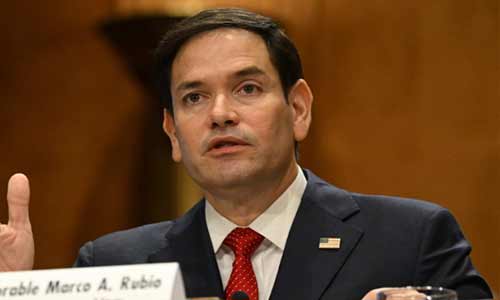
The affected officials come from Bolivia, Colombia, Ecuador and Peru. The latter three countries were visited by U.S. Secretary of State Marco Rubio in September as Washington sought closer cooperation against drug trafficking and human trafficking. Leaders in the countries have complained that some of the officials now targeted had frustrated or obstructed efforts to combat organised crime.
The Trump administration has presented the measures as part of a wider campaign against corruption, narcotics trafficking and illegal migration under the U.S.-led “Shield of the Americas” initiative established by President Donald Trump this year.
The most prominent official affected is Bolivia’s Attorney General, Roger Mariaca, who was elected by lawmakers in 2024 for a six-year term.
U.S. authorities accused Mariaca of abusing his office by allegedly soliciting and accepting bribes to facilitate narcotics trafficking and of assisting violent criminals to evade justice. Those allegations are claims made by the U.S. government and have not been independently adjudicated in the United States.
The State Department said Mariaca’s alleged conduct undermined democratic institutions in Bolivia and frustrated Washington’s campaign against narcoterrorism.
Mariaca has rejected the action against him, describing it as political pressure on his office.
Speaking in Sucre, Bolivia, the attorney general said the work being carried out by his office had displeased political interests both inside and outside Bolivia.
“No political pressure, national or international, can stand in the way of establishing the facts, which must be investigated,” Mariaca said.
He also vowed to continue investigations being undertaken by his office, including a politically sensitive case involving Argentine strategist Fernando Cerimedo, who has links to Trump’s political circle and previously advised Bolivian President Rodrigo Paz’s campaign.
Mariaca has previously faced criticism over the handling of drug-trafficking matters by Bolivian prosecutors. He headed prosecutors in Santa Cruz in 2023 when alleged Uruguayan drug trafficker Sebastián Marset escaped a police operation. Marset is now in U.S. custody.
Beyond Bolivia, the U.S. action also covers one judge from Peru, two Colombian figures, including a businessman and a lawmaker, and two Ecuadorians. The available State Department reporting did not publicly identify every affected judge and prosecutor by name.
The decision marks another expansion of Washington’s use of visa powers against foreign officials.
The Trump administration has previously used visa restrictions against foreign officials and delegations in disputes ranging from immigration and alleged discrimination to diplomatic and security policy.
[A MUST HAVE] Evidence Act Demystified With Recent And Contemporary Cases And Materials

Available now for NGN 40,000 at ASC Publications, 10, Boyle Street, Onikan, Lagos. Beside High Court, TBS. Email publications@ayindesanni.com or WhatsApp +2347056667384. Purchase Link: https://paystack.com/buy/evidence-act-complete-annotation
______________________________________________________________________ “Enhance Legal Practice With Authoritative Reports” — Alexander Payne Offers Comprehensive Law Reports, Spanning Over A Century Of Nigerian Jurisprudence Interested buyers are encouraged to place their orders and enquiries via:
0704 444 4777, 0704 444 4999, 0818 199 9888
Website: www.alexandernigeria.com
Interested buyers are encouraged to place their orders and enquiries via:
0704 444 4777, 0704 444 4999, 0818 199 9888
Website: www.alexandernigeria.com