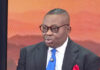
*Faults Shift Of NBA Election Date To July 18

NBA presidential candidate Lateef Omoyemi Akangbe, SAN, LLM, MBA, FCIArb, has filed a formal protest against the Electoral Committee of the Nigerian Bar Association (ECNBA) over two circulars dated July 3, 2026, but published on July 4, 2026, challenging the unilateral rescheduling of the election date from Monday, July 20, to Saturday, July 18, without candidates’ consent, and describing the guidelines for the Candidates’ Debate scheduled for July 8 as “structurally deficient” because they prohibit cross-examination, rebuttal, and any form of direct engagement between presidential candidates, rendering the event “a series of parallel monologues rather than a genuine debate.”
Akangbe has threatened to withdraw his participation from the Candidates’ Debate and Manifesto Day if the structural deficiencies are not remedied before July 8, 2026, describing such withdrawal not as “an act of evasion but as a principled refusal to legitimise a format that, in its present form, does not serve the electorate, does not test the candidates, and does not deserve to be called a debate.”
The protest letter was copied to all members of the ECNBA, the NBA President, the General Secretary, and all qualified presidential candidates.
Akangbe’s sharpest criticism was directed at the ECNBA’s characterisation of the election date change as a decision taken “further to deliberations at the meeting of the Committee with candidates held on the 2nd of July 2026, and following some concerns earlier raised by critical stakeholders.”
Akangbe stated that what actually occurred at the July 2 meeting was markedly different from what the ECNBA’s circular described.
“At the meeting of 2 July 2026, one candidate for the office of General Secretary, Mr Okey Leo Ohagba, Esq., raised the question of whether the election date should be moved to a weekend. Mr Ohagba expressed the view, which I acknowledge as not unreasonable in principle, that a weekend election would facilitate greater voter participation. The matter was discussed briefly. It was not put to a vote. It was not formally agreed upon. It was not ratified by the candidates present, either by consensus or by any other recognised decision-making procedure. No resolution was reached. No communiqué was issued. The meeting moved on to other business,” Akangbe stated.
“For the Committee to now present this rescheduling as a decision taken ‘further to deliberations’ at that meeting is, with respect, a mischaracterisation of what occurred. What occurred was a suggestion by one candidate for one office in the course of a general discussion. What did not occur was a decision by the candidates, or by any quorum of candidates, to endorse a change to the constitutionally mandated election timetable,” the presidential candidate continued.
“The Committee has converted an informal suggestion into a formal timetable revision without the consent of the stakeholders most affected, and has then attributed the decision to those very stakeholders in its public circular,” Akangbe stated.
Akangbe raised a procedural objection about the manner in which the rescheduling was communicated.
“I, as a presidential candidate, did not receive prior notice that this change was being contemplated, let alone implemented. I learned of it the same way every other member of the Nigerian Bar Association learned of it: through a mass circular published to the entire profession on the morning of 4 July 2026,” Akangbe stated.
“A change of this magnitude, affecting the election date for a national election of over 80,000 voters, deserved at a minimum a formal notification to all candidates in advance of public announcement, an opportunity to comment, and a structured process for recording consent or objection. None of this was done,” he added.
Akangbe warned that moving the election forward by two days compresses an already tight timetable and creates operational risks.
“The rescheduling compresses an already tight timetable by two days and introduces a sequence of critical activities, including the publication of the Final Voters Register, the mock voting exercise, the final systems audit, and the pre-election platform lockdown, that now fall within a window so narrow that any slippage at any stage will cascade through the remainder of the process with no room for recovery,” Akangbe stated.
“The Committee has purchased the appearance of stakeholder responsiveness at the cost of operational prudence,” he added.
The second and more extensive portion of Akangbe’s protest addressed the guidelines for the Candidates’ Debate scheduled for July 8, 2026. Akangbe described the presidential debate segment as fundamentally deficient because it strips away every element that makes a debate a debate.
He identified three specific structural deficiencies.
Akangbe quoted three rules from the guidelines. Rule 15 provides that “Candidates shall not use their presentation time to address, challenge, criticise, or respond to any other candidate.” Rule 16 provides that “No candidate may interrupt, heckle, or make any verbal or non-verbal interjection during the presentation of any other candidate.” Rule 30 provides that “Presidential candidates shall not engage in direct exchanges or rebuttals with each other.”
“Taken together, these rules strip the presidential segment of every element that distinguishes a debate from a sequence of individual presentations,” Akangbe stated.
“A debate, by definition, is a structured contest of ideas in which propositions are advanced, challenged, tested and defended. Cross-examination, rebuttal and direct engagement between candidates are not incidental features of a debate. They are constitutive of it. Without them, what remains is a manifesto presentation exercise, which may have its own value but should not be called a debate and should not be presented to the electorate as one,” the presidential candidate argued.
He stated that the electorate’s interest in a presidential debate is “not merely to hear each candidate recite prepared remarks in sequence. It is to see how each candidate responds under pressure, how each handles a challenge to a stated position, and how each engages with the ideas, the proposals and the criticisms of the others.”
“A format that forbids precisely this engagement deprives the membership of the very information a debate is supposed to provide, and substitutes in its place a controlled performance in which no candidate’s claims are tested by anyone other than a moderator whose questions are pre-curated and whose time allocation is fixed,” Akangbe stated.
Akangbe challenged Rule 29, which provides that the speaking order across all three phases of the presidential debate shall be: Aare Olumuyiwa Akinboro SAN, Lateef Omoyemi Akangbe SAN FCIArb, and Oyinkansola Badejo-Okusanya SAN (Mrs B.), and that “this order is determined by the ECNBA and shall not be altered.”
Akangbe accepted that seniority at the Bar is “a reasonable and defensible criterion” for the opening statements but objected to the same fixed order applying across all three phases, including responses to moderator questions and wrap-up statements.
“In every established competitive debating format, from parliamentary debate to presidential debate in national elections across the common law world, the order of speaking is varied between rounds to ensure that no candidate is permanently advantaged or disadvantaged by the position in which they speak,” Akangbe stated.
He explained the structural disadvantage: “A candidate who speaks first on every question has the advantage of framing the discussion. A candidate who speaks last on every question has the advantage of responding to everything that has been said. A candidate who speaks in the middle on every question has neither advantage and must contend, throughout the entire event, with the structural disadvantage of following one candidate and preceding another in a fixed sequence.”
“The standard remedy is rotation: the order is varied between rounds so that each candidate occupies each position at least once. This is not a novel proposal. It is elementary debating practice. Its omission from the Guidelines is conspicuous,” Akangbe stated.
Akangbe noted that the three-phase structure of the presidential segment, consisting of Opening Statements (7 minutes), Moderator Questions (3 minutes), and Wrap-Up Statements (2 minutes), contains no dedicated rebuttal round.
“In every serious presidential debate format, candidates are given an opportunity, however brief, to respond to what the other candidates have said. This is the mechanism through which claims are tested, inconsistencies are exposed, and the electorate is given the information it needs to make a genuinely informed choice,” Akangbe stated.
“The omission of any rebuttal mechanism, combined with the prohibition on direct engagement in Rules 15, 16 and 30, means that a candidate may make a demonstrably false or misleading claim in the course of the debate, and no other candidate may correct it. The electorate will hear the claim unchallenged,” Akangbe warned.
“This is not a format designed to produce truth. It is a format designed to produce comfort,” the presidential candidate concluded.
Akangbe asked the ECNBA to do three things before the debate proceeds on July 8, 2026.
First, introduce a rotation of the speaking order across the three phases of the presidential debate, so that no candidate occupies the same position throughout the entire event.
Second, introduce a structured rebuttal round, even if brief, in which each presidential candidate is given a defined period, “which need not exceed two minutes,” to respond to claims or positions advanced by the other candidates during their presentations.
Third, amend Rules 15 and 30 to permit candidates, during the rebuttal round and within the bounds of professional courtesy, to address directly the positions advanced by other candidates, “which is the very essence of a debate.”
Akangbe’s protest letter concluded with a direct statement of consequence.
“I do not fear the debate. I welcome it. I have a manifesto that can withstand scrutiny, a record that can bear examination, and a vision for the Bar that I am prepared to defend against any challenge, from any quarter, in any format that is fair,” Akangbe stated.
“What I will not do is lend the credibility of my candidacy and the dignity of the Rank I hold to a proceeding that is called a debate but is designed as a controlled performance in which no claim is tested, no position is challenged, and no candidate is required to do anything more demanding than read a prepared statement to a clock,” the presidential candidate declared.
“If the structural deficiencies identified in this letter are not remedied before 8 July 2026, I will have no option but to withdraw my participation from the Candidates’ Debate and Manifesto Day. I will do so not as an act of evasion but as a principled refusal to legitimise a format that, in its present form, does not serve the electorate, does not test the candidates, and does not deserve to be called a debate,” Akangbe stated.
He added that in the event of withdrawal, he would “make my manifesto and my positions available to the entire membership of the Nigerian Bar Association through my own channels and through any fair and open forum that will allow them to be examined, questioned and tested in the manner that the membership deserves.”
Akangbe requested the ECNBA’s urgent attention and a substantive response in writing before close of business on Monday, July 6, 2026.
The formal protest is the latest in a series of interventions by Akangbe SAN challenging the ECNBA’s conduct of the 2026 NBA election process. He and fellow presidential candidate Akinboro SAN had earlier written separate letters to the ECNBA demanding the integration of NIN-based voter authentication and changes to the election service provider. The ECNBA responded to those demands with a one-page letter and a subsequent press statement that Akangbe described as having “confirmed rather than dispelled” the concerns raised.
The Egbe Amofin O’odua, the association of Yoruba lawyers, has called for the immediate dissolution of the ECNBA and the constitution of a new electoral committee through an independent process involving the Attorney General of the Federation, the Body of Past Presidents of the NBA, or broad stakeholder consultation. The association also called for the integration of NIN into the voting process and recommended the adoption of additional technological safeguards.
The NBA election is now scheduled for Saturday, July 18, 2026, two days earlier than the previously announced date of Monday, July 20, 2026. The Candidates’ Debate and Manifesto Day is scheduled for Tuesday, July 8, 2026.
The three presidential candidates are Aare Olumuyiwa Akinboro, SAN, Lateef Omoyemi Akangbe, SAN, FCIArb, and Oyinkansola Badejo-Okusanya, SAN (Mrs B.).
The protest letter was dated July 4, 2026, and signed by Lateef Omoyemi Akangbe, SAN, LLM, MBA, FCIArb, Candidate for the Office of the President, Nigerian Bar Association.
[A MUST HAVE] Evidence Act Demystified With Recent And Contemporary Cases And Materials

Available now for NGN 40,000 at ASC Publications, 10, Boyle Street, Onikan, Lagos. Beside High Court, TBS. Email publications@ayindesanni.com or WhatsApp +2347056667384. Purchase Link: https://paystack.com/buy/evidence-act-complete-annotation
______________________________________________________________________ “Enhance Legal Practice With Authoritative Reports” — Alexander Payne Offers Comprehensive Law Reports, Spanning Over A Century Of Nigerian Jurisprudence Interested buyers are encouraged to place their orders and enquiries via:
0704 444 4777, 0704 444 4999, 0818 199 9888
Website: www.alexandernigeria.com
Interested buyers are encouraged to place their orders and enquiries via:
0704 444 4777, 0704 444 4999, 0818 199 9888
Website: www.alexandernigeria.com