By Dr. Obiajulu Uja
1. INTRODUCTION
The Independent National Electoral Commission (INEC) is a constitutional body mandated with the conduct of free and fair elections in Nigeria, together with other functions listed in the Constitution with respect to monitoring political parties and other related matters. Having briefly defined the institution called INEC, the next question I will attempt here is: how independent is INEC?
As far as the writer is concerned, the electoral body has had several names from 1979 when I was in Primary 2 at Central School, Iwollo, Ezeagu LGA, Enugu State, as follows:
- FEDECO – Federal Electoral Commission
- NEC – National Electoral Commission
- NECON – National Electoral Commission of Nigeria
- INEC – Independent National Electoral Commission
Despite the fact that most times the chairmen of these bodies are professors from universities in Nigeria or retired judicial officers, they still perform below the standards that a reasonable thinking person would believe to be impartial and unbiased, not to talk of being independent as stated in the Commission’s name.
In the past, we have had Prof. Nwosu, Prof. Uya, Prof. Iwu, Prof. Jega, Prof. Yakubu, and Prof. Amupitan. Most men of integrity will agree or argue that, from this list, only Prof. Nwosu of the military era could be adjudged a chairman who lived up to expectations in Nigeria’s political climate until now.
2. HOW INEC ASSISTS IN DISORGANISING OPPOSITION PARTIES IN NIGERIA
Like I said at the beginning of my series, the Independent National Electoral Commission (INEC) staff and management work as a department of most ruling governments, except under President Jonathan’s administration, when Prof. Attahiru Jega proudly announced that a sitting president was defeated in the 2015 general election.
Presently, we have two cases of opposition parties, namely the Labour Party (LP) and the Peoples Democratic Party (PDP). In the Labour Party, the case between Barrister Julius Abure and the National Caretaker Committee headed by Senator Nenadi Usman went from the Federal High Court to the Supreme Court, where judgment was delivered, but INEC refused to remove Julius Abure’s record from its portal despite being a party to the suit.
However, in the Peoples Democratic Party (PDP) present turmoil, the Commission has already taken sides with the Minister of the Federal Capital Territory, Nyesom Wike, claiming judgments and rulings of courts, whereas there is a counter judgment of the Oyo State High Court recognising the Turaki SAN group.
It is very instructive to note that the Commission is becoming more partisan than impartial and unbiased in most of its interpretations of judgments. They most times represent the sitting government of the day, like the present APC and Ahmed Tinubu regime. The Independent National Electoral Commission (INEC) must realise that the world is a global village and we cannot continue to embarrass Nigeria in the comity of nations.
3. THE SUPREME COURT DECISION ON PARTY INTERNAL AFFAIRS AND NON-INTERVENTION BY COURTS
The Supreme Court of Nigeria had ruled in Onuoha v Okafor that certain issues, particularly those of party leadership, are internal matters of political parties and should not be subject to judicial intervention. This position was reiterated in the recent Supreme Court judgment in Labour Party & Others v Labour Party Caretaker Committee.
However, most times, judges of the Federal High Court continue to entertain these suits because of the wrongful joinder of INEC as a party in the litigation and lawyers trying to justify why such matters should be subject to litigation, contrary to Supreme Court directives.
I therefore call on the National Judicial Council to set strict sanctions for judicial officers who fail to adhere to these principles regarding internal party affairs in their courts. In one unfortunate instance, we saw a Federal High Court in Abuja granting an order to the police to assist a faction of the Peoples Democratic Party loyal to Wike to gain access to the party’s national headquarters.
4. THE ADC NATIONAL EXECUTIVE ISSUES AND THE ROLE OF COURTS AND INEC
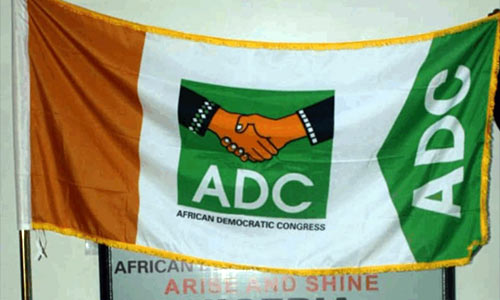
The African Democratic Congress (ADC) was relatively an unknown party in Nigeria until the amalgamation of opposition political heavyweights began to position it as a viable opposition platform for the 2027 elections, especially as concerns grew that the ruling APC intended to turn Nigeria into a one-party state.
The entire National Working Committee led by Chief Ralph Nwosu stepped down for the David Mark-led team to come on board, after which the ADC began gaining momentum. However, legal challenges soon followed.
The former presidential candidate of the party went to court, but his suit was dismissed on the grounds that it was an internal party matter. The Nafiu Bala Gombe matter appears to be an attempt to weaken the opposition ahead of the 2027 general elections.
It seems INEC and some judges are inadvertently aiding this process. However, this will not succeed because citizens must be allowed to have their voices heard.
5. INEC’S INTERPRETATION OF STATUS QUO ANTE BELLUM IN CA/ABJ/145/2026 (DAVID MARK VS NAFIU BALA GOMBE)
This has been a recurring issue among lawyers and institutions when court judgments are delivered. Each party tends to interpret rulings in a way that favours its position.
In the Labour Party matter, both Abure and Nenadi Usman claimed victory, yet INEC refused to act on the Supreme Court judgment.
In the ADC matter, following the decision of the party, David Mark’s name was already on INEC’s portal. Therefore, when the Court of Appeal ordered that the status quo ante bellum be maintained pending determination of the substantive suit, the correct interpretation is that David Mark should continue in office until set aside by a court.
INEC’s statement, signed by Mohammed Haruna, a National Commissioner, that it would not recognise either faction is, in my view, a flawed conclusion based on a wrong premise. This reflects a biased interpretation by the legal and political departments of INEC.
INEC should seek proper legal interpretation and avoid selective compliance that appears to favour the ruling APC.
CONCLUSION
Nigeria cannot be forced into a one-party autocracy. We therefore call on INEC, judicial officers, politicians, and other stakeholders to act responsibly and avoid actions capable of triggering lawlessness or unrest in the future.
INEC should review its decisions and allow David Mark to continue in office until a competent court decides otherwise.
The Author:
Dr. Obiajulu Uja, Esq
Professor of Practice in Corporate Law & Governance,
Leadership Analyst and Political Commentator
Writes from Abuja
07040000935
[A MUST HAVE] Evidence Act Demystified With Recent And Contemporary Cases And Materials

Available now for NGN 40,000 at ASC Publications, 10, Boyle Street, Onikan, Lagos. Beside High Court, TBS. Email publications@ayindesanni.com or WhatsApp +2347056667384. Purchase Link: https://paystack.com/buy/evidence-act-complete-annotation
______________________________________________________________________ “Enhance Legal Practice With Authoritative Reports” — Alexander Payne Offers Comprehensive Law Reports, Spanning Over A Century Of Nigerian Jurisprudence Interested buyers are encouraged to place their orders and enquiries via:
0704 444 4777, 0704 444 4999, 0818 199 9888
Website: www.alexandernigeria.com
Interested buyers are encouraged to place their orders and enquiries via:
0704 444 4777, 0704 444 4999, 0818 199 9888
Website: www.alexandernigeria.com