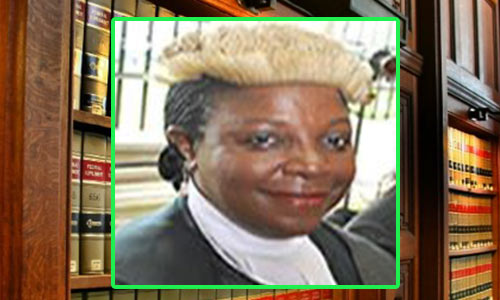
A judgment delivered by Justice U.N. Agomoh of the Federal High Court, Ibadan Division, on January 30, 2026, in Suit No. FHC/IB/CS/121/2025, has raised serious concerns about judicial overreach after the court effectively installed a leadership for the Peoples Democratic Party (PDP) without any party before it seeking such relief.

The case was brought by the Peoples Democratic Party (PDP) against the Independent National Electoral Commission (INEC) and several party officials, seeking orders to compel INEC to recognize the National Working Committee and National Executive Committee members elected at the PDP’s National Convention held in Ibadan on November 15–16, 2025.
The respondents were INEC (1st), Alhaji Mohammed Abdulrahman — Acting National Chairman (2nd), Senator Samuel Nnaemeka Anyanwu — National Secretary (3rd), Senator Mao Ohuabunwa — Chairman, Board of Trustees (4th), Hon. Austine Nwachukwu — PDP Chairman, Imo State (5th), Hon. Amah Abraham Nnanna — PDP Chairman, Abia State (6th), and Turnah Alabh George — PDP Secretary, South-South Zone (7th).
Justice Agomoh dismissed the application in its entirety and held that the PDP’s National Convention held in Ibadan on November 15–16, 2025 was conducted in total disregard of two subsisting judgments of the Federal High Court in Abuja — one by Justice Omotosho (Suit No. FHC/ABJ/CS/2120/2025, delivered October 31, 2025) restraining the conduct of the convention, and another by Justice Lifu (Suit No. FHC/ABJ/CS/2299/2025, delivered November 14, 2025) prohibiting INEC from supervising, monitoring, or recognizing the convention.
The court held that every action and decision purportedly taken at the convention is a nullity, and that the court, being a court of equity, will not act in aid of illegality by legitimizing the outcomes of a convention held in defiance of court orders.
However, the court went further to pronounce that “the Caretaker Committee set up by the applicant is the only lawful and legitimate body that can run the affairs of the PDP in the circumstances” and that “INEC is only bound to deal with the Caretaker Committee pending the conduct of a lawful convention where National Officers would be elected.”
Legal analysts have raised significant concerns about the judgment, noting that none of the parties before the court asked for the sacking of the Turaki-led executive, and none of the parties asked for the recognition of the Anyanwu-led faction or the Caretaker Committee.
The reliefs sought by the Applicant (PDP) were specifically about compelling INEC to recognize the officers elected at the Ibadan Convention and to update its records. There was no counter-claim or relief sought by any respondent asking the court to remove or invalidate the Turaki-led executive. Yet the judgment effectively strips them of legitimacy by declaring the entire convention a nullity.
Similarly, while Senator Samuel Anyanwu (3rd Respondent) filed a counter-affidavit, the record does not show that any party filed a counter-claim seeking the court to affirm the Caretaker Committee or the Anyanwu-led faction as the legitimate leadership. Yet Justice Agomoh went ahead to pronounce that the Caretaker Committee is “the only lawful and legitimate body” — effectively recognizing them without being asked to do so.
“Court Enthroned Leadership For A Political Party”
This is perhaps the most consequential critique. It is a well-established principle of Nigerian law that courts do not impose leadership on political parties. Political parties are voluntary associations, and their internal affairs are primarily governed by their constitutions.
The court’s role, especially on a mandamus application, should have been limited to determining whether INEC had a duty to act and whether it failed to act — not to determine who should run the party.
By declaring that INEC “is only bound to deal with the Caretaker Committee,” Justice Agomoh effectively installed a leadership that no party before the court asked for. This raises serious concerns about whether the court exceeded its jurisdiction by granting reliefs not sought and by making pronouncements on issues not properly before it.
Legal Principles Potentially Violated
The doctrine of ubi jus ibi remedium works alongside the principle that a court cannot grant what was not asked for. Nigerian appellate courts have consistently held that a court must confine itself to the reliefs sought by the parties. Granting unsolicited reliefs amounts to the court descending into the arena.
Additionally, the question of whether the Ibadan court can sit on appeal over judgments of coordinate courts in Abuja (Justices Omotosho and Lifu) is itself problematic. Justice Agomoh acknowledged these Abuja judgments but then used them as the basis to nullify the convention — arguably acting as an appellate court over decisions that were already on appeal at the Court of Appeal.
Grounds For Appeal
While the court had the right to refuse the reliefs sought (which it did), going further to declare the convention a nullity, enthrone the Caretaker Committee as the only legitimate body, and direct INEC on whom to recognize — all without being asked — appears to go well beyond the scope of the application before it. These are strong grounds for appeal.
[pdf-embedder url=”https://thenigerialawyer.com/wp-content/uploads/2026/02/PDP-AND-INEC.pdf” title=”PDP AND INEC”]
Counsel
E.Y. Ajayi Mrs. appeared for the Applicant. O.A. Adeyemi Esq. with F.A. Ajiboye Esq. appeared for the 1st Respondent (INEC). Chief Ferdinand O. Orbih SAN with Dr. J.Y. Musa SAN and Dike Udenna Esq. appeared for the 2nd, 3rd, and 4th Respondents. A.P. Igbayilola Mrs. holding the brief of Adedayo Adedeji SAN appeared for the 5th–7th Respondents.
[A MUST HAVE] Evidence Act Demystified With Recent And Contemporary Cases And Materials

Available now for NGN 40,000 at ASC Publications, 10, Boyle Street, Onikan, Lagos. Beside High Court, TBS. Email publications@ayindesanni.com or WhatsApp +2347056667384. Purchase Link: https://paystack.com/buy/evidence-act-complete-annotation
______________________________________________________________________ “Enhance Legal Practice With Authoritative Reports” — Alexander Payne Offers Comprehensive Law Reports, Spanning Over A Century Of Nigerian Jurisprudence Interested buyers are encouraged to place their orders and enquiries via:
0704 444 4777, 0704 444 4999, 0818 199 9888
Website: www.alexandernigeria.com
Interested buyers are encouraged to place their orders and enquiries via:
0704 444 4777, 0704 444 4999, 0818 199 9888
Website: www.alexandernigeria.com