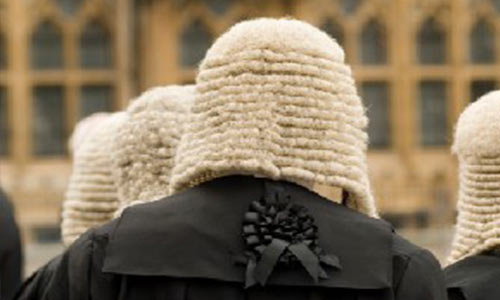
Judges in the United States who have issued orders or opinions citing fabricated, AI-generated legal authorities have largely escaped disciplinary consequences, according to a report published by Bloomberg Law and authored by Oliver Roberts of Washington University School of Law.

According to the report, there are now at least eight cases in the United States in which judges have issued orders or opinions citing AI-generated fabricated authorities. These cases span high-profile constitutional rights issues, multi-million-dollar securities litigation, and a murder conviction. In one case, the Georgia Supreme Court vacated a trial court’s AI-riddled order, while in a Mississippi case, the Fifth Circuit Court of Appeals is considering reassigning a case from a judge whose temporary restraining order was filled with fake citations of law and facts.
In July 2025, Mississippi-based US District Judge Henry Wingate issued an order enjoining an anti-DEI law that included incorrect plaintiff names, incorrect citations to the law, and fabricated case evidence. Around the same time in New Jersey, US District Judge Julien Xavier Neals issued an opinion in a biopharmaceutical securities case that included fake quotations and misstated the outcomes of cited cases, describing motions to dismiss as denied when they had actually been granted.
The report states that after the parties notified the judges of the errors, both quietly removed the error-filled orders from the docket, replaced them with corrected versions, and provided no explanation to the parties or the public. Months later, Senate Judiciary Committee Chairman Chuck Grassley (R-Iowa) wrote to both judges demanding answers. Wingate identified a law clerk’s use of Perplexity as the source of the errors, while Neals blamed a law school intern’s unauthorised use of ChatGPT. Both judges explained the errors as an inadvertently published “early draft” that failed to go through proper review. Neither faced punishment, and Grassley issued a statement commending both judges “for acknowledging their mistakes.”
Similar errors have affected state courts. In Georgia, a trial court denied a criminal defendant’s request for a new trial after she was sentenced to life in prison for murder, in an order filled with nonexistent cases and citations that did not support the propositions asserted. On appeal, the Georgia Supreme Court vacated the order after the prosecutor admitted she had misused AI in preparing her briefing and introduced fake citations into the record, which the trial court had relied upon. Despite both the judge and lawyer having committed similar misconduct, the Supreme Court only punished the lawyer, suspending her privilege to practice for six months and requiring additional legal education. The trial court judge faced no repercussions.
The report notes similar patterns of absent accountability in a Georgia divorce case in 2025, another Georgia civil case in 2026, and two family law cases in California. More recently, an Oklahoma state judge issued an order with two fake citations, and the matter was investigated.
Roberts cautioned that lack of accountability is only part of the problem, noting that judicial reliance on AI-generated fabrications may be far more widespread than the known cases suggest. Across the eight cases identified, the judges who issued the flawed orders did not catch the fabricated authorities themselves; the errors were identified by counsel or by appellate courts reviewing them. With some estimates placing the US appeal rate at just 12 percent, the report raises the question of how many other final orders and opinions containing fabricated citations remain in force, binding parties, because no one appealed or challenged them.
The risk is described as especially troubling for litigants without lawyers, with nearly 30 percent of federal civil cases filed in 2025 reportedly unrepresented. Such litigants, the report notes, may have little reason to suspect a judge’s order cites fake law, and may lack access to legal research databases to verify it. Roberts further warned that fabricated citations may be only the most visible errors, as an inaccurate summary of the record, a distorted description of precedent, or the omission of controlling authority can be harder to detect, yet affect outcomes just as seriously.
The report cites a Northwestern University study finding that more than 60 percent of surveyed federal judges reported using at least one AI tool in their judicial work, while 45.5 percent said court administration had not provided AI training, and a further 15.7 percent were unsure whether it had.
Roberts concluded that if the judiciary will not address these failures itself, state legislatures and Congress must step in, with disclosure requirements, verification safeguards, and meaningful consequences for misconduct serving as a starting point. He added that in the most egregious cases, impeachment may be warranted, stressing that judicial independence protects a judge’s authority to decide a case, but must not excuse the abdication of that responsibility.
The article carried a standard disclosure noting that it does not necessarily reflect the opinion of Bloomberg Industry Group Inc., the publisher of Bloomberg Law, Bloomberg Tax and Bloomberg Government, or its owners.
[A MUST HAVE] Evidence Act Demystified With Recent And Contemporary Cases And Materials

Available now for NGN 40,000 at ASC Publications, 10, Boyle Street, Onikan, Lagos. Beside High Court, TBS. Email publications@ayindesanni.com or WhatsApp +2347056667384. Purchase Link: https://paystack.com/buy/evidence-act-complete-annotation
______________________________________________________________________ “Enhance Legal Practice With Authoritative Reports” — Alexander Payne Offers Comprehensive Law Reports, Spanning Over A Century Of Nigerian Jurisprudence Interested buyers are encouraged to place their orders and enquiries via:
0704 444 4777, 0704 444 4999, 0818 199 9888
Website: www.alexandernigeria.com