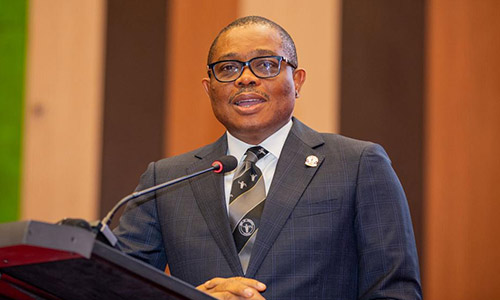
*Says “Imagine If The Chief Judge Of Every State Issues A Practice Direction Requiring Mandatory Age Determination And Consideration Of Diversion”

The Nigerian Bar Association and UNICEF have launched a partnership aimed at expanding access to pro bono legal services for vulnerable children across Nigeria, with both bodies committing to mobilise lawyers in every branch of the federation to represent children in contact with the justice system.
The launch took place at a high level stakeholders’ meeting in Abuja attended by the Attorney-General of the Federation and Minister of Justice, represented by a senior official of the Federal Ministry of Justice, as well as representatives of the Legal Aid Council of Nigeria, the Nigerian Law School, the Nigerian Correctional Service, the National Judicial Institute, the judiciary, law enforcement agencies, development partners and civil society organisations.
The President of the Nigerian Bar Association, Mazi Afam Osigwe, SAN, described the initiative as “more than the beginning of a partnership,” but “a reaffirmation of our collective commitment to ensuring that every child in Nigeria, regardless of circumstance or background, can access justice, protection, and effective legal representation.”
He noted that although Nigeria has made significant progress through the Child Rights Act and other child protection frameworks, countless children still face enormous barriers in accessing justice, particularly victims of abuse, trafficking, exploitation, harmful traditional practices, child marriage, neglect and violence, as well as children in conflict with the law.
Denying vulnerable children access to legal representation, he said, represents a collective failure of society and of the legal profession.
“As legal practitioners, we are not merely interpreters of the law; we are guardians of justice and defenders of the rights of the most vulnerable,” he said. “The legal profession carries both a privilege and a responsibility to ensure that those who cannot afford legal services are not excluded from the protection that the law provides.”
Osigwe said the collaboration seeks to translate that responsibility into concrete action by mobilising lawyers across the country to provide quality pro bono representation for children, strengthening referral pathways between justice and child protection actors, enhancing the capacity of practitioners to handle child sensitive cases, and promoting a justice system that places the best interests of the child at its centre.
He said the initiative aligns with the Association’s longstanding commitment to public interest law and contributes to Nigeria’s efforts towards the Sustainable Development Goals, particularly those relating to access to justice, strong institutions and the protection of children.
He commended UNICEF for its sustained commitment to strengthening child protection systems in Nigeria, recalling that discussions at the 2025 NBA Annual General Conference highlighted the urgent need to improve access to justice for children and laid the foundation for the present collaboration. He also acknowledged the roles of government institutions, the judiciary, law enforcement agencies, civil society organisations, development partners, legal aid providers and community based organisations, stressing that protecting children requires coordinated action from all stakeholders.
In an appeal to members of the profession, the NBA President called on every branch, law firm, Senior Advocate of Nigeria and young lawyer to embrace pro bono service for children as a defining professional responsibility.
“When a child survivor of abuse requires legal representation, let there be a lawyer ready to stand by that child. When a child is unlawfully detained or denied due process, let there be a lawyer ready to defend that child’s rights. When a child is subjected to trafficking, forced marriage, exploitation, neglect, or any form of violence, let a lawyer be willing to act.”
He said pro bono legal service is not an act of charity but an act of justice, adding that the true measure of the profession lies not only in commercial transactions or dispute resolution but in its willingness to protect society’s most vulnerable members and strengthen public confidence in the rule of law.
To institutionalise the initiative, he challenged every branch to establish or strengthen child focused pro bono schemes, encouraged law firms to dedicate professional time to child protection matters, urged Senior Advocates to mentor younger lawyers in child sensitive practice, and called on young lawyers to make pro bono service a defining feature of their professional identity.
He assured stakeholders that the Association would provide the leadership, coordination and institutional structures required to mobilise lawyers nationwide, strengthen professional capacity, facilitate referrals and expand access to quality representation for children.
“Years from now, when the story of child justice reform in Nigeria is written, let it be said that the Nigerian legal profession answered the call,” he said. “Let it be said that when vulnerable children needed champions, members of the Nigerian Bar Association stood up, stepped forward, and made justice accessible to those with nowhere else to turn.”
He urged lawyers to embrace the work not merely as a professional obligation but as a moral imperative, stressing that every child deserves a voice, protection and equal access to justice regardless of poverty, disability, geography or social circumstance.
Delivering the remarks of UNICEF, the Country Representative, Wafaa Saeed, thanked the leadership of the Association for its commitment and described the founding premise of the collaboration.
“Today marks the beginning of a partnership grounded in a simple but powerful principle: no child should be denied justice because they lack access to legal representation,” she said.
She said the partnership seeks to ensure that children in contact with the law are protected, represented and supported throughout the justice process, regardless of their background, location or economic circumstances.
Saeed located the right in international and domestic instruments, noting that access to justice is guaranteed under the Convention on the Rights of the Child, the African Charter on the Rights and Welfare of the Child, and Nigeria’s Child Rights Act. “Yet for many children, this right remains out of reach,” she said.
She set out the barriers. “Across Nigeria, children continue to encounter barriers when interacting with the justice system. Some find themselves in detention without legal representation. Others experience lengthy delays in case management, limited access to diversion opportunities, weak referral systems, and inadequate support services.”
She said the issue cannot be treated as a narrowly legal one. “At UNICEF, we firmly believe that access to justice is not simply a legal issue. It is a child protection issue, a development issue, and a matter of human dignity. Every child, whether a victim, survivor, witness, or child alleged to have committed an offence, deserves fair treatment, due process, and the opportunity to have their voice heard.”
The Country Representative said the Association’s reach makes it the right partner for the work.
“Through its extensive network of legal practitioners, professional structures, and continuing legal education platforms, the NBA can help institutionalise child sensitive legal representation and establish sustainable pathways for pro bono services across Nigeria,” she said, adding that the two bodies would work to strengthen the capacity of lawyers, improve referral pathways, support diversion and rehabilitation measures, and expand access to quality representation.
Saeed illustrated the stakes with three situations.
“Behind every statistic is a child whose future may depend on whether someone speaks for them, protects them, and ensures that their rights are respected,” she said.
She asked her audience to imagine a child who has spent months in detention for a minor offence for want of a lawyer to argue for diversion or alternative care, whose case is reviewed after a committed lawyer intervenes, and who is reunited with family and returns to school. “That intervention does more than resolve a legal matter. It restores hope and opportunity.”
She described a second case, of a young girl who survives abuse and is overwhelmed by fear, stigma and the complexity of the justice system, and who through dedicated representation gains access to protection services and pursues justice in a manner that respects her dignity and best interests.
She described a third, of a child accused of an offence who, “rather than being defined forever by one mistake,” receives child sensitive legal support, benefits from diversion and rehabilitation, and is given a second chance.
“They remind us that justice is not only about laws, procedures, or institutions. Justice is about children. It is about protecting rights, restoring dignity, and opening pathways to a better future.”
She set out the standard the partnership is aiming at. “We envision a Nigeria where every child has access to legal assistance from the earliest point of contact with the justice system; where lawyers, social workers, police officers, correctional personnel, and judicial officers work together seamlessly; where diversion and rehabilitation are prioritised whenever appropriate; and where the best interests of the child guide every decision.”
She stressed that the work cannot be carried by one institution. “Success depends on effective partnerships among government ministries, judicial institutions, law enforcement agencies, social welfare services, development partners, civil society organisations, the media, communities, and the legal profession.”
Saeed then addressed each set of actors in turn, inviting them to move beyond commitment towards action.
To the Bar, she said: “We look to your leadership in mobilising lawyers in every branch of the federation to champion pro bono legal representation for children and to make child justice an integral part of professional practice. Just imagine if every practising lawyer in each NBA branch handles a case pro bono on behalf of one child every year in Nigeria.”
To the judiciary, she urged continued promotion of child sensitive procedures, and put a specific proposal. “Just imagine what it would mean to justice for children if the Chief Judge of every State issues a Practice Direction to judicial officers in the state, requiring mandatory age determination and consideration of diversion measures if a child is brought before them for arraignment. Imagine.”
To the Legal Aid Council of Nigeria, law enforcement agencies, correctional services and social welfare authorities, she called for stronger coordination mechanisms, referral systems and multidisciplinary approaches. To government ministries and policymakers, she called for sustained investment in child justice reforms, implementation of child rights legislation, and the allocation of resources needed to take child friendly justice services to every part of the country. To development partners, civil society organisations, academic institutions and the media, she asked for support in generating evidence, raising awareness, strengthening accountability and promoting a national culture that places children’s rights at the forefront of justice sector reform.
She summed up the common objective. “Let us unite around a common vision: a Nigeria where no child faces the justice system alone; where every child has access to competent legal representation; where detention is truly a measure of last resort; and where every child can count on a justice system that protects rather than harms, rehabilitates rather than stigmatises, and empowers rather than excludes.”
In closing, the Country Representative said the initiative would be judged by outcomes rather than by the ceremony.
“It will be measured by the child who is reunited with family instead of remaining unnecessarily detained; the survivor who receives justice and protection; and the young person who is given a second chance through rehabilitation and reintegration rather than a lifetime of exclusion.”
She reaffirmed UNICEF’s commitment to supporting the Government of Nigeria, the Nigerian Bar Association and all partners in strengthening access to justice for children. “Together, we can build a justice system that is fairer, more responsive, and truly centred on the rights and wellbeing of every child. Let this partnership serve as a catalyst for lasting change and as a testament to our shared belief that every child deserves protection, dignity, and justice.”
The partnership is expected to strengthen child sensitive legal services nationwide by mobilising practitioners, improving collaboration among justice sector stakeholders, and ensuring that vulnerable children receive the legal support necessary to safeguard their rights.
[A MUST HAVE] Evidence Act Demystified With Recent And Contemporary Cases And Materials

Available now for NGN 40,000 at ASC Publications, 10, Boyle Street, Onikan, Lagos. Beside High Court, TBS. Email publications@ayindesanni.com or WhatsApp +2347056667384. Purchase Link: https://paystack.com/buy/evidence-act-complete-annotation
______________________________________________________________________ “Enhance Legal Practice With Authoritative Reports” — Alexander Payne Offers Comprehensive Law Reports, Spanning Over A Century Of Nigerian Jurisprudence Interested buyers are encouraged to place their orders and enquiries via:
0704 444 4777, 0704 444 4999, 0818 199 9888
Website: www.alexandernigeria.com
Interested buyers are encouraged to place their orders and enquiries via:
0704 444 4777, 0704 444 4999, 0818 199 9888
Website: www.alexandernigeria.com