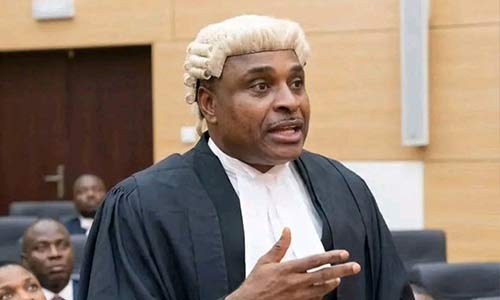
Actor-turned-politician and lawyer Kenneth Okonkwo has responded to the N5 billion defamation demand issued by Peter Obi’s lawyers by daring the NDC presidential candidate to proceed with the lawsuit, threatening to release “privileged information” he acquired as Obi’s campaign spokesman during the 2023 presidential election, and publishing alleged WhatsApp conversations that he said support his claim that Obi and NDC South-East leaders demanded N10 million from House of Representatives aspirants and N20 million from senatorial aspirants as a condition for securing party tickets.
However, lawyers have cautioned Okonkwo that his threat to divulge privileged information acquired in a fiduciary capacity could expose him to severe professional consequences, potentially destroying his career as a legal practitioner, and that the distinction between public information and confidential information acquired under the duty of his engagement as campaign spokesman could prove fatal to his defence if the matter proceeds to litigation.
In a statement shared on his social media platforms following reports that Obi’s legal team had issued a seven-day ultimatum demanding N5 billion in damages, a public apology, and a written undertaking to cease further defamatory publications, Okonkwo dismissed the demand with derision.
“It has been brought to my notice that there is a letter circulating online from the hypocrite, Peter Obi, and his Lawyers that I should pay him N5 billion. Hahaha!” Okonkwo stated.
“If Peter Obi is looking for money to campaign, he should privately ask me for assistance, not come from extortion, and I will help him. I did so when I was his Spokesperson, paying for my flight tickets and booking for my hotel accommodation to some of our campaigns,” he added.
Okonkwo said he had not yet read the legal letter but would respond formally after reviewing it.
The most legally significant aspect of Okonkwo’s response was his explicit threat to disclose information he described as privileged, acquired during his tenure as Obi’s campaign spokesman.
“Let me sound this note of warning, the Lawyers must take responsibility for any information I may have to divulge, which I acquired as a spokesperson, but which by my conscience I have not shared with anyone,” Okonkwo stated.
He elaborated on his approach to confidential information: “My principle is that I do not use any confidential information I share with anyone against the person except the person who becomes unintelligent enough to tow the line of foolishness.”
“Anyone who decides to sue his former Spokesperson for defamation is indeed very unwise,” Okonkwo warned.
He concluded by inviting the litigation: “It will be a shame to Peter Obi and his Lawyers if they do not take this case to court.”
In a series of posts on his X handle on Wednesday morning, Okonkwo went beyond rhetoric and published what he described as WhatsApp conversations between himself and one Obunike Ohaegbu, an NDC aspirant from Anambra State, which he said substantiated his allegations about Obi’s involvement in demanding payments from party aspirants.
Okonkwo wrote: “Obunike Ohaegbu, when I questioned him to prove that Peter Obi was responsible for demanding the N10 million from him and other HOR aspirants and N20 million from the Senate aspirants, he made it clear that when he confronted the party on who authorised the payment, the party named Peter Obi and the caucus leaders who were assembled by Peter Obi.”
He shared excerpts of the alleged chat in which Ohaegbu reportedly stated: “My brother, the entire NDC project, at least from my personal experience, has left me feeling deceived and profoundly disappointed. While other states, particularly Kano and several states in the North, appeared to be engaged in negotiations and consultations aimed at achieving consensus, neither I nor, to the best of my knowledge, any aspirant from Anambra State was invited to any meeting for the purpose of negotiating or agreeing a consensus arrangement.”
The alleged chat continued: “Consequently, I mobilised my supporters and participated fully in the primary election process in the belief that the outcome would determine the party’s candidates. This naturally raises a fundamental question. If no consensus meeting was held with the aspirants in Anambra State, and no agreement was reached amongst those seeking nomination, my brother Ken, how did your friend arrive at the list of candidates that he allegedly produced at Johnwood Hotel in Abuja?”
The most damning passage of the alleged chat stated: “Consensus, by its very nature, requires consultation, negotiation and agreement amongst stakeholders. Where there is no consultation, no negotiation and no agreement, there can be no consensus. If aspirants were directed to participate in primaries while candidate lists were allegedly being prepared elsewhere, then serious questions arise about the integrity of the entire process. If that is not fraud, then the word fraud must have another meaning.”
Okonkwo defended his decision to go public: “Let me make it clear that as a citizen and a Lawyer, I have a duty to disclose every crime against the state that comes within my knowledge. The South-East people have suffered enough. No human being can again take them or any citizen of Nigeria for granted or perpetrate any fraud against them without challenge.”
Legal practitioners who have commented on the dispute have cautioned Okonkwo that his threat to disclose privileged information acquired as Obi’s campaign spokesman carries profound risks to his professional standing and could cause him more harm than the defamation suit itself.
The concern centres on the distinction between public information, which anyone can freely discuss, and confidential or privileged information acquired in the course of a fiduciary relationship, which is subject to legal protections regardless of how the relationship ends.
As Obi’s campaign spokesman, Okonkwo occupied a position of trust that gave him access to internal campaign deliberations, strategic discussions, financial information, and other sensitive material that was shared with him on the understanding that it would be used for campaign purposes and not disclosed to third parties. The termination of his role as spokesman does not extinguish the duty of confidentiality that attached to the information he received in that capacity.
Under the Rules of Professional Conduct for Legal Practitioners, a lawyer owes a duty of confidentiality to clients and principals. Rule 19 provides that a lawyer shall not, during or after the retainer, disclose confidential information relating to the business of a client or principal without the client’s consent. While Okonkwo’s relationship with Obi was not strictly a lawyer-client relationship, it was a fiduciary relationship that carries analogous duties of confidence.
The concern expressed by lawyers is that if Okonkwo carries out his threat and discloses information that is properly classified as privileged or confidential, he could face disciplinary proceedings before the Legal Practitioners Disciplinary Committee (LPDC) for breach of professional ethics. The consequences could range from a reprimand to suspension or even striking off the roll of legal practitioners, effectively ending his legal career.
Furthermore, the disclosure of privileged information in the context of litigation could be challenged by Obi’s legal team as inadmissible, and any court hearing the defamation case could exclude such evidence on the grounds that it was obtained in breach of a duty of confidence. This would leave Okonkwo in the worst possible position: having disclosed sensitive information that damages his professional standing but is ultimately excluded from the evidence upon which the case is decided.
The lawyers have also pointed out that Okonkwo’s public announcement of his intention to disclose privileged information could itself be used against him. By stating publicly that he possesses confidential information and intends to use it as a weapon if sued, he has arguably demonstrated an intent to breach his duty of confidence, a fact that the LPDC or any court could take into account in assessing his professional conduct.
Okonkwo has sought to justify his actions by invoking his duty as a lawyer and citizen to report crimes. “As a citizen and a Lawyer, I have a duty to disclose every crime against the state that comes within my knowledge,” he stated.
This argument, while legally sound in principle, is a double-edged sword. A lawyer does have a duty to report criminal conduct that comes to his knowledge. However, that duty must be exercised through the appropriate channels, typically by reporting to law enforcement authorities or regulatory bodies, not by publishing allegations on social media or live television. The manner and forum of disclosure are as important as the substance of what is disclosed.
Moreover, the duty to report crime does not override the duty of confidentiality in all circumstances. Where information was acquired in a fiduciary capacity, the appropriate course is to report the alleged criminal conduct to the relevant authorities while preserving the confidentiality of the source material, not to broadcast it on social media alongside threats to reveal more if the person responds with legal action.
The WhatsApp conversations published by Okonkwo raise their own legal questions. If the conversations are authentic and Ohaegbu confirms their contents, they could provide a factual foundation for Okonkwo’s allegations, potentially supporting a defence of justification (truth) in any defamation proceedings.
However, the conversations, as published, do not directly attribute the alleged N10 million demand to Obi personally. Ohaegbu’s alleged statement is that “when he confronted the party on who authorised the payment, the party named Peter Obi and the caucus leaders.” This is hearsay within hearsay: Ohaegbu is reportedly telling Okonkwo what “the party” told him about who authorised the payment. Whether this chain of attribution would satisfy the evidential standard for a defence of justification in a defamation case remains to be tested.
The alleged chat also raises a question about Ohaegbu’s own willingness to testify. If the matter proceeds to court, Okonkwo would need Ohaegbu to confirm the authenticity of the conversations and potentially testify as a witness. Whether Ohaegbu, who remains an NDC aspirant, would be willing to testify against the party’s presidential candidate is uncertain.
Okonkwo’s concluding invitation for Obi to proceed with litigation suggests he is not seeking to avoid the courtroom but actively welcomes it, either because he is confident in his evidence or because he calculates that the threat of disclosing privileged campaign information will deter Obi from following through.
The seven-day ultimatum in Obi’s legal letter, dated June 9, 2026, gives Okonkwo until approximately June 16 to comply with the demands for withdrawal, apology, and N5 billion in damages. If Okonkwo does not comply, Obi’s lawyers have stated they will file suit “without further recourse.”
The stage is set for what could become one of the most high-profile defamation cases in Nigeria’s 2027 election cycle, pitting a presidential candidate against his former campaign spokesman, with allegations of bribery, threats of privileged disclosures, WhatsApp evidence, and N5 billion in claimed damages all in play.
Neither Peter Obi nor his legal team has publicly responded to Okonkwo’s counter-statements or the publication of the alleged WhatsApp conversations. Ohaegbu has not publicly confirmed or denied the contents of the conversations attributed to him.
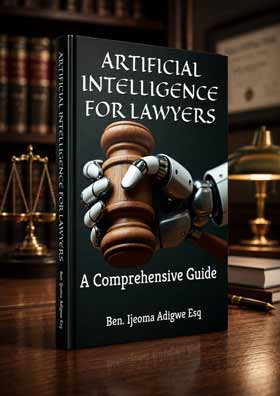 The book also examines Nigeria's legal ecosystem, focusing on the LPELR and NBA AI Guidelines. As a bonus, every purchase comes with a FREE eBook titled: How to Use the AI Features in LegalPedia and LawPavilion.
Ohio Books Ltd praises the publication, stating:
"....this is the only Nigerian book I know of on the topic."
How to Order:
📞 Call, Text, or WhatsApp: 08034917063 | 07055285878
📧 Email: benadigwe1@gmail.com
🌎 Website: www.benadigwe.com
Ebook Version: Access it directly online at https://selar.com/prv626
Authored by Ben Ijeoma Adigwe Esq., ACIarb (UK), LL.M, Dip. in Artificial Intelligence, Director at the Delta State Ministry of Justice, Asaba, Nigeria.
______________________________________________________________________
[A MUST HAVE] Evidence Act Demystified With Recent And Contemporary Cases And Materials
The book also examines Nigeria's legal ecosystem, focusing on the LPELR and NBA AI Guidelines. As a bonus, every purchase comes with a FREE eBook titled: How to Use the AI Features in LegalPedia and LawPavilion.
Ohio Books Ltd praises the publication, stating:
"....this is the only Nigerian book I know of on the topic."
How to Order:
📞 Call, Text, or WhatsApp: 08034917063 | 07055285878
📧 Email: benadigwe1@gmail.com
🌎 Website: www.benadigwe.com
Ebook Version: Access it directly online at https://selar.com/prv626
Authored by Ben Ijeoma Adigwe Esq., ACIarb (UK), LL.M, Dip. in Artificial Intelligence, Director at the Delta State Ministry of Justice, Asaba, Nigeria.
______________________________________________________________________
[A MUST HAVE] Evidence Act Demystified With Recent And Contemporary Cases And Materials

 Interested buyers are encouraged to place their orders and enquiries via:
0704 444 4777, 0704 444 4999, 0818 199 9888
Website: www.alexandernigeria.com
Interested buyers are encouraged to place their orders and enquiries via:
0704 444 4777, 0704 444 4999, 0818 199 9888
Website: www.alexandernigeria.com