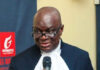
* Justice Muhammad’s confirmation has created image and credibility problems for the senate and the judiciary

There are clear issues of fitness and requisite qualification for the serious job of the Chief Justice of any country. Sadly, in the confirmation hearing of Mr Tanko Muhammad as the Chief Justice of Nigeria (CJN), the new Senate leadership, headed by Ahmed Lawan, may have missed the import of its responsibility and the national significance of the position under consideration. At the end, a great disservice was done to the nation.
First, the Senate must recognise the enormity of its responsibility especially when it comes to confirmation hearings for nominations from the executive branch. The object of these hearings is first to reassure the public that persons nominated for these appointments meet the criterion of ‘fit and proper persons’. In addition, such nominees must possess the appropriate requisite qualifications in a proven manner. Such hearings, except in cases requiring strict national security confidentiality, must be open and publicly broadcast. A situation such as this case in which the hearing was conducted literally in camera leaves the credibility and transparency of the senate and its leadership in serious question.
Secondly, we are dealing with the position of the headship of the Supreme Court and indeed the entire judiciary in our country. The apex court is the ultimate determinant of questions of justice in the land. Beyond it, the next level of appeal is to God! Therefore, the right of every citizen to justice, the entire principle of rule of law and equality before the law which are fundamental to the existence of a democratic order reside in the Supreme Court. Minimally then, the leadership of that court and indeed the judiciary must inspire in the citizenry and the international community a certain confidence derivable from the meritocratic rigour of their selection process.
Clearly, both the manner and standards of Justice Muhammad’s confirmation by the Senate have created doubts as to his fitness for this all important position. By implication, the quality of judgments that are likely to be delivered by the Supreme Court under him may now depend on the weighted knowledge of the other judges of the court rather than on the knowledge or competence of the CJN. Given what transpired at the confirmation hearing, based on the video evidence that is now circulating on social media, the Senate should be ashamed for the hasty confirmation of a CJN who betrayed a pathetic lack of understanding of simple legal jargons.
Relying on a previous position of the Supreme Court that ‘technicality in the administration of justice shuts out justice’ as opposed to a recent decision of the same court that relied on technicality to arrive at their judgment, a Senator had sought to know Justice Muhammad’s view on this contradiction and how the apex court would fare under him. The response by Justice Muhammad has left many Nigerians bewildered: “Now, if something which is technical comes before the court, what we do in trial courts is to ask people who are experts in that field to come and testify. We rely on their testimony because they are experts in that field. Ask me anything about an aeroplane, I don’t know; ask me to drive an aeroplane (sic), I am sure if you are a passenger and they told you that the flight is going to be driven (sic) by Honourable Justice Ibrahim Tanko Muhammad, I am sure you will get out of the plane because it is something that requires technicality….”
The case of the CJN has poignantly brought to the fore the lack of rigour in the appointment and promotion of judges among other issues bedevilling the judicial system. As part of the reform that is now most urgent, greater attention should be paid to how judges are appointed and their career progression. The salutary lessons to be learnt from the spectacle at the senate confirmation of the CJN should be at the heart of a national conversation on the underdevelopment of the judicial arm of government. All this while, the discussion has been mainly on the corruption in the sector. Incompetence is also glaringly an issue.
The present culture of a mere chronological ascension to the crucial office of the number one officer in the judicial sector should be interrogated in an informed manner. From his embarrassing performance at the senate, Justice Muhammad is clearly incapable of articulating any philosophy (right, left or centre) for the Supreme Court under his watch. Above everything else, there is an overarching moral burden built into the office of CJN. That burden is made heavier when the incumbent is publicly adjudged unqualified and compromised in the manner of his confirmation. More worryingly, a CJN who has such serious difficulty in distinguishing between the concept of technicality in law and the technical nature of piloting an air plane obviously does not justify the confidence of those who nominated him let alone meet the needs and standards of Nigeria in 2019.
Quote
The case of the CJN has poignantly brought to the fore the lack of rigour in the appointment and promotion of judges among other issues bedevilling the judicial system. As part of the reform that is now most urgent, greater attention should be paid to how judges are appointed and their career progression.
Culled from Thisday Editorial
[A MUST HAVE] Evidence Act Demystified With Recent And Contemporary Cases And Materials

Available now for NGN 40,000 at ASC Publications, 10, Boyle Street, Onikan, Lagos. Beside High Court, TBS. Email publications@ayindesanni.com or WhatsApp +2347056667384. Purchase Link: https://paystack.com/buy/evidence-act-complete-annotation
______________________________________________________________________ “Enhance Legal Practice With Authoritative Reports” — Alexander Payne Offers Comprehensive Law Reports, Spanning Over A Century Of Nigerian Jurisprudence Interested buyers are encouraged to place their orders and enquiries via:
0704 444 4777, 0704 444 4999, 0818 199 9888
Website: www.alexandernigeria.com
Interested buyers are encouraged to place their orders and enquiries via:
0704 444 4777, 0704 444 4999, 0818 199 9888
Website: www.alexandernigeria.com