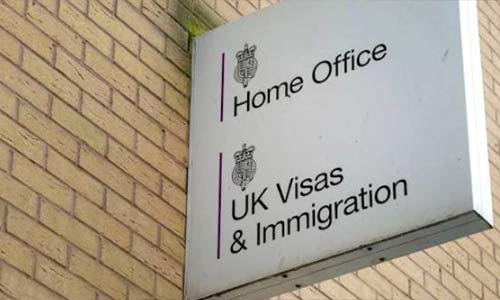
The United Kingdom Government has unveiled a sweeping overhaul of its immigration rules, introducing major changes that tighten visa requirements, expand deportation powers and reshape the framework governing work, study, family, visitor and sponsor-related migration routes.

The changes are contained in the Statement of Changes HC 259, laid before Parliament on July 9, 2026, and ordered to be printed by the House of Commons. The 38-page document amends 42 sections of the UK Immigration Rules and introduces new provisions affecting migrants, employers, educational institutions, sponsors and foreign nationals seeking entry into or permission to remain in the UK.
Under the implementation schedule, changes relating to Appendix EU and Appendix EU Family Permit will take effect on July 30, 2026, while all other amendments will come into force on August 3, 2026.
However, applications for entry clearance, Electronic Travel Authorisation, permission to enter, permission to stay or administrative review submitted before August 3, 2026, will be decided under the previous rules in force as of August 2, 2026.
One of the most significant changes concerns deportation. The new rule provides that foreign nationals convicted on or after March 22, 2026, who receive suspended prison sentences of 12 months or more will be treated the same way as persons sentenced to immediate custody for the purpose of deportation.
This means that where a foreign national receives either a custodial sentence or a suspended sentence of at least 12 months, the public interest will require deportation unless narrow exceptions relating to private life, family life or human rights apply.
The change also affects the ETA and Child Student routes, where the word “suspended” has now been inserted after “custodial” in provisions dealing with previous sentences. This gives the Home Office power to refuse entry clearance or travel authorisation on the basis of suspended sentences in the same way as custodial sentences.
The new rules also introduce a more standardised and stricter approach to overstaying and immigration bail across several visa routes.
Across about 30 immigration appendices, the Home Office has replaced route-specific wording with a uniform requirement that applicants seeking permission to stay must not be in breach of immigration laws, except where the overstaying exceptions under Part Suitability apply. Applicants must also not be on immigration bail, except where the same exceptions apply.
The affected routes include Skilled Worker, Global Business Mobility, Scale-Up, Start-Up, Innovator Founder, Representative of an Overseas Business, Minister of Religion, Government Authorised Exchange, Global Talent, Student, Child Student, Parent of a Child Student, Graduate, Visitor, Youth Mobility Scheme, Long Residence, Private Life, Adult Dependent Relative and Settlement Family Life.
There are, however, route-specific variations. Under the Hong Kong BN(O) route, immigration bail may be disregarded where the applicant was placed on bail after making an asylum claim in the UK. Under Appendix ECAA, the restriction applies to conduct occurring after 11:00 p.m. on December 31, 2020.
The UK Government has also amended its asylum rules to allow the Secretary of State to omit a personal interview where the applicant is an EEA or Swiss national and the Home Office can determine from the application papers that the claim is clearly unfounded.
The rule further clarifies that failure to conduct a personal interview will not prevent the Secretary of State from making either a positive or negative decision on the asylum application.
In the Skilled Worker route, the changes alter how future 2027 and 2028 salary rules will apply. Instead of focusing only on the date of application, the amended provisions will consider whether the Certificate of Sponsorship used for the application was issued by the employer before the relevant cut-off date.
The Scale-Up route has also been amended to ensure that neonatal leave is recognised alongside parental leave when assessing employment continuity, meaning neonatal absences will not unfairly affect qualifying workers.
Under Appendix FM, new child protection provisions have been inserted to make clear that arrangements for a child’s care and accommodation in the UK must fully comply with relevant UK law.
The Visitor route has also been amended to introduce an administrative exemption for nationals of India holding valid diplomatic passports issued by India.
The changes further introduce a requirement for the Secretary of State to review immigration regulations every five years and demonstrate that regulatory burdens imposed on businesses, educational institutions or community organisations cannot reasonably be achieved through less restrictive measures.
In a related update, the UK Government has also updated its list of countries whose nationals require a visa to enter or transit through the UK.
The updated list, published on July 10, 2026, includes countries across Africa, Asia, the Middle East, South America, Central America, the Caribbean and Europe.
Nigeria is among the affected countries, alongside Afghanistan, Albania, Algeria, Angola, Bangladesh, Belarus, Botswana, Burundi, Cameroon, China, Colombia, Congo, Democratic Republic of Congo, Egypt, Ghana, India, Iran, Iraq, Jamaica, Kenya, Lebanon, Libya, Pakistan, Russia, Rwanda, Senegal, Sierra Leone, Somalia, South Africa, Sudan, Syria, Tanzania, Turkey, Uganda, Vietnam, Yemen, Zimbabwe and others.
The implication is that nationals of listed countries must obtain the appropriate visa before entering or transiting through the UK, except where specific exemptions apply.
The latest immigration overhaul marks one of the most wide-ranging updates to the UK’s migration framework in recent years, with major consequences for foreign nationals, employers, students, families, sponsors and asylum applicants.
[A MUST HAVE] Evidence Act Demystified With Recent And Contemporary Cases And Materials

Available now for NGN 40,000 at ASC Publications, 10, Boyle Street, Onikan, Lagos. Beside High Court, TBS. Email publications@ayindesanni.com or WhatsApp +2347056667384. Purchase Link: https://paystack.com/buy/evidence-act-complete-annotation
______________________________________________________________________ “Enhance Legal Practice With Authoritative Reports” — Alexander Payne Offers Comprehensive Law Reports, Spanning Over A Century Of Nigerian Jurisprudence Interested buyers are encouraged to place their orders and enquiries via:
0704 444 4777, 0704 444 4999, 0818 199 9888
Website: www.alexandernigeria.com
Interested buyers are encouraged to place their orders and enquiries via:
0704 444 4777, 0704 444 4999, 0818 199 9888
Website: www.alexandernigeria.com