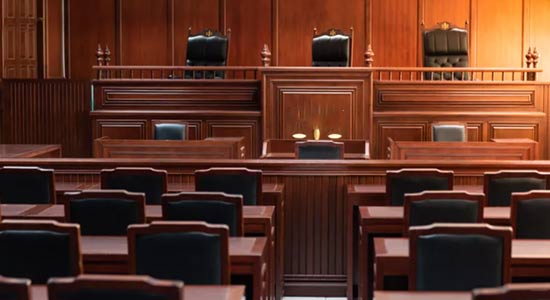
Tension reportedly erupted inside a military facility in Abuja on Tuesday after civilian lawyers representing alleged coup plotters refused an order by a military tribunal directing them to appear in wigs and gowns before defending their clients, in a development that has further deepened concerns surrounding the secretive proceedings being conducted within a restricted military venue with limited public access.

The standoff inside the military facility came at the same time that, in a related development, the Federal High Court in Abuja on Monday played a video recording of Sheikh Sani Abdulkadir, the sixth defendant in the ongoing trial of persons accused of allegedly plotting to overthrow the government of President Bola Tinubu, in which the Islamic cleric admitted that he received money for prayers linked to the alleged operation while insisting he had warned the plotters that their plan would collapse.
Sources familiar with the proceedings disclosed that the lawyers challenged the directive of the military tribunal, insisting that the tribunal lacked the authority to impose dress requirements arbitrarily, particularly in what they described as a controversial and secretive military trial involving civilians and weighty constitutional questions.
According to the sources, the disagreement created a tense atmosphere inside the restricted military venue where several individuals accused of involvement in an alleged coup plot are currently standing trial away from public scrutiny.
The situation reportedly escalated after tribunal officials allegedly threatened to eject the defence lawyers from the courtroom if they refused to comply with the dress code directive.
However, the lawyers reportedly stood their ground, maintaining that legal representation should not be subject to what they considered arbitrary conditions that could undermine the defendants’ rights.
A source privy to the proceedings said: “The standoff reportedly escalated after tribunal officials threatened to eject the lawyers from the venue if they failed to comply with the directive. Despite the threats, the lawyers maintained their position and challenged the legality of the order.”
Sources said the development further deepened concerns already surrounding the ongoing proceedings, which are being conducted within a military facility with limited public access.
The standoff raises fundamental questions about the propriety of trying civilians before a military tribunal in the first place, the rules of procedure applicable to such proceedings, and the extent to which a military tribunal can impose dress requirements on civilian lawyers admitted to the Nigerian Bar and entitled to appear before any court or tribunal in Nigeria.
The defence lawyers’ position that the tribunal lacks the authority to impose dress requirements arbitrarily touches on the broader question of whether the military tribunal trying the alleged coup plotters is itself operating within its constitutional and statutory mandate, and whether the rights of the civilian defendants to a fair hearing are being safeguarded in proceedings that are being conducted away from public scrutiny.
The standoff at the military facility unfolded against the backdrop of a firm position already taken by the National Executive Council (NEC) of the Nigerian Bar Association (NBA), at its meeting held on Thursday, 7 May 2026 in Awka, Anambra State, where it unanimously objected to the requirement that civilian legal practitioners appearing before Courts Martial must appear robed.
The Council considered the letter dated 27 April 2026 addressed by the NBA President to the Chief of Army Staff concerning the directive contained in a recent Convening Order establishing a Court Martial to try officers and men accused of plotting a coup against the Federal Government.
NEC noted the position that the requirement compelling civilian lawyers appearing before Courts Martial to wear robes lacks legal foundation under existing Nigerian law and constitutes an unwarranted extension of the Rules of Professional Conduct for Legal Practitioners.
The Council observed that Rule 79 of the Rules of Procedure (Army) 1972 merely addresses the categories of persons qualified to appear before a Court Martial and is silent on the mode of appearance or dress code of counsel appearing before such tribunals.
NEC further noted that the regulation of the professional conduct and appearance of legal practitioners in Nigeria falls exclusively within the purview of the General Council of the Bar pursuant to the Legal Practitioners Act and the Rules of Professional Conduct for Legal Practitioners.
The Council emphasised that Rule 45 of the Rules of Professional Conduct specifically prescribes the courts before which legal practitioners are required to appear robed, namely the High Courts, the Court of Appeal, and the Supreme Court, and that the deliberate mention of these courts necessarily excludes other tribunals and bodies not expressly listed.
NEC therefore agreed that there is no legal basis for extending mandatory robing requirements to appearances before Courts Martial, particularly when legal practitioners do not appear robed before several constitutionally recognised tribunals and quasi-judicial bodies.
The Council reaffirmed the position that while Courts Martial remain recognised courts established under the Armed Forces Act, such recognition does not automatically import the procedural and ceremonial requirements applicable to superior courts of record under the Constitution where the governing rules of professional conduct provide otherwise.
In adopting the position, NEC called on the Nigerian Army to immediately review and withdraw the aspect of the Convening Order mandating civilian lawyers appearing before Courts Martial to be robed.
The NBA NEC’s position is buttressed by an intervention by human rights lawyer, Mr. Femi Falana, SAN, who in a public statement titled “Why Lawyers Cannot Robe Before Military Courts” set out the legal basis for the objection.
Falana SAN noted that notwithstanding the strident opposition to the setting up of a military court to try the alleged coup plotters, the military authorities had been allowed to convene a General Court Martial for the trial of the 36 military officers accused of attempting to overthrow President Bola Tinubu — but pointed out that in the Convening Order issued on April 23, 2026, Major General A.M. Alechenu had prescribed a mode of dress for the prosecutors and defence counsel that are to appear before the General Court Martial.
Specifically, Item 9(g) of the Convening Order states: “All officers are to wear No 4 dress (or equivalent) while soldiers are to wear No 5 dress (or equivalent) throughout the duration of the court. All civil lawyers are to be robed. However, serving officers who are lawyers have the option of either wearing No 4 (or equivalent) or being robed.”
In Falana SAN’s view, in light of the fact that the directive is completely at variance with the Rules of Professional Conduct for Legal Practitioners 2023, the military authorities should jettison it.
Anticipating that the position might be ignored by the military authorities, Falana SAN drew the attention of legal practitioners, including military prosecutors, who are to appear before the General Court Martial, to Rules 8(5) and 45 of the Rules of Professional Conduct for Legal Practitioners, which stipulate as follows:
Rule 8(5): “An officer in the Armed Forces who is a lawyer may discharge any duties devolving on him as such officer and may appear at a Court Martial as long as he does so in his capacity as an officer and not as a lawyer.”
Rule 45(2): “A lawyer shall not wear the Barrister’s or Senior Advocate’s robe (a) on any occasion other than in Court except as may be directed or permitted by the Bar Council.”
Falana SAN warned: “In view of the clear and unambiguous provisions of the Rules of Professional Conduct for Legal Practitioners in Nigeria, defence counsel and military prosecutors who may be robed before the General Court Martial stand the risk of being dragged before the Legal Practitioners Disciplinary Committee for professional misconduct.”
In a related development, the Federal High Court in Abuja on Monday played a video-recorded statement of Sheikh Sani Abdulkadir, the sixth defendant in the ongoing trial of persons accused of allegedly plotting to overthrow the government of President Bola Tinubu.
The recording, presented during proceedings before Justice Joyce Abdulmalik of the Federal High Court of Nigeria, showed the Islamic cleric admitting that he received money for prayers linked to the alleged operation, while insisting he warned the plotters that their plan would collapse.
The video was played while the fourth prosecution witness (PW4) remained in the witness box, as the prosecution continued to build its case against the six defendants standing trial over allegations of conspiracy to stage a military takeover.
In the recording, Abdulkadir said he had known the alleged ringleader, identified as Colonel Maaji, for less than a year.
He told investigators he was introduced through an intermediary known as Sanda, who allegedly requested spiritual assistance for the success of a planned coup.
The cleric’s admission that he received money for prayers linked to the alleged operation while insisting he had warned the plotters that their plan would collapse places him at an unusual intersection of the prosecution’s case: a defendant who acknowledges receipt of money but seeks to characterise his role as that of a sceptical spiritual consultant rather than an active participant in the alleged plot.
The simultaneous unfolding of the two developments the wig-and-gown standoff inside the secret military tribunal on Tuesday, and the playing of Sheikh Abdulkadir’s video statement before Justice Joyce Abdulmalik at the Federal High Court on Monday — highlights the parallel forums in which persons accused of involvement in the alleged plot against President Tinubu’s government are being tried.
On one hand, the Federal High Court is conducting a public, open trial in line with the constitutional guarantees of fair hearing and public adjudication enshrined in Section 36 of the 1999 Constitution. On the other hand, the military tribunal is conducting proceedings inside a restricted military facility, away from public scrutiny, and with civilian lawyers facing threats of ejection over a dress code directive.
The defence lawyers’ insistence that the tribunal lacks the authority to impose arbitrary dress requirements is, at its core, a challenge to the broader framework within which the secret military proceedings are being conducted a framework that civil society groups, human rights advocates and members of the legal profession have already raised concerns about.
The position of the NBA National Executive Council and the intervention by Mr. Femi Falana, SAN, provide the institutional and jurisprudential backing for the stance taken by the civilian lawyers inside the military facility on Tuesday: that there is no legal basis under the Rules of Professional Conduct for Legal Practitioners for civilian lawyers to be compelled to robe before a Court Martial.
As of the time of filing this report, the standoff over the wig-and-gown directive inside the military facility was yet to be resolved, and the prosecution was continuing to build its case against the six defendants at the Federal High Court.
The unfolding proceedings both before Justice Joyce Abdulmalik at the Federal High Court and before the military tribunal at the restricted military facility will continue to attract the attention of the legal profession, civil society and the wider public, given the weighty constitutional questions involved and the gravity of the charges against the defendants.
[A MUST HAVE] Evidence Act Demystified With Recent And Contemporary Cases And Materials

Available now for NGN 40,000 at ASC Publications, 10, Boyle Street, Onikan, Lagos. Beside High Court, TBS. Email publications@ayindesanni.com or WhatsApp +2347056667384. Purchase Link: https://paystack.com/buy/evidence-act-complete-annotation
______________________________________________________________________ “Enhance Legal Practice With Authoritative Reports” — Alexander Payne Offers Comprehensive Law Reports, Spanning Over A Century Of Nigerian Jurisprudence Interested buyers are encouraged to place their orders and enquiries via:
0704 444 4777, 0704 444 4999, 0818 199 9888
Website: www.alexandernigeria.com
Interested buyers are encouraged to place their orders and enquiries via:
0704 444 4777, 0704 444 4999, 0818 199 9888
Website: www.alexandernigeria.com