Child’s Right Activist, Debo Oladinni, Esq., has said that the average Nigerian child has become an endangered specie, and that it is high time a state of emergency is declared.

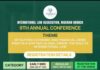
Debo Oladinni made this statement in a speech delivered at the 2019 Annual International Federation of Women Lawyers, Ekiti State branch, on Wednesday, 19th June, 2019, at the Aare Afe Babalola Bar Centre, High Court, Fajuyi, Ado-Ekiti, Ekiti State.
Quoting Chief (Mrs) Victoria Awomolo, SAN, and speaking on the topical issue: ”Child Labour: A bane to economic and social development in the society”, the Activist stated that the statement that children at leaders of tommorow is fast running into oblivion.
SPEECH DELIVERED BY DEBO OLADINNI, ESQ AT THE 2019 ANNUAL INTERNATIONAL FEDERATION OF WOMEN LAWYERS- FEDERACION INTERNACIONAL DE ABOGADAS (FIDA), EKITI STATE BRANCH, ON WEDNESDAY, 19TH JUNE, 2019 AT THE AARE AFE BABALOLA BAR CENTRE, HIGH COURT, FAJUYI, ADO-EKITI, EKITI STATE
By a letter dated 25th May, 2019, duly signed by Oluwaseyi Ebenezer (Mrs), Secretary, International Federation of Women Lawyers- Federacion Internacional De Abogadas (FIDA) Week Committee, I was invited to serve as one of the panellists to share my thoughts on the topical issue: “Child Labour: A bane to economic and social development in the society”, in commemoration of the 2019 Annual FIDA Law Week, Ekiti State Branch. I initially planned to speak extempore on this mind boggling issue, as I was informed that the time allotted to me to air my views was between five to ten minutes, but upon reading the thought provoking, highly cerebral and sumptuous paper prepared by the erudite, astute, intelligent and distinguished Lead Presenter, Chief (Mrs) Victoria Awomolo, SAN, I considered it pertinent, most humbly, to pen down my thoughts on the economic and social problems affecting the society, occasioned by the menace of child labour.
I must immediately confess that I had the utmost privilege of receiving the soft copy of this lecture on Friday 14th June, 2019, and upon opening this well-researched presentation, I digested the resplendent and mind enriching information contained therein and ruminated over the salient issues raised by the distinguished learned Silk. Without regurgitating the content of the illuminating presentation of Chief (Mrs) Victoria Awomolo, SAN, as she has extensively covered the field, in relation to the topic, I will attempt to succinctly highlight some key issues addressed in her presentation. She commenced her presentation with a brief introduction, stating the truism that children are the leaders of tomorrow and any society which neglects the rights, education and social development of its children runs the great risk of succumbing to underdevelopment, as children are regarded as the greatest human asset of any nation. Sadly, I must state that this recurring cliché that ‘children are the leaders of tomorrow’ is vanishing into oblivion. An issue which should serve as a grave cause for concern for all stakeholders, as stated in her presentation is fact that about 105 million children are out of school in Nigeria, with about 43 percent engaged in one form of child labour or the other. Furthermore, while scavenging the internet for useful information, I discovered that the 2015 International Labour Organization World Report on Child Labour stated that about 168 million children are trapped in Child labour globally, while there are 75 million young persons aged 15 to 24 years of age, who are unemployed and many more who must make do with jobs that fail to offer a fair income, security in the workplace, social protection or other basic decent work attributes. Also, the National Bureau of Statistics (NBS) 2017 Multiple Indicator Cluster Survey (MICS) stated that about 50.8 percent of Nigerian children, between the ages of 5 and 17, are involved in child labour, with the North Central having the highest percentage of child labour of 56.8 per cent, followed by the North-West accounting for 55.1 per cent. The South- South recorded 48.7 per cent; South-East -46.6 per cent, and South-West- 38 per cent, respectively. Furthermore, the MICS also captured the percentage of children working in hazardous conditions in the country and identified the North Central as accounting for the highest number with 49.6 per cent followed by the North West with 41.9 per cent; South-South 37.9 per cent; South- East 36.1 per cent; North-East 34.1 per cent and South-West 25.4 per cent. The said survey was conducted in conjunction with other partners, including the National Primary Health Care Development Agency (NPHCDA) and the United Nations Children Fund (UNICEF).
Thereafter, Chief (Mrs.) Adegboyega Awomolo, SAN proceeded to state the various definitions of who a ‘child’ is, as encapsulated by different legislations such as the Labour Act, Criminal Procedure Act, Children and Young Persons Act and the Child Rights Act, 2003. The Child Rights Act 2003 defines a ‘Child’ as any person under the age of 18 years and by virtue of Section 274 of the Act, the provisions of the Act supersede the provisions of other enactments relating to children. The Act has been domesticated in 24 States out of 36 States in Nigeria. She subsequently discussed in great detail the issues pertaining to Child labour; the types of Child labour; the socio-economic factors contributing to Child labour (such as poverty, globalisation, insecurity, absence of social security schemes, corruption in the educational sector etc.); the impact of Child labour at the micro family level; Child labour as a bane to socio-economic development; the concrete steps that can be taken by the Government at all levels to eradicate Child labour. Furthermore, she dovetailed into the issue of Child labour and human trafficking, and basically considered the provisions of Sections 15 (a), 16 and 23 (1) of the Trafficking in Persons (Prohibition, Enforcement and Administration) Act 2003. Unequivocally, she condemned the ‘culture of silence or condonation of evil’ exhibited by individuals, stakeholders and the Government, with respect to Child labour or abuse related cases, lamenting that only an infinitesimal number of such cases have been taken to court due to disposition of the Nigerian society in general to Child labour matters. However, Chief (Mrs.) Awomolo, SAN applauded the National Agency for the Prohibition of Trafficking in Persons (NAPTIP) for taking steps to stem the ugly trend of human trafficking. The learned Silk cited the recent decision of the Court of Appeal (Ibadan Judicial Division) in Titilayo Folorunsho v. Federal Republic of Nigeria (2019) LPELR 46463 (CA), wherein, the Court of Appeal condemned in strong terms, the unwholesome practice of procuring persons for prostitution as follows:
“From the evidence before the lower Court, the learned trial Judge was right in drawing from evidence the inescapable conclusion that the Appellant along with others procured Abidemi Opeyemi Adesina to be used for prostitution in Libya. Anyone who for the sake of lucre, deliberately sold his fellow human being into servitude either within or outside the country deserves nothing but outright condemnation. From the shores of their native land, the helpless victims are transported (as in the horrible epoch of slave trade in the olden days) to a cold and pitiless world, a world with neither joy nor freedom. Therein they are forced to contend with very inhuman and degrading conditions and challenges such as prostitution and forced labour. Such culprits are glorified vultures in the image of human beings.
The Appellant has failed to show any reason why we should upturn the decision of the lower Court. The appeal lacks merit and it is accordingly dismissed. The judgment of the lower Court delivered on the 26th September, 2016 is hereby affirmed”.
In concluding her highly educative discuss, Chief (Mrs.) Victoria Awomolo, SAN made several recommendations, including but not limited to the need to provide easy access to qualitative and affordable education for the Nigerian child; the need for stakeholders to make concerted efforts to ensure that the Child Rights Act, 2003 is strictly enforced to the letter to protect the rights of all children, as failure to enforce same would not augur well for the future of Nigeria. In the words of a consummate, astute, intelligent, highly cerebrally and distinguished legal practitioner, Chief Wole Olanipekun, OFR, SAN (my Principal), in a lecture titled: “Human Trafficking and the Challenges of the African Child” (the 3rd series of the Dorcas Oke Hope Alive Initiative-DOHAL), delivered on 27th July, 2013, wherein he enthused as follow with respect to protecting and securing the future of the African child:
“We cannot afford to live in a society where human trafficking thrives; where our children are under the threat of the shackles of modern day slavery and sold as commodities. The responsibility to put an end to human trafficking is on each and every African parent; we must launch a crusade against this scourge to create a protective environment for the African child and re-consecrate the roles of children in our society. The family being the very foundation and fabric of any nation must be strengthened. The government, law enforcement agencies, judiciary, employers’ and workers’ organisations, NGOs and other civil societies both internationally and regionally as well as nationally must work in partnership to curtail this dreadful and destructive plague afflicting the African child. Together, we can choose to make the African child grow up in a safe society free from violence, exploitation, poverty and discrimination.”
To my mind, the average Nigerian child has become an ‘endangered specie’, and it is high time we declare a ‘state of emergency’ in fighting frontally, the issue of Child labour. Respectfully speaking, we must stop paying lip service to the issues relating to Child labour; the statistics churned out by the National Bureau of Statistics (NBS) and other international bodies have shown that rather than the percentage of children involved in Child labour decreasing, it has only skyrocketed at an alarming rate. It is time for all individuals, stakeholders, and the Government to take the bull by the horn, and go back to the drawing board to re-strategise. Can we revisit the recommendations contained in the National Action Plan for the Elimination of Child Labour in Nigeria (2013-2017), packaged by the Federal Ministry of Labour and Productivity; and implement the said recommendations, in order to salvage the future of the Nigerian child? The said National Action Plan can be readily accessed on the internet, and I want to indulge all persons present at this august occasion to take time to study the Plan, as contained therein, are the solutions to drastically reducing Child labour in Nigeria to the barest minimum. The Nigerian Labour Congress (NLC), Trade Union Congress (TUC), Nigeria Employers’ Consultative Association (NECA), Faith Based Organizations, Network against Child Trafficking, Abuse and Labour (NACTAL), International Labour Organization (ILO), United States Department of Labour (USDOL) etc. all made inputs into the National Action Plan. In my estimation, that is the best blueprint to guide the fight against Child labour. The Plan addressed thematic areas such as: policy, legal and enforcement framework, institutional arrangement; prevention; educational and vocational skills acquisition, treatment of Child labour victims etc.
I cannot conclude my address, without appreciating most sincerely, Prof. Adejoke Oyewunmi, a distinguished and erudite lecturer of the Faculty of Law, University of Lagos for providing me with an avalanche of materials in relation to Child labour, which have enriched my mind on the issue.
Thank you for listening. God bless you all.
Debo Oladinni, Esq, Ado-Ekiti, 19th June, 2019
 Reimagine your practice with the power of AI “...this is the only Nigerian book I know of on the topic.” — Ohio Books Ltd
Authored by Ben Ijeoma Adigwe, Esq., ACIArb (UK), LL.M, Dip. in Artificial Intelligence, Director, Delta State Ministry of Justice, Asaba, Nigeria.
Bonus:
Get a FREE eBook titled “How to Use the AI in Legalpedia and Law Pavilion” with every purchase.
Reimagine your practice with the power of AI “...this is the only Nigerian book I know of on the topic.” — Ohio Books Ltd
Authored by Ben Ijeoma Adigwe, Esq., ACIArb (UK), LL.M, Dip. in Artificial Intelligence, Director, Delta State Ministry of Justice, Asaba, Nigeria.
Bonus:
Get a FREE eBook titled “How to Use the AI in Legalpedia and Law Pavilion” with every purchase.
How to Order: 📞 Call, Text, or WhatsApp: 08034917063 | 07055285878 📧 Email: benadigwe1@gmail.com 🌐 Website: www.benadigwe.com
Ebook Version: Access directly online at: https://selar.com/prv626
______________________________________________________________________ "You Don't Need To Be Rich, You Just Need To Start" — Victoria Ezeigwe, Esq Launches Investment Handbook For Nigerians Starting With ₦5,000
Get your copy today and take the first step toward financial growth:
_______________________________________________________________________ [A MUST HAVE] Evidence Act Demystified With Recent And Contemporary Cases And Materials
 _______________________________________________________________________