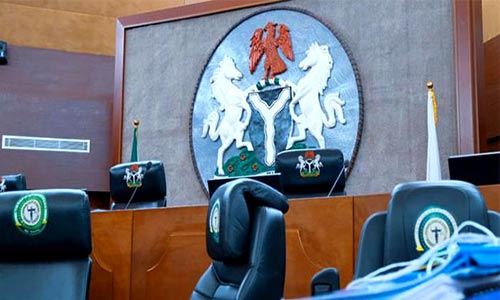
The Supreme Court has restored sections 77(5), 77(6), 77(7) and 84(2) of the Electoral Act 2026, in a unanimous judgment delivered on Thursday by a seven-member panel led by Honourable Justice Adamu Jauro in appeal No. SC/CR/495/2026.

The decision reversed the judgment of the Court of Appeal of 16 July, which had declared the disputed provisions unconstitutional. The apex court had heard the appeal by the Independent National Electoral Commission on 16 September, following the dismissal by the Federal High Court of a challenge brought by the Zenith Labour Party.
The restored provisions require political parties to submit their membership registers to the commission within the stipulated period and to use those registers for their primaries, while section 84(2) provides for direct primaries or consensus in the nomination of candidates.
What The Judgment Left Open
While the judgment did not automatically invalidate nominations already concluded, it is not clear which of the provisions could apply to individual candidates and primaries, leaving the commission with a significant implementation question and raising the prospect of fresh litigation ahead of the 2027 elections.
The uncertainty is sharpest in relation to primaries already conducted, and particularly where candidates defected from one party to another before securing their tickets.
Among those whose nomination processes could attract scrutiny are the former Inspector-General of Police, Mr. Mohammed Adamu, who emerged as the Social Democratic Party governorship candidate in Nasarawa State through a substitution primary; the former Minority Leader of the House of Representatives, Hon. Kingsley Chinda, who emerged as the All Progressives Congress governorship candidate in Rivers State; and Senator Saliu Mustapha, who defected from the APC to the Peoples Democratic Party before picking the party’s senatorial ticket for Kwara Central.
None of the candidates was specifically disqualified by the judgment.
Gombe: A Fresh Primary Ordered
The former Minister of Communications and Digital Economy, Mr. Isa Pantami, is at the centre of a separate dispute, after a Federal High Court sitting in Gombe nullified the Peoples Democratic Party primary that produced him and ordered the party to conduct a fresh exercise.
The court made the order on 24 September, nullifying the primary of 26 May 2026 and directing that a fresh exercise be held within 30 days. He had emerged from the earlier primary through voice affirmation after defecting from the All Progressives Congress, and his emergence was challenged by another aspirant, Mr. Usman Garry.
The party has fixed 29 September for the fresh governorship primary in the state.
Its Public Relations Officer in Gombe, Mr. Abdulkadir Dukku, said all eligible delegates had been directed to assemble at their respective wards.
“All eligible delegates are hereby directed to assemble at their respective ward areas to participate in the exercise and vote for the aspirant of their choice,” he said.
The party urged its members, supporters and well-wishers to cooperate with the arrangements, and called on participants to conduct themselves peacefully and in an orderly manner and to comply with the guidelines for the exercise.
Osun Senator Rejects Reports Of Disqualification
The Senator representing Osun East, Mr. Olubiyi Fadeyi, on Saturday dismissed suggestions that the judgment had ended his re-election bid.
In a statement issued in Osogbo, he said the process by which he became the Peoples Democratic Party candidate for the 2027 poll adhered strictly to the Constitution and the Electoral Act, and attributed the reports to political opponents he said were unsettled by his popularity.
“For clarity’s sake, there is no clear evidence of Fadeyi’s disqualification from any court sitting; hence, the report of his alleged disqualification remains speculative and unfounded,” the statement read.
“The process to bestow the PDP ticket on Senator Fadeyi for a second term in office is clear, legal and approved by all relevant party executives. The PDP followed the provisions of electoral law, and everything was done in accordance with the law and the party’s laid-down rules.”
He added that the question of his candidacy remained an internal affair of the party, and that it had been duly affirmed that he was its authentic candidate.
“It Does Not Affect Any Nomination At All”
A Senior Advocate of Nigeria and former Attorney-General and Commissioner for Justice of Kwara State, Mr. Salman Jawondo, said the judgment does not touch nominations that have already been concluded.
He said it was a general interpretation of the law and could not by itself empower the commission to delist candidates whose nominations were complete.
“It does not affect any nomination at all. INEC needs a fresh court pronouncement to delist them. Some people must complain before INEC can act,” he said.
He said the judgment could not retrospectively invalidate completed electoral processes, and that any challenge would have to be brought by a person with the requisite standing and within the applicable timeframe.
“As at the time the nomination was made, there was no such effect. It does not take effect on any previously done process. The judgment is generic and it is just an interpretation of the law,” he said.
He added that a person challenging a nomination must be an aspirant and must file the action within 14 days of the occurrence being challenged.
“If you go to court to challenge those nominations, you cannot use the judgment on Thursday to challenge those nominations. So, in effect, anyone going to court is just wasting his or her time,” he said.
“The Only Thing That Can Disqualify You Is The Constitution”
Another Senior Advocate of Nigeria, Mr. Bolaji Ayorinde, said the decision creates no fresh basis for disqualifying candidates and does not disrupt the preparations of political parties, describing it as a restatement of the constitutional framework governing eligibility.
“I think the Supreme Court is being consistent and they have just restated the law as it should be. They are trying to protect the rights of parties to contest elections,” he said.
“There is no controversy with the judgment. It only gives the opportunity for aspirants to go and become candidates so that everybody will have a chance. It is a welcome decision.”
He argued that the Electoral Act cannot be applied in a manner that displaces the constitutional qualifications for elective office.
“The only thing that can disqualify you as a candidate is the Constitution, not even the Electoral Act. As long as you are within the Constitution, you are protected. I don’t see the judgment creating any problem,” he said.
He urged the commission to implement the judgment in a way that would not disenfranchise candidates or parties.
“The judgment does not affect the preparation of parties for the election. What do politicians do apart from prepare? They are all on the field. What is important for INEC is to make sure that everybody has a chance,” he added.
“No Factual Finding On Their Register Status”
The Chairman of the Nigerian Bar Association, Ikirun Branch, Osun State, Mr. Abdulkareem Azeez, said the judgment does not automatically invalidate the candidacies of politicians who defected to new parties.
He said the Supreme Court affirmed the constitutional validity of the provisions without making factual findings on the membership status, primaries or defection timelines of individual candidates.
“No, the judgment does not automatically invalidate anyone’s candidacy. It only affirms that Sections 77(5) to (7) and 84(2) of the Electoral Act 2026 are constitutionally valid,” he said.
He noted that the candidates whose movements preceded their primaries were not parties to the suit, and that the court did not determine whether any of them appeared on the relevant party register within the period prescribed by law.
“There was no factual finding on their register status, primary conduct or defection timing,” he said.
According to him, the commission will have to apply the restored provisions to the circumstances of individual candidates, with disputed cases ultimately falling to the courts. The questions arising could include whether a candidate’s name appeared on the relevant membership register at least 21 days before the primary, whether the primary complied with the law, and whether any issue of double participation arose.
He added that whether the restored provisions can have retrospective effect would itself depend on the facts of each case.
The Commission Is Silent
Calls to the Chief Press Secretary to the Chairman of the commission, Mr. Adedayo Oketola, did not connect. The commission’s Director of Voter Education and Publicity, Mrs. Victoria Eta-Messi, said she would revert with a response but had not done so as at press time.
[A MUST HAVE] Evidence Act Demystified With Recent And Contemporary Cases And Materials

Available now for NGN 40,000 at ASC Publications, 10, Boyle Street, Onikan, Lagos. Beside High Court, TBS. Email publications@ayindesanni.com or WhatsApp +2347056667384. Purchase Link: https://paystack.com/buy/evidence-act-complete-annotation
______________________________________________________________________ “Enhance Legal Practice With Authoritative Reports” — Alexander Payne Offers Comprehensive Law Reports, Spanning Over A Century Of Nigerian Jurisprudence Interested buyers are encouraged to place their orders and enquiries via:
0704 444 4777, 0704 444 4999, 0818 199 9888
Website: www.alexandernigeria.com
Interested buyers are encouraged to place their orders and enquiries via:
0704 444 4777, 0704 444 4999, 0818 199 9888
Website: www.alexandernigeria.com