*”People Became Governors Not By The Will Of The People But By Declaration Of Court” — Sunusi Musa, SAN, On Zamfara, Bayelsa And Rivers

A Senior Advocate of Nigeria, Dr. Monday Ubani, has said that while the Constitution and the Electoral Act both permit the courts to intervene in electoral disputes, the judiciary has no power to substitute its own choice for that of the electorate, and that the real controversy is not whether courts may intervene but how far that intervention may go.
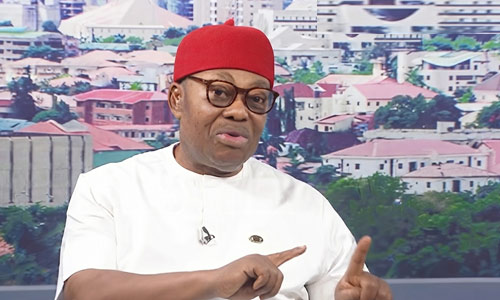
He spoke on a Channels Television morning programme examining why elections declared by the Independent National Electoral Commission are sometimes overturned in court, alongside another Senior Advocate, Mr. Sunusi Musa, who joined from Kano, and the election expert of the Nigeria Civil Society Situation Room, Mr. Austin Aigbe.
The discussion ranged over the 2003 Anambra contest between Dr. Chris Ngige and Mr. Peter Obi, the Rivers State case between Mr. Rotimi Amaechi and Mr. Celestine Omehia in 2007, the Imo State case decided in 2020, and the Bayelsa and Zamfara decisions.
The senior advocate began by settling the threshold question.
“Is there a basis for judicial intervention in electoral dispute? And I say yes, there is, because the Constitution itself allows it. The Electoral Act allows the court to intervene when there is an electoral dispute. But the only problem is, what is the extent of that intervention?”
He set out the statutory position. Under section 140(1) and (2) of the Electoral Act, where an election dispute arises and the court finds that the person declared winner by the commission is not entitled to that declaration because votes counted were manipulated or wrong, the court has a duty to recount and determine who obtained the majority of lawful votes.
“Let us assume there are two contestants. One is declared, and another goes to court to challenge it. Suppose you scored five million as the person declared winner, and the other person who has gone to court scored four million. But the court found out that of the five million, two million of those votes were manipulated, were wrong. The court under section 140(2) has a right to declare the man who scored four million as the winner.”
Where, however, the court finds that neither party deserves a declaration, he said, it may invalidate the declaration and order that the parties return to the people within 90 days for a fresh election. “That’s what the law says.”
The difficulty, he said, lies in the departures from that scheme.
“But we have seen aberrations, aberrations like Amaechi’s case, and we have seen aberrations in most of the cases people have mentioned. And that is where people are now expressing concern. Are we now allowing the court to determine the sovereignty that is supposed to be given to the people who have a right to make a choice?”
“It is not as if the court has no right. The court has a right on the basis of the legal framework. But to what extent? And it is that extent that people are contesting. Are we not giving too much power to the court now to decide who should govern?”
He said the function of a court in an electoral dispute is to examine the process rather than the choice.
“What the court comes to do is to examine the process itself through which somebody has emerged. Is it proper? Is it valid? If it is not valid, then the court has a right to make a pronouncement that it is not valid, that it did not follow the normal process. That is what the court does. The court has no right whatsoever to substitute the will of the people. So knowing the extent of their power is where we must emphasise.”
Applying that to the Rivers case, he said: “Why would the court now say that because the person has a right to be on the ballot, he should be the one declared winner, even though a winner has emerged? What the court should have done is to ask both parties to go back to the electorate. Let the electorate now make a choice. But what the Supreme Court did was to say that the man who ought to have been on the ballot was now the winner, even though he did not in any way appear before the electorate to make that choice. So the court made a choice.”
“The court must know the limit of the powers that the law has given to them, so that they don’t exercise it wrongly and then begin to get criticism from members of the public,” he said. “Let the electorate be the one to do that, and not the court.”
On sanctions, the senior advocate said the absence of a dedicated prosecuting authority explains why offenders escape with little consequence.
“People have been advocating that there must be a special commission, a special body that will actually deal with electoral malfeasance, and not INEC, which has been saddled with the responsibility of conducting elections. We have not been able to resolve that issue, and that is why people are getting a slap on the wrist even when it is proven that they have committed grave misconduct in the electoral process.”
Pressed on where responsibility for low turnout and lost confidence lies, the senior advocate located the problem not in the courts but at the collation centre, and gave an account of his own experience in 2023.
“I was the collation agent in 2023. Before I entered that particular hall where election results were being collated, I had already collected all the polling unit results from the agents. I told them they must get it to me, and they got it to me. I was the only collation agent in that collation centre that had results.”
“So the other parties were putting pressure on the INEC person to alter the result at the collation centre. But he said, Mr. Ubani has the results already. What am I going to do? If I do, he’s going to contest it, because he has a result.”
“In other words, if I didn’t have that result, the INEC man there was ready.”
He described a further incident from the same exercise. “There was a girl that collected two million naira from a political party in order to alter the result. Eventually the security men swooped on her and she was thoroughly beaten up that day, and she was able to refund part of the money in my presence. I saw that happen in 2023.”
His conclusion was directed at the commission. “If INEC in Nigeria today wants to conduct a free, fair and credible election and get it right, everyone will want to participate in our electoral process. It happens all over the world.”
Asked whether judicial intervention has eroded voter confidence, he declined to agree.
“You are putting me on the witness box, but I need to carry out a poll,” he said, adding that any contribution was “maybe very insignificant.”
“What we have found out over time is that Nigerians lost confidence with the electoral process, with the outcome, mostly at the collation centre. What is cast at the polling unit does not reflect when it gets to the collation centre.”
He recalled the expectations attached to technology. “If you remember the election of 2023, many Nigerians came from all over the world in order to participate in the process, because they believed that with the introduction of technology we would now get it right. But then the technology failed us in 2023.”
“So it is not necessarily the judicial interpretation of the electoral outcome. It is actually the process through which election results are announced. If we can really tidy up the election between polling unit and collation centre, which is where the problem is, Nigerians will begin to have confidence in the electoral process.”
“Even when you want to go to court, you know you’re going to lose, because the result has been announced properly in accordance with what took place,” he said. “The polling unit is the most important place in the electoral process, with Form EC8A.”
On what the commission should do next, he called for the full deployment of technology.
“Look at what is happening in other nations that are getting it right. The introduction of technology in the electoral process goes a long way. You minimise the intervention of human persons because of the issue of corruption.”
“We introduced the BVAS, which now makes it easier to know those who will be accredited. So the issue of bringing persons who do not participate in the electoral process to be part of the result will not be possible any more with BVAS. Now the next is electronic transmission. We all agree that we can transmit this result, and it is going to help those at the collation centre to know what has taken place at the polling unit. I don’t know the reason why we are running away from it. Other nations are using it and it is working out for them.”
“Then the next stage, after we have gone through this process, is electronic voting,” he said, acknowledging resistance. “Sometimes the conservatives in the entire system will want us to go back to Egypt.”
“But I tell you this: the moment technology is fully implemented in our electoral process, I can assure you that the issue of voter apathy will disappear. The issue of the choice being made by the people will be settled, and going to court will reduce considerably. Nobody will want to go to court, because it is free, it is very credible and it is very fair.”
Confronted with the risk that artificial intelligence could be used to clone faces and voices, he replied: “We cannot, because the bush is very terrible, run away from hunting.”
On electoral offenders, the senior advocate described what he says he has witnessed.
“Do you know that if a political party finds out that another political party is winning in a polling unit, they organise thugs to disrupt the process, making sure that the result is not announced there and it is cancelled? And you see it with your eyes, and they get away with it.”
“I have seen a situation where ballot boxes were being snatched and we were pursuing. I remember that election in 2019 in Abia State where we were pursuing INEC officials, because they would go and change it before getting to the collation centre. If you saw how we were driving that day, that I didn’t die. I have never seen anything like this.”
“So my take is this. We must be a serious nation. We must get to the level where we say this is not right and we cannot allow this to continue. Whoever commits any electoral misconduct must be brought to book. We must punish offenders. That is the only way a nation prospers, that is the way a nation can progress.”
“It happens in other nations. People do not commit crime in those countries because there is enforcement of the law. We must enforce our law. Why must you come and disrupt the electoral process? Who are you? Are you the owner of the nation? So we must stop all this nonsense. Let all of us get angry.”
For his part, Mr. Sunusi Musa, SAN, said the same body of law authorises both the vote and its review.
“I stand by the law, and when I say I stand by the law, it is the law that empowers people to vote, and it is also the law that empowers the court to see whether the result declared by INEC is in accordance with the provision of the law. These two things, in my own opinion, go hand in hand.”
“It is normal, when there is an election, if somebody feels that the result is not in accordance with the law, that they should be allowed to challenge it in a court of law.”
He explained why petitions are brought at all. “In the 2015 election, when a candidate truly believes he lost an election based on the wish of the people, he will not even go to court. What you have is a situation whereby, if people refuse to come out to vote, the politicians will allocate the votes, and the other person will see that this is not truly the wishes of the people, because I have a record of the number of people that came out and this is not what happened. So that is why the law said, go to court and prove that what was declared is not according to the wishes of the people.”
The senior advocate raised a case he said had been omitted from the presenter’s list.
“One very peculiar state that you did not mention is Zamfara State. If you check the history, Zamfara consistently from 1999 have been rejecting PDP. Even when their sitting governor decided to become PDP, when the election came they voted out PDP. But from nowhere in 2019, after they voted for a particular party, the Supreme Court decided that all those who were elected by the majority of the votes should not be the ones to rule the people according to the wish of the people, but decided to give it to PDP, that did not even meet the requirement of the Constitution on the spread of votes.”
“You get concerned when you see things like that,” he said, adding: “Even if the court reached a decision that APC had no candidate at that election, the justice of the case is for it to order a new fresh election, so that you give the people the chance to choose.”
On limits, he drew a distinction he said is often missed.
“Where in an election petition it is found that the person declared winner did not win the majority of lawful votes cast, what the court ought to do is not that he is disqualified from contesting the election, because that is different.”
He accepted the Imo result on that footing. “It was an issue whereby there was exclusion of the results of about 300-plus polling units, and when they were added, the person who came fourth came first. That is, the court can declare a winner there.”
But where a petitioner says he was lawfully nominated and unlawfully excluded, he said, the position is different. “The court cannot declare him winner of the election. What the court will do is to tell them to return to the public, for the electorate to decide who is the winner.”
On Zamfara, he said the court found the votes cast in favour of the party and applied the doctrine of wasted votes. “Fine. Now if it applied to them, does that mean that you now declare somebody a winner? More so, that person is not a party in that case, because that case was a pre-election matter. Can you use a pre-election matter to declare a winner of an election without taking away the responsibility of the election petition tribunal?”
“I am of the view that a pre-election judicial process should not be used in declaring any person a winner of any election. The normal post-election judicial process should be the parameter.”
He said of the three cases: “Zamfara, Bayelsa and Rivers State. I think, with all respect, the people have the right to express their concern, because these were places where in my own opinion people became governors not by the will of the people but by declaration of court.”
He nonetheless objected to the general proposition that votes do not count, and blamed the press for it.
“I want to blame the press for always trying to make the people believe that the vote of the people doesn’t matter because the court decides. I don’t think it’s a fair assessment. Out of the 36 state governorship elections, I don’t think there is any state where the losers do not approach the court. So if out of that only one or two succeed in court, I don’t think it is right to say that the generality of the votes did not count, because it is just one or two instances where the court decided, while in the rest the court aligned with what was declared.”
Asked whether judicial intervention has produced voter apathy, he was unequivocal. “I don’t agree. I will never agree to that. There is no empirical evidence that shows that the decision of the court is the cause of voter apathy. The reason for voter apathy is the fact that people believe that even if they vote, the politicians and the security agents will connive to rig the election. That is where the problem is.”
He added that no presidential election has ever been reversed. “To the best of my knowledge, there has never been a time that the Supreme Court reversed a presidential election. It happened in 2007, when it was clear that the election was conducted without valid ballot papers, that the Supreme Court decided to uphold the election for public interest, not because the winner emerged through the legal process.”
To test the claim properly, he said, one would have to compare turnout trajectories in the affected states rather than nationwide figures.
Answering a viewer who asked why the electoral umpire was not permitted to validate results that originated from it, the senior advocate explained the evidential position in the Imo case.
“When the candidate brought the results, by law, when the forms are filled, the first copy goes to one place and the second goes to the police. He summoned the police to bring their own record of the forms given to them, and that was what was used in counting.”
“Now, when INEC said the results were fabricated, what was expected of INEC was to bring the authentic one. They only said the result was fabricated, but they did not produce any other result to counter it. So do you now want the court to just believe? Fine, we agree it is fabricated. Where is the authentic one that you claim is contrary to this one?”
He added that the petitioner proved that the serial numbers on the Form EC8A series produced by the police tallied with the serial numbers of the forms issued by the commission for those polling units.
The election expert, Mr. Austin Aigbe, framed the problem structurally.
“We have this consistent challenge where a ballot is no longer decided where the action of the candidate takes place,” he said, accepting that parties have a right to approach the court where they feel there has been an infraction, manipulation or suppression of votes, while insisting that “the people with a mandate should determine the course of action.”
He corrected a common assumption. “First, is to recognise that even though votes are cast at the polling unit, no winner is declared at the polling unit. There needs to be a collation process until a final winner emerges. So you cannot say that because you won at your polling unit, you have won an election.”
“But the greatest bane in our electoral system is the collation process, which we have seen as the opaque system where people can actually win at the polling unit and the result of that polling unit does not materialise at the collation point.”
He explained the safeguard that exists on paper. “The law says where there are infractions the returning officer can decide not to accept that result. The number of ballot papers issued, the number used, the valid results, including rejected and void ballots, must all tally with the total number of ballot papers issued. Where there are inconsistencies resulting in over-voting, that returning officer at collation can declare that result null and void.”
“That is what happened in Osun in 2018. But in any case, politicians know what to do. They prepare ahead.”
Unusually among the panel, the election expert defended the Rivers decision.
“For me, a pre-election case is even more constitutional than the electoral tribunal cases,” he said. “Party primaries took place. The Constitution of this country does not provide for independent candidates. The internal affairs of the party are solely the affairs of the party, and the Supreme Court has pronounced on that.”
“But when a party drops a candidate and ends up sending another name to INEC, INEC cannot interfere in that party’s operation, and goes ahead to use that name for the election. On the ballot on the day of election, there is no Amaechi on that ballot. There is no Celestine Omehia. Yes, it is true that Amaechi did not participate, he did not bring his face to the public to be voted for, but the people voted the party, and it is the party that won.”
“When you are declaring an election, they say PDP scored this vote, APC scored this vote. The candidate is mentioned by reason of who truly sponsors a candidate, and it is a party.”
On Imo, however, he was critical. “The chart used to decide the winner in Imo was a chart presented by the party. Why did the court not ask INEC to review the results? Why use the chart of the party presented to the Supreme Court? That is where the bane is.”
He said the same logic covered Bayelsa, where the issue concerned the credentials of the deputy governorship candidate, and that in both Rivers and Bayelsa the removal of the votes of the party in contention altered the arithmetic of the constitutional requirement of a quarter of the votes in two-thirds of the local government areas.
Asked whether judicial intervention has eroded confidence, he answered that it has.
“It does. It’s a perception, and perception is reality,” he said, later insisting on the qualification: “Please underline the words ‘one of the reasons’.”
“We have enough examples. A politician will tell you, don’t worry, declare, let them go to court. They are relying on the court processes to manipulate, with the idea of technicalities and all manner of judicial pronouncements. People have been forgiven their sins by joining the party, because the court processes will drop when you are with us.”
“There is enough jurisprudence, there is enough academic work that has justified that there is a judicialisation of elections, that judicial pronouncements are contributing to the problems in the electoral system. I am not saying it is the problem. It is one of the problems, among other things.”
He added the perception point about Zamfara: “Even though it doesn’t concern you, the fear is that if it happened in Zamfara, it can happen anywhere.”
The election expert produced the turnout data on which much of the discussion turned.
“In 1999 the voter turnout was 52.3 per cent. The highest we ever had was in 2003, where we had 69.1 per cent of voters turning out to vote. In 2007 it dropped to 57.5 per cent. In 2011 it dropped to 53.7 per cent. In 2015 it dropped by 10 per cent to 43.7 per cent. In 2019 it was 34.8 per cent, and in 2023, 28.6 per cent, which is about 25 million voters out of 93.5 million registered.”
He then cautioned against the figures themselves. “Those data we continue to talk about, low voter turnout, in my opinion they are not the facts, because there are dead people on those ballots. There are people registered just for the purpose of getting a national identity card, to go and register or have a bank account. All of those make up the list. In my strongest view, we are not up to 100 million voters ahead of the 2027 election.”
In the sharpest exchange of the programme, the election expert questioned the incentives operating on the lawyers in the room.
“My guy here said there will no longer be court processes. I’m sure by the time he leaves here his colleague lawyers will be telling him, so you want to take the food out of our mouth? Because the court process, particularly the Supreme Court appearance, is what gets you easier to the Senior Advocate of Nigeria level.”
“I have asked a politician, why are you going to court? The politician told me, I want my name to be ringing each time the case is mentioned in court, the media will take it. That is why we are discussing people today, those who went to court. Some knew they didn’t win the election, but they went to court, because the court process has become another level of campaign.”
“And I asked, whatever the amount you are paying? He said, don’t worry, my lawyers are taking it freely. I had to speak to some lawyers. That was when I knew. I am not a lawyer. He told me that every lawyer is interested in getting their name to the Supreme Court, that if you get Supreme Court appearances for a period of time, you can easily earn yourself that rank, a very distinct position in that profession. But the question is, at whose expense?”
He added: “And the electoral cases are the fastest to take you there.”
Invited to respond, the senior advocate replied: “You want me to answer that? You are putting me in the witness box.”
The election expert’s proposed remedy placed the burden on voters rather than institutions.
“Citizens must own the process, which means that citizens must become INEC. The citizens must have the knowledge of the process.”
He gave an example from an election he observed. “In one of the polling units the voters stood, not the agent. It was beyond the agent. The voters stood and were questioning the INEC official. They said, we want to know the number of people that have voted. The official brought out the BVAS and said it was 316. They wrote it down. I stood there and I was like, oh my God, can we get this kind of citizens?”
“They moved forward to question. Can you count the ballots? Please open your bags, all the officials’ bags. They requested that all be opened, to be sure there were no missing ballots inside their bags, in case somebody pulls out a ballot and adds it up and it becomes over-voting.”
“And finally, they said, you are done? Yes. Now, before you snap it, before you upload it, record it in the Form EC8A. In my subconsciousness, how did these people know? They found out. These are informed citizens. We must get to a level of informed citizens.”
On the officials themselves, he said ad hoc staff cannot be treated as strangers to the commission. “They wear the tag of official on the day of election. Automatically INEC hired them, even if it is for a day, which means there is a contract between them, and so they are now staffers of INEC. Whatever they do well and don’t do well goes to INEC.”
He described the pressure they work under. “In 2018 I was observing an election in one polling unit, and at the point of closing the presiding officer was literally shaking because of the crowd around her. She could no longer add figures together. She was asking, 20 plus 40, shivering, trying to write something, and people were saying, she’s educated. Yes, she’s educated, but there is a tense environment.”
“When they write those errors and move them to collation, those numbers are inconsistent and those polling unit results can be cancelled, even though a party has won. That is why the Form EC8A is there to correct that abnormality. Before you transmit, you enter that result on the digital one on the BVAS. If it doesn’t go through, it means there is an error that can be sorted out at the polling unit.”
He placed the duty to inform voters on the parties rather than on the commission. “I don’t think it is INEC. INEC voter education should be secondary. The parties that benefit from the process are the ones with the sole responsibility to mobilise voters and let them know how to protect their vote on the day of election. They are the ones they vote for. They don’t vote for INEC.”
Asked what could be said to the politicians, the election expert was blunt.
“If you are to ask me about political parties, I’ll tell you sincerely there is no political party system in Nigeria. If it had not been that the word is there in the Constitution, you call them party. We have a cluster of people who agree when they win and scatter when they lose.”
He offered a comparison. “Coming out from the Ghana election of 2024, a party lost an election. An incumbent party lost an election. Within six months they had restored themselves, and as I speak now they already have a presidential candidate for an election that will take place in 2028. That is a party.”
“In the Nigerian system, politicians have learned to bend the rule, but they never break it. So when they go through the rule, they strengthen it, and the next person coming has to go through that process.”
He set out a model that would preserve a physical record.
“What we have argued in electronic voting is that when you vote, have that device print a ballot paper. When you vote on the day of election, that vote transmits into a box. You won’t even see it, so there will be no vote buying in the first place. The person voting cannot even see the voting, but when you press it, it prints into a closed box. By the time you are done it displays the winner and it collates automatically.”
“The presiding officer will then write the result, and of course there will be a result at the polling unit given to the agents around, and the people at the polling unit know their result. If the party collates all of their results and discovers that what was declared was wrong, and goes to court, at the court process that closed ballot box is brought to court and the ballots are counted.”
He attached a sanction. “If INEC had declared the result sincerely and accountably, that party that went to court will earn a ban of 10 years. The candidate will earn a ban of 10 years. And I tell you it will get to a point that politicians become sensitive.”
The presenter noted that the police arrested more than 700 people during the 2023 elections and asked how far the prosecutions had gone, a question the panel did not answer with figures.
The election expert also recalled an earlier exchange on the Electoral Act amendment, saying: “Distinguished senior advocate Ubani shouted, why is it you have a section and you went to hide in a caveat so that you can disrupt, in case you are able to manipulate?”
Several viewers wrote in during the programme.
One contributor said turnout is declining all over the world because of declining trust in politics and politicians, that the same is true in the United Kingdom, Europe and the United States, and that politics and voting must be reformed to make them attractive to voters.
Another said the turnout figures of earlier years were obtained by mindless thumbing of ballot papers, so that they are phantom figures of ghost voters, and that the register is bloated with the dead, the migrated and the fake, overloaded by politicians who intended ballot stuffing, which the BVAS has now made impossible, and that this explains the apparent fall in turnout.
A viewer from Abuja asked, in relation to the Imo case, why the umpire should not be granted the right to validate a result that ought to have originated from it. Another contributor said that between 1999 and 2015 most voters voted in more than five to ten polling units, and that the BVAS has changed that.
Asked how progress could be made if the electoral framework is reviewed, the election expert said the answer lies with voters rather than with the commission.
“INEC went through a review that was not taken up by the National Assembly. Citizens, in the 2027 election, you are the king in the election. You are the one who hires the president, the members of the Senate, the members of the House of Representatives, the members of the House of Assembly, the governors.”
“When you employ the right people in the National Assembly, they can make laws that align with our pattern. If those who manipulate the electoral process emerge, they can never change the system to benefit the people. That is where we are, since 1999. People kept manipulating the system.”
“Going into 2027, with the method INEC has put in place, citizens just need to follow that method up and ensure that at the polling unit where you voted, the result is uploaded, and use the Form EC8A to verify that that result is real, and citizens taking pictures of those results. Forget about AI. AI will change your face. If INEC allows more people to have access to the real result, the fake will be minimal in the online space.”
The disagreement on this panel is narrower than it appeared, and identifying where it actually lies is the most useful thing to take from it.
All three participants accepted that courts may intervene in electoral disputes; none argued for ousting the jurisdiction. All three also accepted that section 140 of the Electoral Act permits a court, having discounted unlawful votes, to declare the candidate with the majority of lawful votes. The Imo case, whatever else is said about it, falls within that power on the panel’s own analysis, because the complaint was the exclusion of results which, when restored, changed the arithmetic.
The real dispute concerns a different category of case: where a court finds a defect in nomination rather than in voting. Two of the panel say that in such a case the only proper order is a fresh election, because the substituted candidate never appeared before the electorate. The third says the vote belongs to the party rather than the candidate, since the Constitution recognises no independent candidacy and the ballot records the party’s score, so a party that wins has won whoever its name-bearer turns out to be. That argument is not fanciful; it reflects the Supreme Court’s own reasoning in the Rivers litigation. But it produces the outcome that the panel’s two lawyers regard as an aberration, and the tension between it and the principle that sovereignty belongs to the electorate has never been squarely resolved.
The observation that a pre-election matter should not be used to declare a winner is the sharpest legal point made. Pre-election proceedings under section 285 of the Constitution and the Electoral Act concern nomination, and the tribunal established to determine who won an election is a different forum with different parties, different pleadings and a different burden. Where a person who was not a party to the election petition is installed on the strength of a nomination ruling, the ordinary requirements of adjudication have been bypassed, and the losing candidate has been condemned unheard on the question that actually determined his fate.
Two practical contributions deserve more attention than the constitutional argument. The first is the account of the 2023 collation centre. The proposition it establishes is simple and testable: a collation officer who knows that an agent already holds the polling unit results behaves differently from one who does not. That is the entire theory behind section 60’s requirement that results be recorded and given to agents at the polling unit, and behind the upload to the viewing portal. It also identifies why the collation stage, rather than the polling unit or the courtroom, is where elections are actually decided.
The second is the incentive argument about the inner Bar. It was made by a non-lawyer to two senior advocates, and neither answered it. Whether or not Supreme Court appearances in electoral matters materially assist an application for the rank, the perception that petitions serve purposes other than the vindication of votes, as publicity, as a continuation of campaigning, or as professional advancement, is itself corrosive. It also supplies a motive for the volume of litigation that the panel otherwise treated as evidence that the system works.
Finally, the turnout figures should be handled with the caution their own source urged. A fall from 69.1 per cent in 2003 to 28.6 per cent in 2023 is arresting, but if the earlier figures were inflated by ballot stuffing and the register is padded with the dead and the duplicated, then the denominator and the numerator are both unreliable, and the trend may measure the removal of fraud as much as the loss of enthusiasm. That is not a reason to dismiss the decline. It is a reason to insist that the register be audited before it is used as evidence of anything.
[A MUST HAVE] Evidence Act Demystified With Recent And Contemporary Cases And Materials

Available now for NGN 40,000 at ASC Publications, 10, Boyle Street, Onikan, Lagos. Beside High Court, TBS. Email publications@ayindesanni.com or WhatsApp +2347056667384. Purchase Link: https://paystack.com/buy/evidence-act-complete-annotation
______________________________________________________________________ “Enhance Legal Practice With Authoritative Reports” — Alexander Payne Offers Comprehensive Law Reports, Spanning Over A Century Of Nigerian Jurisprudence Interested buyers are encouraged to place their orders and enquiries via:
0704 444 4777, 0704 444 4999, 0818 199 9888
Website: www.alexandernigeria.com
Interested buyers are encouraged to place their orders and enquiries via:
0704 444 4777, 0704 444 4999, 0818 199 9888
Website: www.alexandernigeria.com