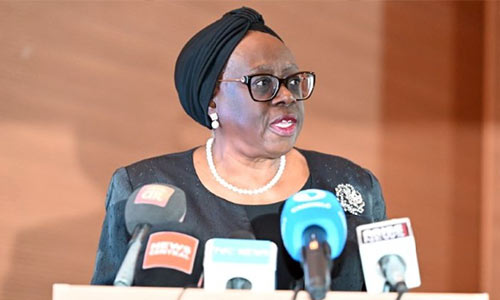
The National Judicial Council (NJC), at its 111th Meeting held on Tuesday, May 13, 2026, under the Chairmanship of the Chief Justice of Nigeria, Hon. Justice Kudirat Motonmori Olatokunbo Kekere-Ekun, GCON, has adopted a landmark policy affirming that retired public servants are eligible for appointment to the judicial bench, settling a long-standing question that has generated controversy in Nigeria’s legal community and threatened to derail judicial appointments in at least one state.

The policy, which introduces specific eligibility conditions for retired public servants seeking judicial appointment, represents the first time the NJC has formally articulated a comprehensive framework addressing the issue, and is expected to have far-reaching implications for the recruitment of judicial officers across the federation.
What Triggered the Policy
The policy was adopted in the context of a specific dispute that arose over the eligibility of two candidates recommended for appointment as Kadis of the Sharia Court of Appeal, Katsina State Ibrahim Abdullahi Yakubu and Bala Salisu Daura.
The consideration of both candidates had been stepped down at the NJC’s meeting in January 2026 following a petition received from one Tanimu Yusuf, dated November 20, 2025, which challenged their eligibility on the grounds that they had previously retired from public service. The petitioner argued that their prior retirement disqualified them from being appointed to the judicial bench.
The petition raised a question that had lingered in Nigerian legal circles for years: whether a person who has retired from public service — whether voluntarily, compulsorily, or by advised resignation — is constitutionally barred from subsequently being appointed as a judicial officer.
After due examination of the issues raised by the petition, the Council concluded its deliberations at the 111th Meeting, resolved the question in favour of eligibility, approved the recommendation of Yakubu and Daura, and adopted a formal policy framework to guide future cases.
The Constitutional and Legal Basis
The NJC reaffirmed that the Constitution of the Federal Republic of Nigeria, 1999 (as amended) does not prohibit retired public servants from judicial appointment. The Council found no provision in the Constitution that expressly or by implication bars a person who has previously retired from public service from being appointed to the bench, provided they meet the qualifications prescribed by the Constitution for the relevant judicial office.
The decision was further guided by judicial precedent, particularly the Court of Appeal’s decision in Ayoola v. Baruwa (1999), where the appellate court affirmed that no constitutional provision precludes a retired legal practitioner from appointment to the Bench. The NJC’s reliance on this authority signals that the Council considers the legal question settled at the level of binding appellate jurisprudence, and that any attempt to disqualify retired public servants from judicial appointment on the basis of their retirement status alone would be inconsistent with both the Constitution and established case law.
The New Eligibility Conditions
While affirming that retirement from public service does not constitute a constitutional bar to judicial appointment, the NJC introduced a set of specific conditions that retired public servants must satisfy before they can be considered for the bench.
Under the newly adopted policy, a retired public servant seeking judicial appointment must have a minimum of ten years remaining in service before attaining the mandatory judicial retirement age. This requirement was introduced to ensure optimal institutional investment in judicial training and to promote continuity, stability, and efficiency within the judiciary. The rationale is that appointing a retired public servant who would only serve a few years on the bench before reaching the mandatory retirement age for judges would not represent a sound use of the resources invested in their selection, training, and induction into the judicial system.
Additionally, prospective candidates who are retired public servants must disclose any criminal conviction they may have; provide their full employment history and reasons for leaving previous employment; declare any existing employment obligations; and disclose their financial status, including any circumstance of financial embarrassment.
These disclosure requirements are designed to ensure transparency and to enable the NJC and its Interview Committees to conduct a thorough assessment of the suitability of retired public servants for judicial office, taking into account the circumstances of their retirement and their post-retirement conduct.
Types of Retirement Covered
The Council noted that public service retirement may take several forms, including voluntary retirement, compulsory retirement, and advised resignation. The NJC observed that some officers retire upon attaining 50 years of age after completing 35 years of service — a common scenario under the Nigerian pension regime where officers who entered public service at a relatively young age may retire well before the age at which judicial officers are required to leave the bench.
By explicitly acknowledging the various forms of retirement and declining to treat any of them as an automatic disqualification, the NJC has ensured that the policy is broad enough to accommodate the full range of circumstances under which public servants exit service.
Implications for the Judiciary
The policy is expected to have significant implications for the recruitment of judicial officers in Nigeria. The legal profession includes a substantial number of retired public servants — including retired magistrates, retired legal officers from government ministries and agencies, retired academics, and retired military and paramilitary legal officers — who possess the qualifications and experience required for judicial appointment but who may have been reluctant to apply or whose candidacies may have been challenged on the grounds of their retirement status.
By formally clearing the constitutional and policy pathway for such individuals, the NJC has potentially expanded the pool of qualified candidates available for judicial appointment, which could help address the chronic shortage of judges that has contributed to case backlogs across Nigerian courts.
However, the ten-year minimum remaining service requirement imposes a practical age limit that will exclude retired public servants who are too close to the mandatory judicial retirement age. For the Court of Appeal, where justices retire at age 70, a retired public servant would need to be no older than 60 at the time of appointment. For High Court judges, who retire at age 65, the candidate would need to be no older than 55.
The Katsina Kadis
With the policy now adopted, the candidacies of Ibrahim Abdullahi Yakubu and Bala Salisu Daura for appointment as Kadis of the Sharia Court of Appeal, Katsina State, have been formally approved by the NJC. Their names have been forwarded alongside the twelve new Justices of the Court of Appeal and one new Judge of the High Court of Benue State recommended at the 111th Meeting.
The resolution of their cases, which had been in limbo since January 2026, effectively serves as the first application of the new policy and establishes a precedent for how similar challenges will be handled in the future.
The adoption of the policy comes at a time when the Nigerian judiciary is under increasing pressure to fill vacancies, improve case disposal rates, and attract the best available legal talent to the bench. The NJC’s decision to formally open the door to retired public servants — while imposing safeguards through the disclosure requirements and the minimum service period — reflects a pragmatic approach to judicial recruitment that balances the need for a wider talent pool with the imperative of ensuring that appointees can serve for a meaningful period and justify the institutional investment in their appointment.
The press release announcing the policy was signed by Kemi Babalola-Ogedengbe, Esq., Deputy Director, Information, National Judicial Council.
[A MUST HAVE] Evidence Act Demystified With Recent And Contemporary Cases And Materials

Available now for NGN 40,000 at ASC Publications, 10, Boyle Street, Onikan, Lagos. Beside High Court, TBS. Email publications@ayindesanni.com or WhatsApp +2347056667384. Purchase Link: https://paystack.com/buy/evidence-act-complete-annotation
______________________________________________________________________ “Enhance Legal Practice With Authoritative Reports” — Alexander Payne Offers Comprehensive Law Reports, Spanning Over A Century Of Nigerian Jurisprudence Interested buyers are encouraged to place their orders and enquiries via:
0704 444 4777, 0704 444 4999, 0818 199 9888
Website: www.alexandernigeria.com
Interested buyers are encouraged to place their orders and enquiries via:
0704 444 4777, 0704 444 4999, 0818 199 9888
Website: www.alexandernigeria.com