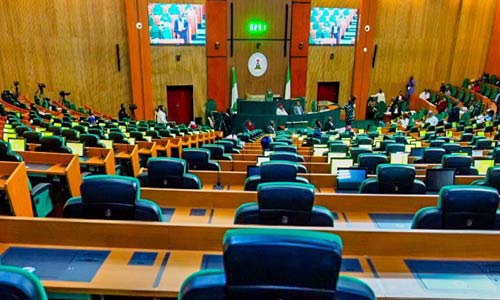
The House of Representatives on Wednesday moved closer to overhauling Nigeria’s electoral framework, approving and amending key clauses of the Electoral Act Amendment Bill aimed at strengthening the powers of the Independent National Electoral Commission (INEC), tightening electoral procedures, and addressing gaps exposed during recent elections.


The bill was considered clause by clause at plenary, with lawmakers adopting several provisions designed to enhance transparency, improve the conduct of elections, and reduce post-election disputes.
Clauses 3, 5, and 6, which deal with preliminary provisions and key interpretations under the Act, were approved to align existing definitions with current electoral practices.
The House also adopted Clauses 10 and 12, reinforcing INEC’s authority over the organisation, supervision, and management of elections, including logistics and deployment of electoral personnel.
Lawmakers approved Clauses 18 and 22 on voter registration and the compilation, maintenance, and display of the voters’ register, with amendments intended to curb manipulation and ensure greater inclusion of eligible voters.
Significant amendments were made to Clauses 23 and 29, which relate to the nomination of candidates by political parties and the submission of candidates’ lists to INEC. The changes seek to clarify timelines, strengthen compliance, and enhance INEC’s oversight of political parties.
Clauses 31, 32, and 34, bordering on party primaries, publication of candidates’ particulars, and qualifications for elective offices, were also approved as part of efforts to address pre-election irregularities.
Further approvals were recorded for Clauses 47, 50, and 54, which touch on voting procedures, voter accreditation, and the use of technology in elections, reaffirming the legal backing for INEC’s deployment of electronic systems.
Clause 60, as amended, addresses the declaration of results, while Clause 62 strengthens provisions on the collation, transmission, and custody of results to reduce disputes arising from election outcomes.
The House also adopted Clauses 64 and 65 on electoral offences and penalties, signaling a tougher stance against malpractice, including vote-buying and other violations of the law.
Clauses 71 and 73, dealing with election petitions and timelines for the resolution of disputes, were approved, while Clause 74 was adopted with amendments to further streamline post-election legal processes.
However, consideration of Section 51 was stepped down and deferred to a subsequent plenary. The Deputy Speaker, who presided, ruled that the provision was not contained in the committee report before the House and could not be taken in line with the House Rules.
The committee’s report on the bill was adopted as a working document, paving the way for continued deliberations on outstanding provisions.
[A MUST HAVE] Evidence Act Demystified With Recent And Contemporary Cases And Materials

Available now for NGN 40,000 at ASC Publications, 10, Boyle Street, Onikan, Lagos. Beside High Court, TBS. Email publications@ayindesanni.com or WhatsApp +2347056667384. Purchase Link: https://paystack.com/buy/evidence-act-complete-annotation
______________________________________________________________________ “Enhance Legal Practice With Authoritative Reports” — Alexander Payne Offers Comprehensive Law Reports, Spanning Over A Century Of Nigerian Jurisprudence Interested buyers are encouraged to place their orders and enquiries via:
0704 444 4777, 0704 444 4999, 0818 199 9888
Website: www.alexandernigeria.com
Interested buyers are encouraged to place their orders and enquiries via:
0704 444 4777, 0704 444 4999, 0818 199 9888
Website: www.alexandernigeria.com