The Economic and Financial Crimes Commission has reportedly constituted a special investigative team to examine transactions and relationships arising from the long-running Mambilla Hydroelectric Power Project dispute, following findings contained in the recent International Chamber of Commerce arbitration award in favour of Nigeria.

The team, which sources familiar with the development said is being supervised by EFCC Chairman Ola Olukoyede, is also tracing properties and other assets suspected of having connections with transactions identified during the arbitration proceedings.
Investigators are expected to review the movement of funds, the relationships among individuals mentioned in the award and whether any assets were acquired with proceeds that could become subject to recovery or forfeiture proceedings.
The EFCC has not, however, publicly announced that any of the persons mentioned has been charged with an offence arising from the latest review. Reports of the special team and possible invitations are based on sources familiar with the investigation.
Among those sources say could be invited for questioning are former Vice-President Atiku Abubakar; his former wife, Jennifer Douglas; former Attorney-General of the Federation and Minister of Justice, Abubakar Malami; former Minister of Power and Steel, Olu Agunloye; former National Security Adviser Sambo Dasuki; his son, Abubakar Dasuki; former Solicitor-General of the Federation Abdullahi Yola; and former Permanent Secretary in the Ministry of Power, Dere Awosika.
The investigation follows the September 16 final award of a three-member ICC arbitration tribunal in Paris, which rejected claims brought by Sunrise Power and Transmission Company Limited and its promoter, Leno Adesanya, against Nigeria over the proposed 3,960-megawatt Mambilla Hydroelectric Power Project in Taraba State.
The tribunal’s final award runs to more than 600 pages and examined a series of transactions involving Adesanya, companies associated with him and persons connected with public officials who had roles at different stages of the Mambilla project.
Sunrise had relied on agreements and settlement arrangements in pursuing claims against Nigeria arising from the decades-old project dispute.
The tribunal ultimately rejected Sunrise’s claims, including a request arising from a 2020 settlement that could have exposed Nigeria to a $200 million settlement payment and an additional $200 million default liability.
The tribunal also ordered Sunrise and Adesanya to reimburse Nigeria for a substantial portion of its legal costs, with reports putting the recoverable legal fees at about $11.82 million.
One transaction now expected to attract particular attention from EFCC investigators is a $500,000 transfer made in January 2003 to Jennifer Douglas, who was then married to Atiku.
According to the arbitral award, Adesanya transferred the money on January 30, 2003, from a Swiss account belonging to China Castle Investments Limited, an offshore company under his control, into Douglas’ Citibank account in the United States.
The payment occurred less than four months before Sunrise was purportedly awarded a Build-Operate-Transfer contract for the Mambilla project in May 2003.
Adesanya told the tribunal that the payment was part of a foreign-exchange transaction carried out for Atiku.
The tribunal, however, said supporting evidence was lacking for that explanation, including contemporaneous documentation showing the underlying naira payment, applicable exchange rate, instructions associated with the transaction or other records explaining its commercial basis.
It also noted that neither Atiku nor Douglas provided a witness statement or declaration supporting Adesanya’s explanation.
The tribunal described the circumstances and timing of the transaction as raising significant red flags, but it did not find that Atiku received a bribe or that he used his governmental powers to secure the Mambilla contract for Sunrise.
Atiku has rejected attempts to portray the award as a corruption finding against him.
Through his spokesman, Phrank Shaibu, the former Vice-President maintained that he was not indicted by the tribunal, was not a member of the procurement panel that awarded the project and was not found to have influenced the award in Sunrise’s favour.
He challenged his political opponents to point to any part of the award finding that he solicited or received a bribe or directed the award of the contract.
Another transaction expected to be examined by the EFCC concerns approximately $1.74 million transferred to Abubakar Dasuki, son of former National Security Adviser Sambo Dasuki, in December 2014.
Adesanya described the transaction as a loan intended to enable the younger Dasuki participate in a quarry business linked to the Mambilla project.
The tribunal said it found no consistent or adequately documented explanation for the payment.
It noted that Adesanya initially referred to a written loan agreement but was unable to produce one when required, while records establishing how the transaction was accounted for were also lacking.
The tribunal described the circumstances as raising considerable red flags.
Sambo Dasuki was mentioned in the proceedings because of the transaction involving his son and the wider relationship examined by the tribunal.
The award did not, however, treat every questioned payment involving an official or a relative as conclusively proved bribery. In several instances, the tribunal identified serious or significant red flags while stopping short of finding that a particular official act had been performed in exchange for the money.
Former Power Minister Olu Agunloye also featured prominently.
Agunloye was Minister of Power and Steel in 2003 when a controversial letter was issued purporting to award Sunrise the Mambilla project on a Build-Operate-Transfer basis.
The tribunal examined three payments made in 2019 through Adesanya’s assistant, Jide Sotinrin, totalling approximately ₦5.2 million.
The payments were ₦3.6 million in August 2019, ₦500,000 in October and about ₦1.121 million in November.
Adesanya said the money constituted humanitarian assistance for Agunloye’s medical expenses and was contributed by members of his community.
The tribunal expressed substantial doubt about that explanation, citing inconsistencies over medical documentation and the absence of sufficient evidence proving that the funds were used for the stated purpose.
The timing was also considered significant because Nigeria had already challenged the validity of the alleged 2003 project award and Agunloye was potentially an important witness in the arbitration.
Nevertheless, the tribunal stopped short of conclusively finding that the 2019 payments were made in exchange for Agunloye’s 2003 project letter, noting among other things the 16-year gap.
Agunloye is already being prosecuted separately by the EFCC over aspects of the Mambilla project and has pleaded not guilty to charges including allegations of forgery, receiving gratification and disobedience to presidential directives.
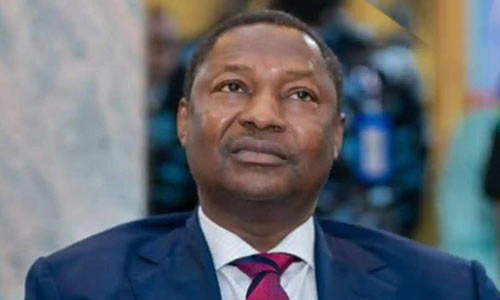
The EFCC’s fresh review is also expected to scrutinise the conduct of former Attorney-General Abubakar Malami in relation to the 2020 settlement agreement and subsequent addendum between the Federal Government and Sunrise.
The tribunal made its strongest corruption findings in relation to the settlement arrangement involving Malami and Adesanya.
A January 2020 settlement provided for Nigeria to pay Sunrise $200 million.
A March 2020 addendum introduced a further $200 million default provision, potentially increasing Nigeria’s exposure to $400 million, aside from interest.
The tribunal found that Malami and the then Minister of Power, Saleh Mamman, lacked authority to bind the Federal Government to the settlement without presidential approval.
It also found that former President Muhammadu Buhari repeatedly withheld approval, including by expressly indicating that the proposed arrangement was not approved.
The tribunal nevertheless found that Malami continued seeking approval and had provided Buhari with inaccurate information about the financial implications of the arrangement.
The tribunal also examined WhatsApp communications and Adesanya’s evidence about discussions during the settlement negotiations.
It concluded, on the evidential standard applicable to the arbitration, that a corrupt arrangement had been reached between Adesanya and Malami and that the settlement agreement and its addendum were products of corruption and contrary to Nigerian public policy.
Malami did not appear before the tribunal to give oral evidence, although material attributed to him formed part of the proceedings.
The EFCC team is further expected to examine a transaction involving former Solicitor-General of the Federation Abdullahi Yola.
Yola represented the Federal Ministry of Justice during negotiations that produced the 2012 General Project Execution Agreement and related terms of settlement, and signed relevant documents on behalf of the ministry.
On November 23, 2015, shortly after Yola retired, Lutin Investments Limited, a company associated with Adesanya, transferred ₦10 million — approximately $50,000 at the time — to Vincent Awaji, a former Ministry of Justice clerk and Yola’s assistant, for Yola’s benefit.
The funds were subsequently distributed among recipients said to include entities or persons connected with Yola.
Adesanya initially characterised the money as a loan intended to assist Yola with renovation of his home and the establishment of a legal practice.
The tribunal found his changing explanations troubling, noting that the amount exceeded Yola’s pre-retirement annual salary, was routed through an intermediary and followed Yola’s participation in agreements beneficial to Sunrise.
It identified what it considered potential links between the transaction and Yola’s official conduct, including his legal advice and participation in the 2012 agreements.
Former Permanent Secretary in the Ministry of Power, Dere Awosika, also featured in the tribunal’s review.
Awosika participated in negotiations surrounding the 2012 General Project Execution Agreement.
Between May 2015 and January 2016, Lutin Investments transferred approximately ₦25.01 million, worth about $135,000 at the time, to her son, Tola Awosika, and his company, 355 Integrated Services Limited.
The transactions included ₦13 million paid in May 2015, ₦12 million in June 2015 and another payment that brought the total to approximately ₦25.01 million.
Adesanya described the arrangement as an investment in a restaurant business involving his daughters and Tola.
The tribunal found that shareholding and dividend records provided some evidence that a real investment existed but nevertheless identified concerns surrounding the transaction, including the size of the payments and their connection with the family of an official who had participated in negotiations involving Sunrise.
The tribunal therefore treated the transaction as suspicious but did not conclusively find that Awosika performed a particular official act in exchange for the payments.
The fresh EFCC review is said to extend beyond those individual payments.
According to sources familiar with the investigation, the special team is examining the relationships among the persons identified in the award, corporate vehicles through which payments moved, assets and properties potentially connected with the transactions, and whether the available evidence meets the statutory threshold for recovery or forfeiture.
Any eventual forfeiture process would require the commission to establish the necessary legal basis and obtain appropriate court orders; the mere identification of an individual or asset during an investigation does not itself establish criminal liability or justify confiscation.
The Mambilla dispute dates back more than two decades.
Sunrise commenced an ICC arbitration against Nigeria in October 2017, claiming breach of an alleged 2003 agreement for development of the project.
Former President Olusegun Obasanjo, who gave evidence in the proceedings, denied authorising the alleged original contract and maintained that no minister had authority to commit his government to a multibillion-dollar power project without presidential approval.
Buhari similarly denied authorising the later settlement entered into during his administration.
The final arbitral award has now provided the EFCC with a substantial documentary record containing financial transactions, communications, witness evidence and findings accumulated during years of litigation.
Sources say the anti-graft agency intends to review that evidence independently under Nigerian criminal and asset-recovery laws rather than treat the arbitral award itself as a substitute for a domestic investigation.
Consequently, the reported plan to invite Atiku, Douglas, Malami, Agunloye, the Dasukis, Yola, Awosika and others would, if carried out, form part of an investigative process rather than a finding of guilt.
The tribunal’s conclusions also differ from person to person: while it made a specific corruption finding regarding the 2020 settlement involving Malami and Adesanya, it identified varying degrees of red flags in several of the other transactions without conclusively characterising every payment as a bribe.
[A MUST HAVE] Evidence Act Demystified With Recent And Contemporary Cases And Materials

Available now for NGN 40,000 at ASC Publications, 10, Boyle Street, Onikan, Lagos. Beside High Court, TBS. Email publications@ayindesanni.com or WhatsApp +2347056667384. Purchase Link: https://paystack.com/buy/evidence-act-complete-annotation
______________________________________________________________________ “Enhance Legal Practice With Authoritative Reports” — Alexander Payne Offers Comprehensive Law Reports, Spanning Over A Century Of Nigerian Jurisprudence Interested buyers are encouraged to place their orders and enquiries via:
0704 444 4777, 0704 444 4999, 0818 199 9888
Website: www.alexandernigeria.com
Interested buyers are encouraged to place their orders and enquiries via:
0704 444 4777, 0704 444 4999, 0818 199 9888
Website: www.alexandernigeria.com