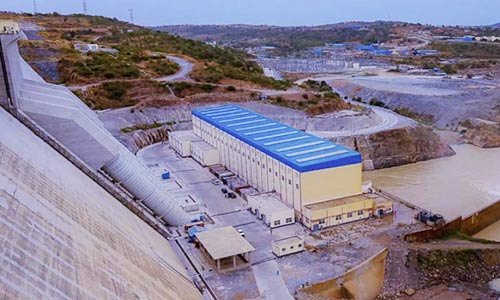
The Federal Government has launched a regulatory review of the $1.3 billion Zungeru Hydropower Project to determine why the 700-megawatt plant is currently delivering only about 350MW to the national grid.

The review, being led by the Infrastructure Concession Regulatory Commission, is expected to examine the contractual, legal and operational issues affecting the plant, with a view to improving its performance and increasing the volume of electricity supplied to the grid.
In a statement issued in Abuja, the ICRC said it was reviewing the terms of the concession to determine whether all parties were complying with their obligations under the agreement.
“As the regulator, we are reviewing the terms of the concession to ensure all parties are keeping to the terms of the agreement and meeting up with their obligations,” the Commission said.
The intervention has brought together the Federal Ministry of Power, the Federal Ministry of Water Resources and Sanitation, the Bureau of Public Enterprises and Penstock Limited, the concessionaire operating the plant.
The BPE serves as the grantor under a power of attorney from the Ministry of Power.
The review places one of Nigeria’s major government-backed power assets under formal regulatory scrutiny, with the 700MW facility currently operating at roughly half of its installed capacity.
Speaking at a stakeholders’ meeting in Abuja, the Director-General of the ICRC, Dr Jobson Ewalefoh, said the Commission had a responsibility to ensure that Public-Private Partnership assets delivered the benefits for which they were established.
He said the meeting was convened to identify the issues preventing the Zungeru plant from operating optimally and to work with the relevant parties towards resolving them.
According to Ewalefoh, PPP assets such as Zungeru could not be allowed to continue operating below capacity, particularly at a time when the Federal Government is seeking to increase electricity supply across the country.
The review comes amid renewed efforts by the Tinubu administration to improve the performance of Nigeria’s power sector and extract greater value from existing generation infrastructure.
President Bola Tinubu has repeatedly identified improved electricity supply as a key component of his administration’s development agenda. In his 2026 Democracy Day address, he described electricity as a “democratic dividend we owe every Nigerian.”
Ewalefoh said achieving that objective would require government institutions and private-sector operators involved in the electricity value chain to fulfil their respective responsibilities.
He explained that the ICRC was established to regulate PPP arrangements and was not itself a party to the Zungeru concession agreement.
Its role, he said, was to monitor implementation, ensure compliance with contractual obligations and protect the public interest.
Under Section 20 of the ICRC Act 2005, the Commission is responsible for keeping custody of concession agreements, monitoring compliance with their provisions and ensuring the efficient implementation of government concession contracts.
“Signing a concession agreement is only the first step; implementation of the terms in the PPP agreement is what delivers results,” Ewalefoh said.
He explained that PPP arrangements were based on the sharing of risks and responsibilities between government and private investors, rather than one side merely doing the other a favour.
According to him, the regulator must therefore ensure that the concession remains sustainable, investors are able to earn reasonable returns, services are effectively delivered and Nigerians receive value from the asset.
The Zungeru review is also expected to form part of a broader assessment of power projects operated under PPP arrangements across the country.
Ewalefoh disclosed that similar compliance reviews would be conducted on the Kainji, Jebba, Shiroro, Dadinkowa and Kashimbila power plants.
The Commission is expected to examine the performance of the facilities and determine the extent to which the operators and relevant government agencies are complying with the contractual obligations governing the projects.
A final report from the reviews will be submitted to President Tinubu.
The wider exercise reflects the ICRC’s position that improving Nigeria’s electricity supply will require not only the construction of new generation facilities but also ensuring that existing power assets perform efficiently.
Ewalefoh said greater efficiency was one of the major reasons public assets were transferred to private-sector operators under PPP arrangements, adding that the regulator must ensure that the expected benefits are realised through proper monitoring and enforcement of concession terms.
The Commission said other existing PPP arrangements would also be reviewed to determine whether they were delivering the services and value envisaged under their respective agreements.
At the conclusion of the Zungeru stakeholders’ meeting, the parties identified and documented the legal and operational constraints affecting the project.
They agreed to reconvene to further consider the issues and work towards resolving the bottlenecks preventing the plant from operating closer to its full 700MW capacity.
[A MUST HAVE] Evidence Act Demystified With Recent And Contemporary Cases And Materials

Available now for NGN 40,000 at ASC Publications, 10, Boyle Street, Onikan, Lagos. Beside High Court, TBS. Email publications@ayindesanni.com or WhatsApp +2347056667384. Purchase Link: https://paystack.com/buy/evidence-act-complete-annotation
______________________________________________________________________ “Enhance Legal Practice With Authoritative Reports” — Alexander Payne Offers Comprehensive Law Reports, Spanning Over A Century Of Nigerian Jurisprudence Interested buyers are encouraged to place their orders and enquiries via:
0704 444 4777, 0704 444 4999, 0818 199 9888
Website: www.alexandernigeria.com
Interested buyers are encouraged to place their orders and enquiries via:
0704 444 4777, 0704 444 4999, 0818 199 9888
Website: www.alexandernigeria.com