The family of Mary Habila, the nurse who died at the residence of the Minister of Works, David Umahi, in Ebonyi State, has for the first time publicly stated what it believes caused her death, saying she had been living with a heart condition and eventually suffered a cardiac arrest.


Habila, who was attached to the minister, was brought dead to the David Umahi Federal University Teaching Hospital, Uburu, Ebonyi State, on June 27, 2026.
She was eventually buried in her hometown of Nok, Jaba Local Government Area of Kaduna State, on Friday, August 21, after weeks of controversy surrounding calls for an autopsy.
In a tribute contained in her burial brochure, the family said Habila had previously been diagnosed with a hole in her heart and had experienced significant health challenges before her death.
“Mary Habila lived with a heart condition, having been diagnosed with a hole in her heart. Though she faced significant health challenges, she carried herself with courage, faith, and quiet resilience,” the family said.
According to the family, her condition later deteriorated despite medical attention, prayers and support from relatives and loved ones.
“She sadly passed away following a cardiac arrest, leaving behind a deep void in the hearts of all who knew and loved her,” the family added.
The family, however, did not explain the medical basis on which it concluded that Habila died from cardiac arrest.
The statement is also not backed by an autopsy report, as the family had opposed a post-mortem examination despite public calls for one following the circumstances surrounding her death.
Her death attracted widespread public attention after it became known in July, about two weeks after she reportedly died at Umahi’s residence.
The delay in public disclosure, coupled with the circumstances of her death, prompted public speculation and calls for an independent autopsy to establish the precise cause.
Some Nigerians had also demanded the resignation of Umahi over the controversy, although the minister repeatedly denied any involvement in Habila’s death.
As calls for an autopsy intensified, Umahi publicly asked the police to conduct a post-mortem examination, arguing that it would help determine the actual cause of death and address allegations of foul play.
The family, however, objected to the autopsy and initially scheduled her burial for July 17.
The police subsequently insisted that an autopsy should be conducted before the body was released.
Umahi later appealed to the family to reconsider its opposition, maintaining that a post-mortem examination would provide clarity and help resolve the controversy surrounding the death.
The family, however, later wrote to the Inspector-General of Police, Olatunji Disu, demanding the immediate release of Habila’s remains for burial.
The burial was subsequently postponed while the dispute continued.
Reports later emerged that Habila was ultimately buried without an autopsy, although that claim has not been independently verified.
The family’s latest statement therefore represents its first public explanation of what it says caused her death, but the absence of an autopsy means there is no independent post-mortem finding publicly available to confirm the precise cause.
The controversy has also moved into the courts.
A civil society organisation, the Kwechiri Unity Forum, recently filed a lawsuit against Umahi, the Inspector-General of Police and others over Habila’s death.
The case adds a legal dimension to a matter that has already generated questions about the circumstances of her death, the delayed public disclosure and the disagreement over whether an autopsy should have been conducted.
 Interested buyers are encouraged to place their orders and enquiries via:
0704 444 4777, 0704 444 4999, 0818 199 9888
Website: www.alexandernigeria.com
Interested buyers are encouraged to place their orders and enquiries via:
0704 444 4777, 0704 444 4999, 0818 199 9888
Website: www.alexandernigeria.com

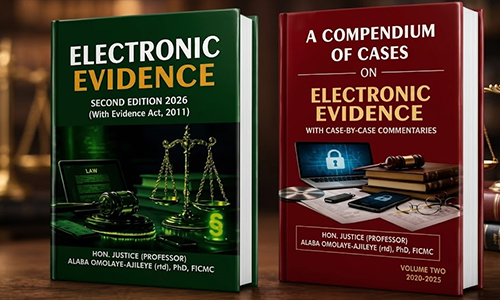
“Order Justice Omolaye-Ajileye’s Electronic Evidence Books Now” — Essential Guides On Evidence Act, Case Law And Digital Proof