*Shares Experiences From Insecurity Flashpoints

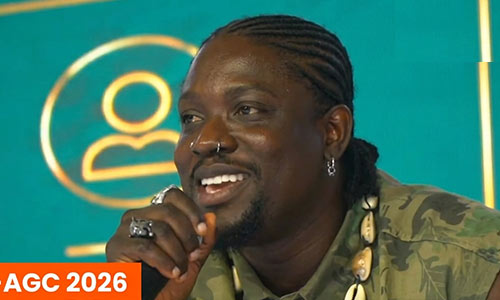
Social media activist Martins Vincent Otse, popularly known as VeryDarkMan (VDM), has defended his controversial invitation to the 66th Annual General Conference of the Nigerian Bar Association in Port Harcourt, telling lawyers that he was not invited to teach them law but to share what he described as firsthand experiences from scenes of killings, kidnappings and other violent attacks across Nigeria.
VDM spoke on Tuesday, August 25, 2026, during the conference plenary titled “Known Gun Men,” a session examining the legal, security and institutional gaps fuelling insecurity in the country.
His appearance followed days of debate, particularly on social media, over the decision to place him on a major NBA conference panel alongside lawyers, security officials and other stakeholders.
Addressing the controversy at the beginning of his intervention, VDM acknowledged that questions had been raised about what qualified him to appear before one of Nigeria’s largest gatherings of legal practitioners.
“First things first, before I answer your question, there has been a lot of debate as to why I was invited here,” he said.
He then sought to distinguish his role from that of the lawyers and legal experts on the panel.
“There has been a lot of debate as to why VeryDarkMan is invited. I am not here to teach you the law. I am here to share an experience,” he told the gathering.
According to him, many of those criticising his invitation had failed to pay sufficient attention to the subject of the plenary.
He argued that insecurity had moved beyond abstract legal discussions because judges, lawyers and other members of the justice system were themselves increasingly exposed to kidnappings and violent attacks.
“This is not the topic of ‘if I may, my Lord’, because a lot of your Lords are being kidnapped,” he said.
VDM cited the reported abduction of a judge who, according to his account, was travelling from Sokoto on July 26 before being kidnapped in Kebbi State and subsequently released after about a week.
He said the incident demonstrated why members of the legal profession had a direct stake in conversations about insecurity.
“So if we don’t discuss this topic, and if I don’t share my experience, it will not be ‘if I may, my Lord’; it will be you joining your personal Lord and Saviour,” he said, drawing attention to what he portrayed as the potentially fatal consequences of insecurity.
VDM maintained that his relevance to the discussion came from repeatedly visiting communities affected by attacks and interacting directly with victims and survivors.
He also criticised sections of Nigeria’s conventional media, alleging that some television and other news organisations had become either reluctant or afraid to adequately document the consequences of insecurity.
“When the killing happened, our conventional media, like AIT, NTA and the rest, they have become lazy, and they have become really scared,” he alleged.
According to him, inadequate coverage of the aftermath of violent attacks had created room for independent activists and social-media personalities to travel to affected communities and bring their experiences to the public.
“They don’t really cover what happens, the result of this insecurity, or rather the result of these unknown gunmen. So that is why people like us will go there. And like I said, that is why I am here,” he said.
VDM then listed several locations where he said he had personally witnessed the aftermath of violence.
He described himself as one of the earliest responders to the deadly attack in Yelwata, saying his presence at the scene exposed him directly to the human consequences of the violence.
“I was the first responder there,” he said while recounting the Yelwata incident.
He also referred to an incident in Lamode, where he alleged that women were shot and killed, describing the attack as one allegedly involving military personnel.
VDM said he travelled to the location and witnessed the aftermath.
He further recalled travelling to the scene of explosions and attacks in Borno State, including locations he identified as Monday Market, Post Office Junction and the University of Maiduguri Teaching Hospital.
According to him, security personnel had arrived at some of the locations before he did, but he described himself as among the earliest media or independent public figures to document what happened.
He also listed Angwan Rukuba in Jos and Bokkos among communities he said he had visited following violent incidents.
VDM told the lawyers that these experiences had exposed him to scenes that were difficult to understand merely from reports or courtroom proceedings.
“I’ve seen people that have been affected by these unknown, unknown gunmen. I’ve seen blood. I’ve seen people burnt alive,” he said.
He therefore urged those questioning his invitation to listen to the experiences he was bringing to the conference rather than judge his participation solely on whether he possessed legal qualifications.
VDM also gave his account of the Yelwata attack, making a claim about the identity of the attackers and what he believed triggered the violence.
“What happened in Yelwata is straight. I’ll be straightforward. It was the Fulani that attacked the people in Yelwata,” he said.
He further claimed that the attack was retaliatory, alleging that a Fulani boy and his cow had earlier been killed before attackers returned to the community.
“It was a retaliation for the Yelwata people. I think they killed the Fulani boy and his cow, and these people came back,” he said.
His account of both the identity of the attackers and the alleged motive was presented as his personal assessment and claim at the conference, and not as a judicial or independently established finding.
Beyond the individual incidents, VDM reportedly argued during the wider session that Nigeria’s insecurity had political and institutional dimensions and alleged that some individuals connected to government and security institutions benefited from continuing instability.
Those broad allegations reportedly attracted immediate pushback from a military representative on the panel, who challenged him over making generalised accusations involving the Nigerian Armed Forces without presenting evidence against specific individuals.
The exchange reflected one of the central tensions of the plenary — the challenge of distinguishing institutional failures or allegations involving individual officials from sweeping claims against entire security organisations.
VDM nevertheless maintained that the persistence of insecurity required Nigerians to confront uncomfortable questions about those who might benefit economically, politically or institutionally from crises that have continued for years.
His participation in the conference was particularly controversial because several lawyers and social-media users had earlier questioned the NBA’s decision to include him on the panel.
Critics argued that an Annual General Conference of lawyers should prioritise persons with recognised professional or specialist expertise, while supporters maintained that individuals who had directly interacted with victims and documented social problems could provide perspectives different from those of lawyers, policymakers and security officials.
VDM used his appearance to answer that criticism directly, insisting that his role was experiential rather than academic or legal.
“I’m not here to teach you people law; I’m here to share experience,” he reiterated.
At one point during the exchange, after being reminded that he had limited speaking time, VDM jokingly appealed to the lawyers in the auditorium.
“I’m part of you; you should be on my side,” he said.
The “Known Gun Men” plenary brought together participants from the legal and security sectors to examine Nigeria’s continuing insecurity and the institutional weaknesses that allow kidnappings, killings, terrorism and other violent crimes to persist.
The session was moderated by Ebun-Olu Adegoruwa, SAN, and included contributions from security representatives, including representatives connected with the offices of the Inspector-General of Police and the State Security Service, as well as lawyers, advocates and other participants.
At the conclusion of the event, VDM was also presented with a special recognition award, adding another dimension to the debate surrounding his participation.
His appearance ultimately became one of the most discussed sessions of the conference, moving the controversy from the question of why the NBA invited him to the substance of the experiences and allegations he brought before the gathering.
For VDM, however, the justification was straightforward: insecurity was not exclusively a subject for lawyers, security chiefs or policymakers because its victims included ordinary citizens and increasingly members of the justice system themselves.
His central response to his critics remained: “I am not here to teach you the law. I am here to share an experience… your Lords are being kidnapped.”
“Order Justice Omolaye-Ajileye’s Electronic Evidence Books Now” — Essential Guides On Evidence Act, Case Law And Digital Proof
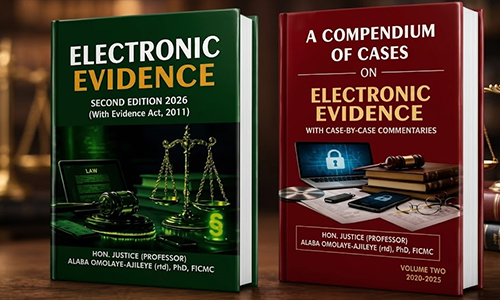
[A MUST HAVE] Evidence Act Demystified With Recent And Contemporary Cases And Materials

Available now for NGN 40,000 at ASC Publications, 10, Boyle Street, Onikan, Lagos. Beside High Court, TBS. Email publications@ayindesanni.com or WhatsApp +2347056667384. Purchase Link: https://paystack.com/buy/evidence-act-complete-annotation
______________________________________________________________________ “Enhance Legal Practice With Authoritative Reports” — Alexander Payne Offers Comprehensive Law Reports, Spanning Over A Century Of Nigerian Jurisprudence Interested buyers are encouraged to place their orders and enquiries via:
0704 444 4777, 0704 444 4999, 0818 199 9888
Website: www.alexandernigeria.com
Interested buyers are encouraged to place their orders and enquiries via:
0704 444 4777, 0704 444 4999, 0818 199 9888
Website: www.alexandernigeria.com
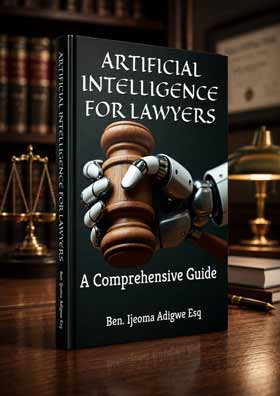 The book also examines Nigeria's legal ecosystem, focusing on the LPELR and NBA AI Guidelines. As a bonus, every purchase comes with a FREE eBook titled: How to Use the AI Features in LegalPedia and LawPavilion.
Ohio Books Ltd praises the publication, stating:
"....this is the only Nigerian book I know of on the topic."
How to Order:
📞 Call, Text, or WhatsApp: 08034917063 | 07055285878
📧 Email: benadigwe1@gmail.com
🌎 Website: www.benadigwe.com
Ebook Version: Access it directly online at https://selar.com/prv626
Authored by Ben Ijeoma Adigwe Esq., ACIarb (UK), LL.M, Dip. in Artificial Intelligence, Director at the Delta State Ministry of Justice, Asaba, Nigeria.
______________________________________________________________________
The book also examines Nigeria's legal ecosystem, focusing on the LPELR and NBA AI Guidelines. As a bonus, every purchase comes with a FREE eBook titled: How to Use the AI Features in LegalPedia and LawPavilion.
Ohio Books Ltd praises the publication, stating:
"....this is the only Nigerian book I know of on the topic."
How to Order:
📞 Call, Text, or WhatsApp: 08034917063 | 07055285878
📧 Email: benadigwe1@gmail.com
🌎 Website: www.benadigwe.com
Ebook Version: Access it directly online at https://selar.com/prv626
Authored by Ben Ijeoma Adigwe Esq., ACIarb (UK), LL.M, Dip. in Artificial Intelligence, Director at the Delta State Ministry of Justice, Asaba, Nigeria.
______________________________________________________________________