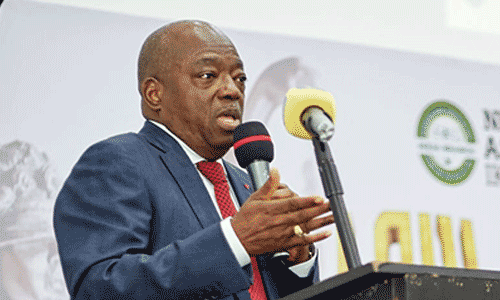
A presidential candidate in the 2026 Nigerian Bar Association election, Aare Olumuyiwa Akinboro, SAN, has petitioned the Chairman of the Body of Benchers, the Attorney-General of the Federation and Minister of Justice, Prince Lateef Fagbemi, SAN, and several legal, regulatory and security institutions over alleged manipulation and constitutional breaches in the association’s presidential poll.
In separate petitions dated July 27, 2026, Akinboro also wrote to the General Council of the Bar, past NBA Presidents and General Secretaries, NBA President Mazi Afam Osigwe, SAN, the Electoral Committee of the Nigerian Bar Association, the Economic and Financial Crimes Commission and the State Security Service, seeking urgent intervention in the controversy surrounding the election.
In the 41-page document, Akinboro described the exercise as a sham and alleged that it was characterised by institutional partisanship, abuse of office, technological irregularities and manipulation of the NBA’s electoral machinery.
He demanded an independent forensic audit of the entire process, a security investigation into possible violations of the Cybercrimes Act, the Nigeria Data Protection Act and other relevant laws, the reconstitution of the ECNBA and the conduct of a fresh election in accordance with the NBA Constitution.
The ECNBA declared Mrs Oyinkansola Badejo-Okunsanya, SAN, winner of the election after she obtained 12,317 votes, representing 47.18 per cent of the votes cast. Lateef Omoyemi Akangbe, SAN, polled 7,934 votes, while Akinboro received 5,855 votes.
Akinboro said he would not submit a petition to the NBA National Officers Election Appeal Committee because, in his view, no valid election recognised by the NBA Constitution took place.
According to him, an election must first exist before the jurisdiction of an election appeal committee can be activated.
“There has to first be an election known to the NBA Constitution before a petition can arise,” he said, adding that approaching the committee would amount to legitimising a process he considered fundamentally invalid.
The senior advocate alleged that problems surrounding the election went beyond technical failures recorded on voting day and began with the conduct of the NBA leadership long before the poll.
Akinboro claimed that shortly after the 2024 NBA election, Osigwe, who was then President-elect, visited him several times and encouraged him to contest the presidency of the association in 2026.
He alleged that Osigwe subsequently introduced him to a former NBA President, Augustine Alegeh, SAN, to discuss his ambition and the political arrangements surrounding the election.
According to Akinboro, Alegeh offered to support his candidature on the condition that he obtained the consent of lawyers from the South-West to a proposed micro-zoning arrangement.
Under the alleged arrangement, the NBA presidency would rotate between the South-West and Mid-West whenever the office was zoned to the association’s Western Zone.
Akinboro said he declined to negotiate the proposal because he considered it inappropriate for an aspirant who would benefit from the arrangement to lead efforts to secure its acceptance.
He maintained that any discussion on micro-zoning should be undertaken by neutral stakeholders and not by a presidential aspirant whose personal ambition could influence the process.
The senior lawyer alleged that the discussions later collapsed, after which Osigwe and Alegeh became opposed to his candidature.
He further accused the NBA leadership of deploying the association’s official structures, employees, programmes and platforms to promote Badejo-Okunsanya’s campaign while denying other candidates equal opportunities.
Akinboro alleged that during the 2025 NBA Annual General Conference in Enugu, officials and members of staff of the association distributed campaign materials promoting Badejo-Okunsanya without extending similar assistance to the other presidential aspirants.
He claimed that the Friendship Centre at the conference was made available for her campaign engagements, while his request to use the facility was denied.
According to him, he was consequently compelled to rent a separate venue from the Enugu State Government to host his supporters and conduct campaign activities.
Akinboro also alleged that the association’s “Unbarred Party” during the conference was converted into a campaign event for the eventual winner, with her billboards prominently displayed and special recognition accorded to her in the presence of conference participants.
He further claimed that at the NBA National Executive Council meeting held in Maiduguri on February 5, 2026, Osigwe openly stated that he could not be neutral in the presidential contest because he had a democratic right to support a candidate.
The petitioner also referred to an NBA Section on Public Interest and Development Law event held in April 2026, where he alleged that the NBA President urged lawyers to “trust a woman with the leadership of the NBA.”
Akinboro said the statement amounted to open campaigning for the only female candidate in the presidential race and reinforced his allegation that the incumbent leadership had abandoned institutional neutrality.
He also alleged that Osigwe contacted several senior lawyers, including Senior Advocates of Nigeria, and attempted to persuade them to withdraw their support for his candidature.
According to him, the NBA Women’s Forum, Young Lawyers Forum and several committees of the association were similarly deployed to advance the campaign of the preferred candidate.
Akinboro disclosed that he and Akangbe had earlier petitioned the NBA Board of Trustees over the alleged partisanship of the leadership.
He said the board was unable to offer effective intervention because amendments to the NBA Constitution had stripped it of substantial oversight powers over the leadership and electoral process.
The petitioner also challenged the composition and independence of the ECNBA, alleging that its members were handpicked by Osigwe rather than appointed through the National Executive Council as required by the NBA Constitution.
Akinboro argued that an electoral committee selected by the incumbent President could not reasonably be perceived as independent where the same President had allegedly expressed support for a particular candidate.
He further alleged that the appointment of the ECNBA Chairman and Secretary to the Body of Benchers after the election reinforced concerns about the committee’s independence and created an appearance that regulatory appointments could be used to reward loyalty.
Akinboro extended the allegation to other appointments within legal regulatory institutions, claiming that positions had increasingly become political tools for rewarding supporters and punishing perceived opponents.
He cited the removal of Chief J.S. Okutepa, SAN, from the Body of Benchers after the senior lawyer supported his presidential ambition as an example of what he described as retaliation against perceived opponents. These allegations have not been independently established.
Turning to the conduct of the electronic election, Akinboro faulted the movement of voting activities between different portals and links after the initial platform reportedly became inaccessible.
The ECNBA had attributed the disruption to what it described as a deliberate, coordinated and sustained cyberattack and subsequently extended voting into the morning of July 19.
Akinboro, however, argued that once voting was transferred to a different portal, the process became a new election which ought to have complied afresh with every constitutional and technical requirement governing NBA elections.
He said the replacement platform should have been subjected to integrity tests, while test messages ought to have been sent to voters at least 21 days before the election to confirm that the system was functional.
He alleged that the failure to conduct those procedures undermined the validity, reliability and security of the votes recorded on the replacement platform.
Akinboro also questioned why multiple voting links were circulated during the election, why voters were intermittently moved from one portal to another and whether all the votes ultimately recorded represented ballots actually cast by qualified members.
He asked for an immediate forensic audit by an internationally reputable firm such as KPMG, Deloitte or PricewaterhouseCoopers.
According to him, the proposed audit should determine the authenticity and extent of the alleged cyberattack, whether the election complied with the approved guidelines and the circumstances surrounding the use of multiple voting links.
He also wants the audit to establish whether unqualified persons participated, the number of eligible voters who requested but did not receive one-time passwords and the reason for repeatedly transferring voting activities between different portals.
Other issues he asked the auditors to examine include whether the announced votes corresponded with actual ballots received, the identities, qualifications and prior engagements of all service providers, and whether the NBA’s Information and Communications Technology Department or any unauthorised person had administrative access to the voting platform.
Akinboro also requested an explanation for the relocation of the election monitoring venue from the ECNBA office to the NBA National Secretariat, arguing that the change raised further questions about institutional control over the process.
He demanded that relevant law enforcement and security institutions investigate whether the conduct of the election breached the Cybercrimes Act, the Nigeria Data Protection Act or any other applicable law.
The senior advocate recalled that the NBA leadership had announced that domestic and international organisations, including the European Union, United States Embassy, British High Commission, Yiaga Africa, SSS, INEC and EFCC, were invited to observe the election.
He therefore asked the association to publish all interim and final reports submitted by the observers so that lawyers could independently evaluate their findings on the conduct of the poll.
Akinboro also called for the immediate dissolution and reconstitution of the ECNBA, followed by the conduct of a fresh National Officers’ Election in strict compliance with the NBA Constitution.
He proposed an urgent meeting involving the Body of Benchers, General Council of the Bar, past NBA Presidents, past General Secretaries and other relevant stakeholders to address the growing discontent within the association.
According to him, the meeting should examine what he described as the capture and manipulation of the NBA’s electoral process by a small group of influential individuals.
Akinboro said his requests were intended to protect the integrity of the legal profession and restore the confidence of lawyers in the association’s democratic processes rather than advance the personal interest of any candidate.
“This is bigger than any individual or election. It is about protecting the credibility of our association and strengthening confidence in our democratic processes,” he said.
He warned that he would explore available legal remedies if the institutions addressed in the petitions failed to investigate the allegations and provide appropriate redress.
Akinboro had earlier described the election as the worst in the history of the NBA, alleging that his name and photograph were incorrectly displayed when voting first commenced and questioning the explanation that a cyberattack caused the irregularities.
The allegations contained in his petitions have not been determined by any court or investigative institution.
At the time of publication, Osigwe, Alegeh, Badejo-Okunsanya, the ECNBA, the Body of Benchers and the other institutions named in the petitions had not publicly responded to the latest allegations.
[A MUST HAVE] Evidence Act Demystified With Recent And Contemporary Cases And Materials

Available now for NGN 40,000 at ASC Publications, 10, Boyle Street, Onikan, Lagos. Beside High Court, TBS. Email publications@ayindesanni.com or WhatsApp +2347056667384. Purchase Link: https://paystack.com/buy/evidence-act-complete-annotation
______________________________________________________________________ “Enhance Legal Practice With Authoritative Reports” — Alexander Payne Offers Comprehensive Law Reports, Spanning Over A Century Of Nigerian Jurisprudence Interested buyers are encouraged to place their orders and enquiries via:
0704 444 4777, 0704 444 4999, 0818 199 9888
Website: www.alexandernigeria.com
Interested buyers are encouraged to place their orders and enquiries via:
0704 444 4777, 0704 444 4999, 0818 199 9888
Website: www.alexandernigeria.com
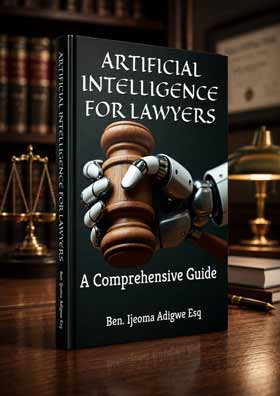 The book also examines Nigeria's legal ecosystem, focusing on the LPELR and NBA AI Guidelines. As a bonus, every purchase comes with a FREE eBook titled: How to Use the AI Features in LegalPedia and LawPavilion.
Ohio Books Ltd praises the publication, stating:
"....this is the only Nigerian book I know of on the topic."
How to Order:
📞 Call, Text, or WhatsApp: 08034917063 | 07055285878
📧 Email: benadigwe1@gmail.com
🌎 Website: www.benadigwe.com
Ebook Version: Access it directly online at https://selar.com/prv626
Authored by Ben Ijeoma Adigwe Esq., ACIarb (UK), LL.M, Dip. in Artificial Intelligence, Director at the Delta State Ministry of Justice, Asaba, Nigeria.
______________________________________________________________________
The book also examines Nigeria's legal ecosystem, focusing on the LPELR and NBA AI Guidelines. As a bonus, every purchase comes with a FREE eBook titled: How to Use the AI Features in LegalPedia and LawPavilion.
Ohio Books Ltd praises the publication, stating:
"....this is the only Nigerian book I know of on the topic."
How to Order:
📞 Call, Text, or WhatsApp: 08034917063 | 07055285878
📧 Email: benadigwe1@gmail.com
🌎 Website: www.benadigwe.com
Ebook Version: Access it directly online at https://selar.com/prv626
Authored by Ben Ijeoma Adigwe Esq., ACIarb (UK), LL.M, Dip. in Artificial Intelligence, Director at the Delta State Ministry of Justice, Asaba, Nigeria.
______________________________________________________________________