*Warns Of Election Rigging, Judicial Capture, Third-Term Plot

Legal scholar and former Chairman of the National Human Rights Commission, Professor Chidi Odinkalu, has warned that introducing state police in the middle of Nigeria’s active election season could hand governors armed structures capable of intimidating opponents, manipulating the 2027 elections and worsening insecurity.
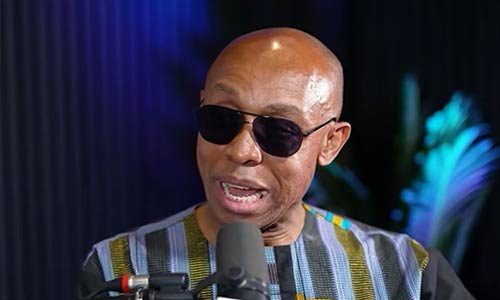
Speaking during an extensive interview on the Mic On Podcast, Odinkalu said he was not opposed to decentralised policing in principle but strongly objected to the speed, secrecy and timing of the current process.
He also raised concerns about the credibility of the Independent National Electoral Commission, the independence of the judiciary, the provision of houses and vehicles to judges by politicians, alleged plans for a third presidential term through constitutional amendment, President Bola Tinubu’s political networks, Peter Obi’s security concerns, Nasir El-Rufai’s prosecution and the ongoing Nigerian Bar Association elections.
Odinkalu said Nigeria was not merely approaching an election year but was already in an active election season, making it inappropriate for lawmakers preoccupied with party tickets, campaign funding and political survival to hurriedly redesign the country’s security architecture.
According to him, citizens could not meaningfully contribute to the state police debate because the actual legislative proposals being processed by the National Assembly had not been made sufficiently accessible to the public.
He argued that public hearings held before the specific proposals were tabled could not be treated as consultations on the final bills.
Odinkalu also criticised the speed with which executive-backed measures were being processed, alleging that some lawmakers received the proposals only on the day they were expected to consider them.
He said a bill passing through multiple legislative stages in one day could not qualify as careful lawmaking or serious policymaking.
The former NHRC chairman said complex issues such as coexistence, policing and insecurity required extensive technical deliberation, which lawmakers fighting for political survival might not have the capacity or time to undertake during an election season.
Odinkalu urged the government and other political actors involved in the process to make a clear commitment that state police would not be deployed before the 2027 general elections.
He said establishing a credible police service required proper recruitment, background checks, intelligence screening, law-enforcement training, command-and-control structures, certification and instruction in firearms handling.
According to him, none of those requirements could be properly completed through a hurried process before the election.
He described Nigeria’s existing police training institutions as severely weakened, noting that military and State Security Service training institutions appeared more functional than police colleges.
Odinkalu said postings to police training institutions were reportedly regarded within the Force as punitive, while the traditional cadet system for recruiting and developing officers had virtually collapsed.
He proposed that any state police arrangement should begin only after the election and should include a defined transitional period, nationally agreed training standards, approved curricula, certification procedures and extensive due diligence on every recruit.
Odinkalu alleged that most state governments already maintained armed or quasi-armed groups operating under different names and could simply convert those formations into state police once the constitutional and legal framework was approved.
He warned that such a process could place uniforms, official authority and weapons in the hands of political loyalists and persons recruited without adequate vetting.
Citing the report of the 2008 M.D. Yusuf Presidential Committee on Police Reform, Odinkalu said an accelerated federal police recruitment exercise conducted between 2000 and 2004 was allegedly exploited by politicians to insert thugs and criminals into the Nigeria Police Force.
According to him, official police reform reports had already documented the danger of hurried recruitment being captured by politicians.
“There will be criminals hired in this process. It is going to be a bazaar for criminals,” he warned.
Odinkalu alleged that the principal attraction of state police to some politicians was not necessarily community protection but the opportunity to possess uniformed and armed structures that could be deployed against political opponents.
He warned that, under the current approach, politically connected individuals could become “official criminals” operating within policing structures during the election period.
The legal scholar said such risks were neither imaginary nor speculative because Nigeria had previously experienced the infiltration of security institutions by political enforcers.
Odinkalu also expressed doubts about INEC’s capacity and commitment to conduct a credible general election under its current leadership.
He alleged that the electoral commission did not necessarily need to conduct a genuine election if it could simply produce and announce results.
“INEC does not have to go through the charade of an election. They can write results,” he said.
He cited the conduct of the Federal Capital Territory elections as an indication of what Nigerians could expect, arguing that the commission had not demonstrated sufficient interest in transparent and credible elections.
Odinkalu maintained that deploying state police before 2027 could further weaken the electoral process by providing governors and political actors with additional coercive tools.
Odinkalu distinguished between internal security and law enforcement, arguing that the two concepts had been improperly merged in the state police debate.
He said the State Security Service was statutorily responsible for internal security under the National Security Agencies Act, while the armed forces had increasingly assumed operational responsibility for internal security through deployments across the federation.
Both institutions, he noted, were under the command of the President.
According to him, governors were now seeking direct control over another armed institution capable of providing political leverage within their states.
He cited the creation and use of vigilante structures in Anambra State in the early 2000s as an example of the grave abuses that could follow when governors controlled armed formations.
Odinkalu said those vigilante groups subsequently engaged in serious violence and abuses from which the state continued to suffer consequences decades later.
He maintained that the current state policing proposal could formalise similar formations by placing them in official uniforms and arming them with state authority.
Odinkalu also raised questions about the financial capacity of state governments to maintain professional police organisations.
He noted that several states owed salaries and pensions, had not fully implemented the national minimum wage and struggled to finance their existing workforces.
According to him, the proposed reforms had not been accompanied by sufficient fiscal decentralisation or a clear mechanism for funding the new police structures.
He warned that states could recruit officers they would later be unable to pay.
Those officers, he said, would nevertheless possess uniforms, firearms and official authority and could seek income through the coercive powers attached to their positions.
Odinkalu reiterated that his position was not based on an ideological rejection of state police but on the dangers arising from the proposed method and timing of implementation.
Odinkalu argued that Nigeria’s federal structure could not be understood or reformed without examining the historical and military settlements that shaped it.
He recalled that Nigeria’s federal arrangement was more decentralised before the civil war, with regions competing economically and contributing to the centre.
He said the war and the centralised military system altered the country’s fiscal and political balance, making the federal government overwhelmingly dominant.
According to him, the state-creation exercises beginning in 1967 were influenced by strategic considerations intended to prevent any region or state from acquiring sufficient power to challenge the centre.
He argued that the fragmentation of the former Eastern Region and the later division of large northern territories were part of a national doctrine designed to ensure that no federating unit could confront the federal government as the Eastern Region did in 1967.
Odinkalu said policing reform could not succeed without confronting the structural doctrine underpinning Nigeria’s federation.
He warned that tactical solutions such as hurriedly creating state police could generate additional problems where the country’s deeper constitutional and historical questions remained unresolved.
The legal scholar also criticised what he described as poorly considered attempts to transfer federal responsibilities to states without assessing their institutional and financial capacities.
He cited the movement of correctional services from the Exclusive Legislative List to the Concurrent Legislative List, questioning how many states could construct and maintain secure facilities for convicted murderers, rapists, child molesters and other high-risk offenders.
Odinkalu said many states might be able to operate open facilities for minor offenders but lacked the resources to run maximum-security custodial centres.
He warned that transferring responsibility without proper classification systems, transition arrangements, integration and public-safety guarantees could expose citizens to greater danger.
He contrasted the limited implementation of state correctional powers with the eagerness of governors to establish state police, alleging that the latter offered greater opportunities to control opponents and elections.
Odinkalu also faulted proposals for state supreme courts, particularly suggestions that litigation over land should terminate at the state level because land was supposedly a state matter.
He argued that state governors did not personally or absolutely own land under the Land Use Act but exercised powers as trustees under a federally established legal framework.
According to him, ending land-related litigation at state supreme courts could alter fundamental structural arrangements underpinning the federation.
Odinkalu identified the illegitimacy of electoral mandates as a major underlying source of insecurity in Nigeria.
He described the vote as the most important currency in a democracy because it gives citizens hope, participation and a stake in the survival of their communities.
According to him, political leaders in a genuine democracy are compelled to protect citizens because every person killed represents a lost voter and affects entire networks of relatives and communities.
He argued that Nigerian politicians often appeared indifferent to killings and mass abductions because they did not depend on citizens’ votes to acquire power.
“The politicians don’t need our votes to get to power. Who do they need? The judges,” he said.
Odinkalu maintained that terrorism, banditry and kidnapping were consequences of a more fundamental governance crisis in which citizens no longer believed that their votes determined who governed them.
Odinkalu strongly criticised governors and other executive officials who provide houses, vehicles and other benefits to judges.
He argued that such benefits should ordinarily be included in the judiciary’s budget and administered independently rather than presented as discretionary gifts by political officeholders.
According to him, any judge who accepted a house or vehicle from a governor breached the Code of Conduct for Judicial Officers.
Odinkalu said that if he were appearing in a case involving a government that had provided a presiding judge with such benefits, he would seek the judge’s recusal.
He maintained that he would refuse to continue appearing before a judge who had accepted a vehicle from an interested state government.
The former NHRC chairman recalled a period when judicial officers maintained strict institutional distance from governors and other members of the executive.
He cited the case of a former Anambra State Chief Judge who resisted being summoned to the office of a military governor because he considered the demand inconsistent with judicial independence.
Odinkalu said independent judges were now endangered and could be denied official vehicles, staff, secure accommodation or suitable courtrooms as punishment for refusing to submit to political pressure.
He declared that judicial independence had “manifestly” been eroded.
According to him, the consequences included lawyers and creditors resorting to thugs rather than courts, weakened confidence in mediation and arbitration, and growing disregard for court orders.
He also questioned the propriety of criminal proceedings in which a defendant was reportedly convicted in absentia, arguing that such developments reflected a disturbing decline in procedural standards.
Odinkalu stood by an earlier prediction that there would be an attempt to secure a third presidential term under the Tinubu administration.
He explained that the effort could emerge through a proposed constitutional amendment introducing a single six-year presidential term.
According to him, if such an amendment were passed after the next election, the crucial legal question would be whether the incumbent president could benefit from the new tenure arrangement.
He said the same constitutional question could potentially affect former President Goodluck Jonathan, depending on the language and timing of the amendment.
Odinkalu predicted that the question would eventually become a judicial dispute requiring determination by the courts.
He argued that the speed with which the current National Assembly handled measures such as the restoration of the old national anthem demonstrated its capacity to approve major constitutional changes without adequate public participation.
The legal scholar said lawmakers who would not return to the National Assembly after the election would have little influence over any subsequent tenure amendment.
He alleged that political actors were replacing some legislators with persons who would be more compliant and grateful to those responsible for their emergence.
Odinkalu declined to describe the National Assembly merely as a rubber stamp, saying he respected rubber stamps too much to use the description.
He said the institution’s record should speak for itself, pointing particularly to the restoration of the former national anthem in one day without public hearings, meaningful public participation or prior national discussion.
According to him, a national anthem represents a country’s identity and should not be changed casually.
He said any parliament willing to alter such a defining national symbol without consultation was “not worth the name.”
Assessing the Tinubu administration, Odinkalu said living conditions had become considerably more difficult for Nigerians.
He argued that citizens could endure hardship where they saw political leaders demonstrating empathy and sharing in their sacrifices.
However, he said the purchase of a presidential aircraft, expenditure on official mansions and renovations, and increased financial benefits for presidential advisers created the impression that those governing the country were insulated from the suffering of ordinary citizens.
Odinkalu also questioned the emergence of alleged ad hoc institutions within the Presidency that were later disowned after details entered the public domain.
He said the government’s refusal to acknowledge the depth of the crisis worsened public frustration.
The legal scholar criticised claims that there was no hunger in Nigeria and disputed suggestions that earning about ₦60,000 in the country represented a better life than relocating abroad, noting that the amount was below the national minimum wage.
He said many of those leaving Nigeria were highly trained doctors, information technology professionals and lawyers, including senior legal practitioners.
According to him, the government should treat the departure of skilled professionals as evidence of a serious national crisis rather than dismiss it.
Odinkalu also dismissed the presidential directive asking the Independent Corrupt Practices and Other Related Offences Commission to investigate an alleged fake federal institution as “greenwashing.”
He argued that the ICPC did not require presidential permission to investigate alleged corruption.
According to him, the integrity of the investigation was questionable because allegations reportedly involved the President’s Chief of Staff, while the President had already publicly expressed confidence in him.
Odinkalu said a credible process should have required the Chief of Staff to step aside temporarily to prevent interference or the appearance of influence.
He also questioned who would receive the investigative report if it were submitted to the Presidency, noting that such reports ordinarily passed through the office of the Chief of Staff.
He said the National Assembly’s refusal to conduct a separate investigation further reinforced his doubts about the process.
Responding to Peter Obi’s statement that he might not be alive to contest the 2027 election, Odinkalu said the government should take concrete steps to guarantee the opposition politician’s safety.
He recalled that after an attack on Muhammadu Buhari before the 2015 election, the Goodluck Jonathan administration strengthened Buhari’s protection.
Odinkalu said the current administration should follow that precedent and reassure Obi that he would not suffer any harmful consequence because of political differences.
He maintained that the state had a duty to provide adequate security to major opposition figures participating in the democratic process.
Odinkalu also addressed the prosecution and detention of former Kaduna State Governor Nasir El-Rufai.
He acknowledged that El-Rufai had taken actions as governor that he considered deeply objectionable and that some of his alleged victims remained alive.
However, he said opposition to El-Rufai’s previous conduct could not justify the denial of his constitutional rights.
Odinkalu maintained that the offences with which the former governor was charged were bailable but that the bail conditions imposed had allegedly made his release practically impossible.
He criticised a requirement reportedly asking a civil servant to provide a ₦15 billion bank guarantee, describing it as manifestly unreasonable.
“The judiciary is being instrumentalised in the case of Nasir El-Rufai. I have no doubts about that,” he said.
Odinkalu argued that the rule of law must apply to every citizen, regardless of their popularity, political record or past conduct.
He added that El-Rufai’s predicament illustrated the transient nature of power and should serve as a warning both to former officeholders and those currently exercising authority.
Odinkalu maintained that President Tinubu’s major network outside Yorubaland was political.
He argued that individuals ordinarily developed enduring networks through primary and secondary schools, universities, professional training, the National Youth Service Corps, the armed forces, intelligence services and professional associations.
He questioned the breadth of Tinubu’s social and institutional networks outside politics, suggesting that political alliances founded mainly on power and patronage might not provide the same level of enduring personal trust as educational, professional or service-based relationships.
Odinkalu also questioned the timing of the 2027 election referenced during the programme, arguing that a mid-January poll could disadvantage millions of Nigerians registered to vote outside their ancestral homes.
He said many people who travelled home for Christmas and New Year might be unable or unwilling to undertake another expensive journey to return to their places of registration days before the election.
He cited northern commercial transport workers living in southern states and South-East traders living in Abuja, Kano, Kaduna and other northern cities as examples of citizens who could be affected.
According to him, voters would be forced either to remain at their places of residence throughout the festive period or travel home and risk being unable to return in time to vote.
Odinkalu alleged that those responsible for the election timetable understood its possible effect on internal migrants and voter participation.
On the controversy surrounding the 2026 Nigerian Bar Association national elections, Odinkalu said the election should proceed.
He argued that regional professional forums such as the Eastern Bar Forum, Midwest Bar Forum, Egbe Amofin and other groupings comprised individual NBA members but were not themselves members of the Association.
According to him, such organisations could support candidates but could not dictate who should become NBA President.
Odinkalu cited the 2018 election, when the Eastern Bar Forum reportedly preferred one candidate but Paul Usoro, SAN, emerged despite not being its chosen aspirant.
He also recalled the 2020 election, in which candidates from the region favoured by a regional arrangement lost to Olumide Akpata, who came from Edo State.
Odinkalu said the incoming NBA President was certain to be Yoruba because all the presidential candidates were from the South-West, while the next General Secretary would be Igbo because all candidates for that office were from the South-East.
He maintained that no Yoruba, Igbo, Hausa or member of any other ethnic group was superior to another.
Odinkalu called for an end to the “cabalisation” of the NBA presidency and insisted that every lawyer who paid the prescribed Bar Practising Fee should be entitled to vote.
“Every lawyer who pays practising fees must have a vote,” he said, adding that he was prepared to defend the principle regardless of the personal or professional consequences.
Odinkalu concluded the conversation by expressing hope that Nigeria would prevail despite the institutional, electoral and security challenges confronting the country.
 Interested buyers are encouraged to place their orders and enquiries via:
0704 444 4777, 0704 444 4999, 0818 199 9888
Website: www.alexandernigeria.com
Interested buyers are encouraged to place their orders and enquiries via:
0704 444 4777, 0704 444 4999, 0818 199 9888
Website: www.alexandernigeria.com

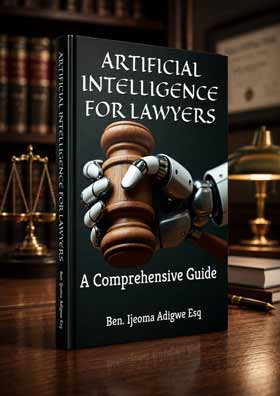 The book also examines Nigeria's legal ecosystem, focusing on the LPELR and NBA AI Guidelines. As a bonus, every purchase comes with a FREE eBook titled: How to Use the AI Features in LegalPedia and LawPavilion.
Ohio Books Ltd praises the publication, stating:
"....this is the only Nigerian book I know of on the topic."
How to Order:
📞 Call, Text, or WhatsApp: 08034917063 | 07055285878
📧 Email: benadigwe1@gmail.com
🌎 Website: www.benadigwe.com
Ebook Version: Access it directly online at https://selar.com/prv626
Authored by Ben Ijeoma Adigwe Esq., ACIarb (UK), LL.M, Dip. in Artificial Intelligence, Director at the Delta State Ministry of Justice, Asaba, Nigeria.
_______________________________________________________________________
The book also examines Nigeria's legal ecosystem, focusing on the LPELR and NBA AI Guidelines. As a bonus, every purchase comes with a FREE eBook titled: How to Use the AI Features in LegalPedia and LawPavilion.
Ohio Books Ltd praises the publication, stating:
"....this is the only Nigerian book I know of on the topic."
How to Order:
📞 Call, Text, or WhatsApp: 08034917063 | 07055285878
📧 Email: benadigwe1@gmail.com
🌎 Website: www.benadigwe.com
Ebook Version: Access it directly online at https://selar.com/prv626
Authored by Ben Ijeoma Adigwe Esq., ACIarb (UK), LL.M, Dip. in Artificial Intelligence, Director at the Delta State Ministry of Justice, Asaba, Nigeria.
_______________________________________________________________________