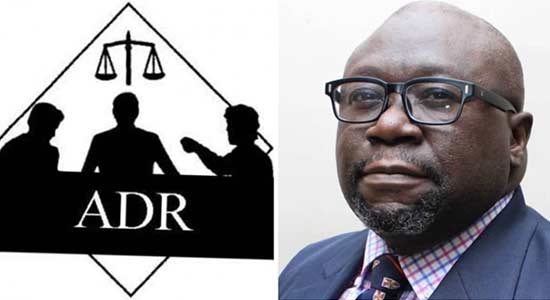
In this article, DR. ADEYEMI AGBELUSI (FCIArb), an internationally accredited Mediator and Arbitrator, argues that instead of fiat and litigation, consensus building is better orchestrated via Alternative Dispute Resolution (ADR) methods.

The legal system has always been an essential aspect of society, particularly when it comes to the resolution of constitutional disputes. However, there are instances where the court system may not be the most effective or efficient method of resolving such issues. This is where Alternative Dispute Resolution (ADR) comes into play.
ADR refers to a range of processes that help parties resolve disputes without resorting to litigation. These processes include mediation, negotiation, and arbitration.
In recent times, there has been a growing need to use ADR methods to resolve constitutional crises. This is because of the perceived inefficiency of the court system when it comes to dispensing justice. In many instances, the courts tend to apply rigid rules and laws to issues before them rather than considering the broader context of the dispute at hand. This often results in an outcome that does not dispense fairness and justice. It also gives rise to judgements which are difficult to enforce or obey, as the courts in this instance cannot use the power of the security forces to compel compliance of the government in which coercive force resides.
A stable and prosperous society is built on consensus. This is what ADR methods offer. Building a society by consensus is a collaborative approach to decision-making that prioritizes collective agreement over unilateral decision-making by a single person or group. This approach ensures that everyone’s voices are heard and considered before any actions are taken, which in turn promotes harmony and unity among members of the society.
The alternative to building a society by consensus is to rely on fiat or litigation, which can be problematic. Fiat refers to decisions made unilaterally by a person or group without input or agreement from others. Such decisions can be met with resistance, and can ultimately result in conflict within the society. Litigation refers to the process of settling disputes through the legal system. This can be time-consuming, expensive, and can further exacerbate tensions within the society.
Building a society by consensus requires that members of the society come together to discuss and negotiate any decisions that need to be made. This involves active listening, empathy, and a willingness to compromise. It also requires that everyone involved be committed to the long-term success and stability of the society, rather than their own individual interests.
Consensus-building can take time, but it ultimately results in stronger and more harmonious societies. This approach allows everyone to feel heard and valued, which in turn fosters a sense of community and belonging. It also helps to avoid the negative consequences of fiat or litigation, such as resentment, division, and legal fees.
ADR methods are focused on finding mutually acceptable solutions to disputes. They allow the parties involved to work collaboratively to resolve the issues in a way that meets their needs and interests. By doing so, ADR methods are able to provide a more fair and equitable solution to constitutional crises.
One of the primary benefits of ADR methods is their flexibility. Unlike the court system, ADR methods are not bound by strict legal procedures and rules. This allows the parties involved to craft solutions that are specific to their needs and interests. This is particularly important in constitutional crises where the issues involved are often complex and multi-faceted.
Mediation, for example, is a common ADR method used to resolve disputes. It involves a neutral third party who helps the parties involved to communicate effectively and find common ground. In the context of constitutional crises, mediation can be particularly effective in bringing together opposing parties to work collaboratively towards a resolution that meets the needs of all parties involved.
Another ADR method that can be effective in resolving constitutional crises is arbitration. This process involves a neutral third party who listens to both sides of the dispute and makes a binding decision based on the evidence presented. While the decision is binding, arbitration is often a more flexible process than litigation, as the parties can agree on the scope of the arbitration and the issues to be resolved.
Negotiation is another ADR method that can be used to resolve constitutional crises. This process requires the parties involved to work together to find a mutually acceptable solution to the issues at hand. Negotiation is often effective in situations where the parties have an ongoing relationship and want to preserve it.
In addition to their flexibility, ADR methods are often faster and less expensive than going to court. This is because they do not involve the same level of legal procedures and formalities as the court system. By using ADR methods to resolve constitutional crises, parties can save time and money while still arriving at a fair and equitable solution.
In conclusion, it has become imperative to deploy ADR methods to resolve constitutional crises. The court system, while important, is not always the most effective or efficient method for resolving complex disputes. Conversely, ADR methods provide a more flexible, fair, and equitable approach to resolving disputes. By using ADR methods, parties can arrive at a mutually acceptable solution that meets their needs and interests, while also saving time and money.
It is time for us to embrace ADR methods as a critical tool for resolving constitutional crises in a way that ensures fairness and justice for all parties. A political solution that is worked on by all concerned parties will need no enforcement and benefit from widespread compliance.
[A MUST HAVE] Evidence Act Demystified With Recent And Contemporary Cases And Materials

Available now for NGN 40,000 at ASC Publications, 10, Boyle Street, Onikan, Lagos. Beside High Court, TBS. Email publications@ayindesanni.com or WhatsApp +2347056667384. Purchase Link: https://paystack.com/buy/evidence-act-complete-annotation
______________________________________________________________________ “Enhance Legal Practice With Authoritative Reports” — Alexander Payne Offers Comprehensive Law Reports, Spanning Over A Century Of Nigerian Jurisprudence Interested buyers are encouraged to place their orders and enquiries via:
0704 444 4777, 0704 444 4999, 0818 199 9888
Website: www.alexandernigeria.com
Interested buyers are encouraged to place their orders and enquiries via:
0704 444 4777, 0704 444 4999, 0818 199 9888
Website: www.alexandernigeria.com