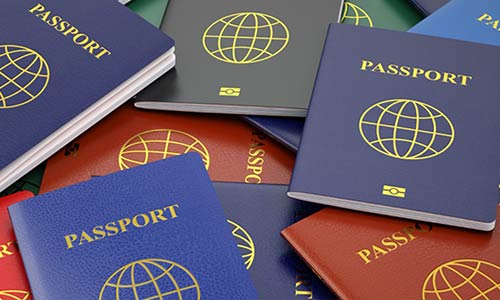
Faced with a critical shortage of skilled labor, Germany is planning to introduce its version of a green card. It aims to make it easier for non-EU nationals to come to find work.


The German government is introducing its own version of a “green card”, the Chancenkarte (literally “opportunity card”), in an attempt to plug its desperate labor shortage. Industry associations have been complaining for some time, and the Labor Ministry has suggested the shortfall is slowing economic growth.
The new “opportunity card,” presented by Labor Minister Hubertus Heil in the German media this week, will offer foreign nationals the chance to come to Germany to look for work even without a job offer, as long as they fulfill at least three of these four criteria:
1) A university degree or professional qualification
2) Professional experience of at least three years
3) Language skill or previous residence in Germany
4) Aged under 35
The criteria are not unlike those used in Canada’s points system, though that uses a more complex weight system. And there will be limits and conditions, the minister from the center-left Social Democrats (SPD) emphasized in media interviews this week. The number of cards will be limited by the German government on a year-by-year basis, according to demand on the labor market, he explained.
“This is about qualified immigration, an unbureaucratic process, and that’s why it’s important that we say that those who have the opportunity card can earn a living while they are here,” Heil told the WDR public radio station on Wednesday.
There are certainly some improvements here, according to Sowmya Thyagarajan. She came to Hamburg from India in 2016 to do a Ph.D. in aviation engineering and is now CEO of her own German company, Foviatech, which creates software for streamlining transportation and healthcare services.
“I think this points system could be a very good opportunity for people coming from abroad to work here,” she told DW. “Especially due to the depleting young population in Germany.” At the moment, Thyagarajan said, her company gives preference to Germans and EU nationals when recruiting, simply because of the bureaucratic hurdles involved for anyone else.
New points, new hurdles
Some are not impressed with Heil’s opportunity card at all. “It’s setting up unnecessarily high hurdles and makes the system more complicated,” said Holger Bonin, research director at theInstitute of Labor Economics (IZA) in Bonn.
To Bonin, Heil’s points system will simply require more bureaucracy.
“Why don’t they make it much simpler? Give people a visa to look for work, and if they don’t find anything within a certain amount of time they have to leave?” he said. “To add extra points to that just makes it more complicated — if these criteria are important to employers, they can decide that during the recruitment. They won’t need a card as a pre-selection.”
Indeed, Bonin argues that some of the criteria Heil names might not actually be that important to employers in Germany: For instance, if they’re an international company that communicates mostly in English, they won’t care whether applicants can speak German or have lived in Germany.
That is borne out by Thyagarajan, who had a varying assessment of how useful the four criteria were: Qualifications and language skills were both important, she said, but she was less certain about the practicality of age restrictions. “Age of less than 35, I’m not sure about that — you don’t have to be young, it really depends on how they’re actually skilled.” As for the three years’ experience, Thyagarajan is also skeptical, since in some cases a degree provides the necessary expertise: “For some job profiles you don’t require experience, but for some, you do indeed have to be experienced.”
Cultural and structural problems
Germany’s skilled labor shortage has been an issue for some time. Gesamtmetall, the Federation of German Employers’ Associations in the Metal and Electrical Engineering Industries, says that two out of every five companies in its sector are seeing production hindered by a lack of staff. The Central Association for Skilled Crafts in Germany (ZDH) says that the country is missing around 250,000 skilled craftspeople.
The number of skilled people emigrating to Germany from non-EU countries to work has risen over the last few years, but it is still relatively low. According to the Mediendienst Integration, the number of qualified workers entering Germany was just over 60,000 in 2019, just 12% of all migration from non-EU countries to Germany in that year.
Germany has a few cultural disadvantages compared to other Western nations hoping to attract skilled workers: German is less universally spoken than English. “Skilled workers are almost always looking to get into countries that speak English,” Thyagarajan said. “To some extent, it’s important (that our employees speak German), because this is Germany, at least a working proficiency.”
Another issue is that German employers traditionally set a higher store by certificates and qualifications, and these are often not recognized in Germany, or take months to approve. “Those problems won’t be solved by introducing an opportunity card,” Bonin said.
There are other systemic problems for German employers: Germany’s federal system means different local authorities sometimes recognize different qualifications, and Germany’s reliance on paper bureaucracy, with employees, often needing translations of their certificates approved by notaries. This too is a concern that Heil is attempting to tackle.
“I think it’s very, very necessary that, apart from a modern immigration law, to thin out the bureaucratic monster of recognizing qualifications,” he told WDR. To that end, he said, he would like to see a central agency that can approve qualifications quickly and back offices in Germany that can support overworked consulates abroad.
 Interested buyers are encouraged to place their orders and enquiries via:
0704 444 4777, 0704 444 4999, 0818 199 9888
Website: www.alexandernigeria.com
Interested buyers are encouraged to place their orders and enquiries via:
0704 444 4777, 0704 444 4999, 0818 199 9888
Website: www.alexandernigeria.com

“Order Justice Omolaye-Ajileye’s Electronic Evidence Books Now” — Essential Guides On Evidence Act, Case Law And Digital Proof

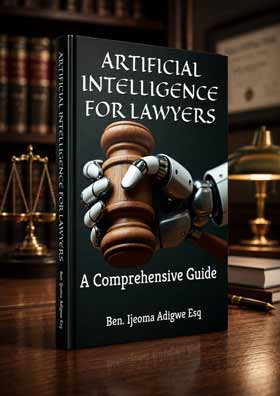 The book also examines Nigeria's legal ecosystem, focusing on the LPELR and NBA AI Guidelines. As a bonus, every purchase comes with a FREE eBook titled: How to Use the AI Features in LegalPedia and LawPavilion.
Ohio Books Ltd praises the publication, stating:
"....this is the only Nigerian book I know of on the topic."
How to Order:
📞 Call, Text, or WhatsApp: 08034917063 | 07055285878
📧 Email: benadigwe1@gmail.com
🌎 Website: www.benadigwe.com
Ebook Version: Access it directly online at https://selar.com/prv626
Authored by Ben Ijeoma Adigwe Esq., ACIarb (UK), LL.M, Dip. in Artificial Intelligence, Director at the Delta State Ministry of Justice, Asaba, Nigeria.
_______________________________________________________________________
The book also examines Nigeria's legal ecosystem, focusing on the LPELR and NBA AI Guidelines. As a bonus, every purchase comes with a FREE eBook titled: How to Use the AI Features in LegalPedia and LawPavilion.
Ohio Books Ltd praises the publication, stating:
"....this is the only Nigerian book I know of on the topic."
How to Order:
📞 Call, Text, or WhatsApp: 08034917063 | 07055285878
📧 Email: benadigwe1@gmail.com
🌎 Website: www.benadigwe.com
Ebook Version: Access it directly online at https://selar.com/prv626
Authored by Ben Ijeoma Adigwe Esq., ACIarb (UK), LL.M, Dip. in Artificial Intelligence, Director at the Delta State Ministry of Justice, Asaba, Nigeria.
_______________________________________________________________________