*Says “Mr President Goes From Home To Office On Foot, I Don’t Know Where You See The Convoy”

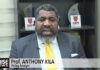
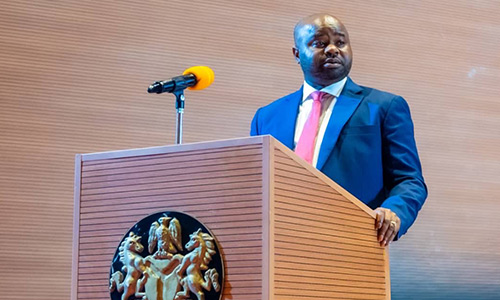
The Chairman of the Nigeria Revenue Service, Dr Zacch Adedeji, has described the removal of petrol subsidy as the best thing to have happened to Nigeria, saying President Bola Tinubu deserves commendation for taking the decision and challenging those seeking to unseat him in 2027 to state what they would do differently.
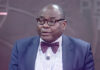
Adedeji spoke in an extended interview on Channels Television’s Sunday Politics on 9 August 2026, in which he was pressed repeatedly on the gap between improving national accounts and the daily experience of households, and in which he set out the administration’s economic record across revenue, refining, foreign exchange, debt, employment and the cost of governance.
“Subsidy Was Evil”
Asked to defend the reforms against the argument that ordinary Nigerians remain in pain, the NRS chairman was direct.
“All the good results that I will reel out soon come as a result of that courageous decision. So, it is not a mistake; it is the best thing that has happened to this country. Subsidy was evil and had been with Nigeria for decades,” he said.
He rejected the premise of the question at the outset. “In your introduction there are some things I need to correct, because you are making a distinction between people and Nigeria. The summation of people you have in Nigeria is what is called Nigeria. So if the balance sheet of Nigeria is getting better, then by extension the life of Nigerians is getting better.”
“Four Mutually Reinforcing Distortions”
Adedeji structured his account of the economy into what he met, what was done, the results, and the outlook.
“Mr President inherited an economy that is baffled with four mutually reinforcing distortions. One is subsidy that is unsustainable. The second one is an opaque foreign exchange market that discouraged investment into the country. The third one is an underperforming oil sector, which should be our backbone. And the last one is that we have a tax base that is very small compared to the size of our economy.”
He described the position inherited in concrete terms. “Instead of NNPC bringing money to us, we are actually owing NNPC because of subsidy that is not sustainable. You go to CBN, you have a backlog of $7 billion. You have ways and means of roughly N23 trillion.”
He said the President moved first on the most fundamental item. “In our language they say when the tree falls upon each other, you have to take it from the top. And he took the bold and most fundamental decision of this administration, which is the removal of subsidy,” coupled with unification of the exchange rate, tax reform and executive orders issued pending the passage of the laws.
“Economics Is Not Run By Emotion”
The chairman said the reforms must be judged by rules rather than sentiment. “As an accountant, economics is not run by emotion. They respond to the rules. There are fundamentals.”
He said the President had “elevated the structure of the system far beyond the comprehension of some people,” and put his challenge to critics. “Are they saying that it is wrong that we removed fuel subsidy? Are they saying that it is wrong that we unified the rate? Are they saying that we should have continued to use the 1923 stamp duty tax law?”
He returned to it repeatedly. “What the President deserves now is support and commendation for being a statesman and not a politician. Anybody who says he is coming, just ask them, what will you do differently?”
“The Subsidy Today Would Have Been N53 Trillion”
On what retaining the subsidy would have cost, Adedeji offered figures.
“The subsidy today would have been N53 trillion if Mr President had not removed it, given what is happening in Iran, given what is happening globally,” he said, adding that against a national budget he put at N63 trillion, that would have represented roughly three quarters of the budget on subsidy alone.
“So it is not what people think it is. People should have considered where we would have been,” he said. “And I tell you the ripple effect of that. The exchange rate today would have been at N3,500 if that had not been done.”
“We Were Living A Lie”
On the naira, he rejected the description of the reform as a devaluation.
“That is a lack of understanding. We did not devalue the naira. It is not naira devaluation,” he said. “The naira was not having its true value, and that is why you don’t see any importation, because people outside know the real value of the naira. So manually holding the dollar to naira at 360 or 340 will not bring anything, because economics is principle.”
He continued: “If the parallel market is 1,500 and you say the official rate is 300, that is why you don’t see anything. We were living a lie in this country.”
He put the effect of the disparity on capital inflows in one line. “When you have the exchange rate at N463 and the official rate is roughly at N1,200, you have zero capital importation.”
“If Mr President Had Not Removed Subsidy, There Is No Way The Refinery Would Work”
Adedeji tied the subsidy decision directly to the emergence of domestic refining.
“Before now the refining capacity of this country was 30,000 barrels a day. Through the conducive environment and the ingenuity of Mr President, we are now refining 700,000 barrels per day,” he said.
He set out the logic. “If Mr President had not removed subsidy, there is no way the refinery will work, because if you produce and it is not government producing, it is private, and you cannot sell it at market driven price. How would that happen?”
He said the effect was protective during the global disruption. “Imagine when we had the Iran war, we were protected for the better part of it. Do you remember when last you heard about a fuel queue in Nigeria? Do you remember the last time people went on strike over petrol pricing?”
He added that Nigeria became a net exporter of petroleum motor spirit in March, describing it as something that had not happened in four decades, and said the Dangote refinery had become the leading supplier of aviation fuel to Europe, surpassing the United States. He also said the naira for crude initiative was the President’s own, and that Ghana was now copying it, adding that the domestic pump price is materially lower than the global average because refining now takes place locally.
“Where Are We Coming From?”
Confronted with IMF data putting poverty at 63 per cent of the national poverty line and estimating 27 million Nigerians facing food insecurity in 2025, and with World Bank figures on household incomes, Adedeji did not accept that the reforms had impoverished Nigerians.
“If you remember where we are coming from, if we’ve not done what we are supposed to do, possibly double of that population would have gone into poverty, and I’m telling you that progress is what we should measure,” he said.
Pressed on whether he accepted that more people are poor, he answered: “No, I’m not acknowledging that more people are poor. I’m telling you that more people would have been poorer.”
He argued the point from the other direction. “Is it the one that has doubled the salary that makes them poorer? Is it the one that has made all the companies make more money and they are paying salary to their people that makes them poorer? That is where you compare data to the reality.”
He also objected to the framing of the questions. “Let people come based on verifiable data. Let us not focus on this motherhood statement, common man, average man.”
“State Governments Are No Longer Coming To Look For Salary Support”
The chairman said the clearest evidence of the reforms reaching ordinary people is at the subnational level, drawing on his own experience as a former commissioner of finance.
“Now state governments are not coming here to borrow or to look for salary support, and the civil servants in the states are not common men that are being well paid now? Are they not common men?” he said.
He said monthly Federation Account distribution had risen from about N700 billion in 2023 to N4.5 trillion, and later put the May 2023 figure at N71 billion monthly against N4.5 trillion in July, describing the increase as about 532 per cent. He cited one governor who he said had moved from collecting a far smaller monthly allocation to N60 billion and had executed projects “without borrowing a dime,” and said similar accounts had come from Ekiti and Imo.
“How many times have you heard in the last three years that a state government or workers in a state have gone on strike?” he asked. “When you pay salary in the state, all the marketers, all the traders, this is where they get their own.”
“Before Now, Nobody Talked About Student Loan”
Adedeji cited the student loan scheme as a direct benefit to households.
“Before now, nobody talks about student loan. Based on the last check, more than one million students in 300 higher institutions have been disbursed more than N303 billion in the last three years. This has never been in existence,” he said, adding that the rich do not apply for such loans.
He also pointed to the consumer credit scheme. “We have credit corp for civil servants, that they can acquire car, house today,” describing it as having moved beneficiaries from salary and rent concerns to acquiring homes and vehicles.
He said the minimum wage had been doubled within three years, and that the President directed that the review be done in three years rather than the statutory five.
“Market Capitalisation From N30 Trillion To N150 Trillion”
On the capital market, the chairman said the NGX leadership had told the President that market capitalisation had risen from about N30 trillion to about N150 trillion, and that more than 900 millionaires had been created in the process.
He said bank recapitalisation had raised N4.6 trillion within three years, with 75 per cent sourced locally and without a single bank collapsing, which he said meant the safety of ordinary depositors’ funds. He said Dangote’s private placement of N1.2 trillion was oversubscribed fourfold.
On corporate performance, he said the earnings of companies such as MTN, Dangote and others had multiplied sixfold because of the operating environment, and that this feeds employment. “When big corporations are doing well, they are the ones to recruit, and that is the real economy.”
Revenue: “Our Target Is N40 Trillion”
On collections, Adedeji confirmed the trajectory put to him, that receipts rose from N12.3 trillion in 2023 to about N28 trillion in 2025, with the 2026 figure already at N27 trillion by mid-year.
“Actually our target is N40 trillion now,” he said.
He attributed the performance to the tax reforms. “The first law in Nigeria on tax was promulgated in 1923, and nobody has changed it until President Bola Tinubu came on board, taking that courageous decision and consolidating all the taxes.” He said 2024 recorded a 76 per cent revenue performance, which he described as unprecedented in Nigeria’s history.
He said the reform had reduced 66 books of taxation to one codified instrument, with the number of payable taxes now in single digits, and asked: “What makes the business environment more conducive other than that?”
“We Are Here To Tax Prosperity, Not Poverty”
Asked about fears that the poor may end up paying more, the chairman rejected the suggestion.
“Our focus is not revenue. If you remember Mr President’s cliche, I am to tax prosperity, I don’t want to tax poverty. I’m to tax the fruit, not the seed, and I’m to tax the return, not investment. So for us it is not extracting.”
He explained the incentive as he sees it. “If you make N100 I will take N30. If you make N200 I will take N60. If you make N300 I will take N90. So if I want to make more, I must work for you to make more. That is why it is in the best interest of us in the Nigeria Revenue Service that businesses are doing well.”
On Reserves, Trade And Debt
Adedeji said external reserves now stand at about $51 billion, which he described as the highest in 17 years and sufficient for about 10 months of imports against an international benchmark of three months, adding that the improvement is partly because petrol importation has ceased.
On trade, he said the country had moved from a marginal export position of about N44 billion in May 2023 to N7.5 trillion. He said Shell alone was bringing in more than $20 billion in inflow on account of executive orders and targeted incentives.
On debt, he said that measured in dollar terms the position is lower, noting that the administration inherited N23 trillion in ways and means. “We’ve not printed one naira. We are even paying down on those things.”
On Frontier Exploration And Executive Order Nine
Responding to reports concerning movement of funds, the chairman said the criticism reflects unfamiliarity with a presidential directive.
“Mr President issued Executive Order Nine that even the frontier exploration should be paid directly into the Federation Account,” he said, adding that collection was assigned to the Nigeria Revenue Service and that payments began about three or four months ago.
“I don’t know whether you read something recently, they said oh, movement of money. Those people are still living in the past. They thought frontier exploration was to be paid elsewhere. We are not doing anything illegal.”
He said NNPC, which previously remitted nothing because of subsidy, now remits more than N100 billion monthly.
On Budget Releases: “Financing Is Different From Funding”
Confronted with complaints about poor capital releases, a 2025 budget carried over into 2026 and unpaid contractors, Adedeji drew a distinction.
“There is a total difference between the budgeting system and the expenditure framework, and you are mixing two things together,” he said. “Financing is different from funding. They are two different things.”
He gave an illustration. “Lagos Calabar is there in the budget, but the funding structure is that you pay part, the contractor looks for the rest, and because the economy is viable, for the first time in the history of this country people are oversubscribing to fund these legacy projects. The same thing for the airport.”
He declined to go further. “Most of this thing is not what I will talk about publicly. In our language, one who eats his own pap does not get it exposed. That is our strength.”
He acknowledged a structural problem in budgeting and said it is being addressed. “If you listen to Mr President’s budget speech this year, he said he is not going to allow a rolling budget, because we are making reform in that area.” On contractors and agencies being owed, he said the Minister of Finance is working on it within an existing funding structure.
Asked where the increased revenue is going, he pointed to infrastructure. “Have you ever seen Lagos Calabar by that group before? Have you seen Sokoto Badagry by that group before? These are the monies used for infrastructure,” adding that funds are also going into the Bank of Agriculture and the Bank of Industry and into mechanised agriculture.
“Mr President Goes From Home To Office On Foot”
On the cost of governance and the perception that officials live in luxury, the chairman was emphatic.
“Mr President goes from home to office on foot, not even driving except when he is going to the airport. I don’t know where you see the convoy,” he said.
Pressed on the presidential aircraft and other expenses, he asked: “How much is escalating that the President of Nigeria cannot afford? Please don’t embarrass this country.” He noted that the President had not left the country in three months, and asked how many parties or holidays he had been seen at in three years, describing him as a former governor, a former treasurer at Mobil, an accomplished accountant and an investor.
He also offered an economic argument against austerity. “Government is both debit and credit. If government needs to print and it does not print, don’t you know the printer has lost the revenue? If we need to use a conference centre and you don’t use the conference centre, you don’t know that the owner of the conference centre has lost the money, and it is where they make money that we can tax them. The real economy is both debit and credit.”
On Refineries, Poverty Reduction And The States
Asked about the state owned refineries, Adedeji said the question is no longer material to the outcome.
“For us honestly it doesn’t matter,” he said. “Today, through Mr President’s initiative of naira for crude supporting refineries, we have 700,000 barrels per day refining capacity. Whether it is done by private or by government, we are one cycle.” He said NNPC is in partnership arrangements to make the state facilities work.
On poverty reduction, he located primary responsibility at the subnational level. “If you talk about real poverty reduction, honestly it resides more with the state, because they are closer to the people. The one strong thing you can use to take people out of poverty is education, which starts from kindergarten, primary school, secondary school. These are the responsibility of state government.”
He said the federal contribution lies in the education loan fund and the consumer credit scheme, and noted that 90 per cent of VAT goes to the states, adding that what the service presents is federation revenue and not federal government revenue. He said the President has withheld no funds due to the states, and invited journalists to put the same questions to state governments.
On electricity, he said the President signed the Electricity Act allowing states to generate, transmit and distribute, and that a task force has been constituted. “Except we correct all those prior distortions, nobody will come and invest in electricity.”
On Jobs And The Youth Population
Asked whether the government is troubled by unemployment and out of school children, he said it is.
“We are bothered, and that is why you see what Mr President is doing. Not only is TETFund funding, the Ministry of Education is also working on technical and vocational education that gives our people the job.”
He added that employment comes chiefly from corporate organisations rather than government, and pointed to construction sites. “Go to the airport in the morning, minimum 1,000 people are trooping in daily on the airport reconstruction. Go to all the sites, whether Sokoto Badagry, whether Lagos Calabar. Employment is on the rise.”
“We Are Now At The Cruising Stage”
Asked to give Nigerians a timeline rather than a further request for patience, Adedeji said the change is already visible.
“I understand and I empathise with our people, because we always want more and better. But when last did you hear about a fuel queue? When last did you hear that workers will go on strike tomorrow? When last did you hear that one state needs to do this with ASUU or the NLC? Do you think they just vanished? Are they not products of those courageous decisions that we’ve taken?”
He said the difficult phase has passed. “We’ve moved from crisis management in our economy to consolidation stage.”
He used an aviation analogy more than once. “It is like you are going to America or you are going to London. When you are taking off it is bumpy, but now we are at cruising stage. Now they say loosen your belt, the food is about to be served. Is that where you now say let’s go and take off again?”
He argued against changing course. “The new tax law, this is like eight months of implementing it. You now want to change that? Is it now that credit corp has come to stay, that they’ve moved from salary and rent and now want to move into having houses and cars? Is that when you want to stop it? Or when the education loan fund is now stabilised, that the first set of our people in the next one year will graduate as products of the fund? Is that when you want to stop it?”
“He Is The Best Gift To This Republic”
Asked whether he considers the President the best Nigeria could have, the chairman did not hedge.
“As of today, by the special grace of God, he is the best. And I’m saying he is the best gift to this republic. I work with him day and night. I’ve never seen anybody that has Nigeria in his mind like him.”
On the 2027 question, he said: “Nigerians are so wise. Nigerians are so considerate. Nigerians don’t pay good with evil.” He challenged critics again: “Show me anyone with any blueprint apart from commenting on what we said. Tell me what they will do differently. It’s not by saying they can do better. I have shown you data. I have shown you where we met it and where we’ve taken it to.”
“Three Things That Have Changed”
Asked to name three things that should have changed in the pocket of the average household before Nigerians could conclude that the reforms worked, Adedeji reframed the question as what has already changed.
He listed energy security, with fuel queues gone; access to education, saying a child in the village can now go to university whether or not the family has money; and what he described as peace and hope arising from an architecture in which corporations that are doing well will take on and take care of workers.
“Now we are out of crisis. We are at consolidation and we are now on the cruise moment,” he said.
[A MUST HAVE] Evidence Act Demystified With Recent And Contemporary Cases And Materials

Available now for NGN 40,000 at ASC Publications, 10, Boyle Street, Onikan, Lagos. Beside High Court, TBS. Email publications@ayindesanni.com or WhatsApp +2347056667384. Purchase Link: https://paystack.com/buy/evidence-act-complete-annotation
______________________________________________________________________ “Enhance Legal Practice With Authoritative Reports” — Alexander Payne Offers Comprehensive Law Reports, Spanning Over A Century Of Nigerian Jurisprudence Interested buyers are encouraged to place their orders and enquiries via:
0704 444 4777, 0704 444 4999, 0818 199 9888
Website: www.alexandernigeria.com
Interested buyers are encouraged to place their orders and enquiries via:
0704 444 4777, 0704 444 4999, 0818 199 9888
Website: www.alexandernigeria.com