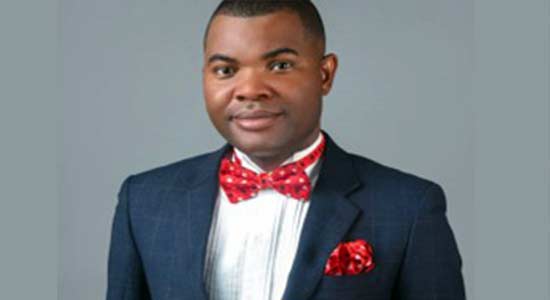
By Akin Olawale Oluwadayisi
In a democratic government, the rule of law reigns supreme, over and above every other instrument, institution and personality. The rule of law is made to apply so that when power is corrupted and absolute power becomes extensively corrupted, there will be a yardstick to challenge the authorities endowed with such power.
Hence, the grundnorm of the Nigerian society which is the 1999 Constitution (as altered) provides in section 1 that the Constitution is supreme over and above every person, government and agency and every other law (inclusive of regulation and popular conventions) that is inconsistent with any of the provisions of the Constitution, shall to the next extent of its inconsistency be declared null and void.
Having listened to the response of the Chief of Army Staff (CoAS) who has cleared the air on the behaviour of the army officers who breached traffic offence and the one who lashed out at the Governor of Lagos State, Mr. Babajide Sanwo Olu, it is commendable to mention that we understand the workings of our laws is a democratic setting going forward. I do not expect less from the speech and more needs to be addressed in terms of discipline in the Army.
However, it is high time we advocated the rule of law over and above many of the excesses of the military personnel in our nation today as they now constitute threats to our growing democracy.
The officers of the Army are subject to service laws, the Armed Forces Act which prescribes military offences for which the violation of any of such offences can get them in court martial. This is presumably the only criminal liability an officer of the Nigerian Army is erroneously subjected to.
But this is not so in the context of our laws. An officer is expected to obey every law of the land just like any civilian except where the law itself provides an exception for them. All offences under the Penal Code Act and Criminal Codes bind both civilian and military officers with no exception. For instance, if an officer of the army committed stealing or theft as the case may be, he will be arrested, investigated and procedure in civil courts like Magistrate or High Court, not a court martial. Court martial only presides over military offences stipulated in the Armed Forces Act such as insubordination, malingering, desertion, disobedience to standing orders, mutiny, and so on.
What the military calls ‘civil offences’ which everybody is to obey extends also to those prescribed by special Acts on criminal liability and these include traffic offences. Although, traffic offences are regarded as strict liability offences which do not take into consideration the intention of the offender but only the act of omission or commission, its liability binds both the civilian and military officers.
Hence, more orientation and training on legal matters should be included in the training of military officers. For a long time, the Court Advocate, the only legal practitioner permitted to sit at the court martial is not regarded as a member in decision making. He is only an adviser. Such office is too important to be relegated to the bench because officers of the army need to know more about the law they are meant to enforce especially as they become part of the internal security architecture of our Nation.
Attitudes of some of the officers of the army such As punishing passengers and motorists (not drivers) for answering phone calls at checking points, and asking passengers to do frog jumbo including elderly people is demeaning, a breach of constitutional rights to dignity and human person. The intentional and audacious attitude of breaching traffic by taking one way with impunity (not for emergency) on many of our roads including in the urban and cities is unbecoming of a disciplined and security agency of the society. We are not in a military rule and officers must not throw caution to the wind.
By Akin Olawale Oluwadayisi, PhD, ACIArb., FIPMD
Senior Lecturer & HoD Jurisprudence and International Law, Adekunle Ajasin University, Akungba-Akoko, Ondo State; & Fellow, Centre for Comparative Law, University of Cape Town South Africa. Specialist in Constitutional and Criminal law and electoral law and justice.
 Interested buyers are encouraged to place their orders and enquiries via:
0704 444 4777, 0704 444 4999, 0818 199 9888
Website: www.alexandernigeria.com
Interested buyers are encouraged to place their orders and enquiries via:
0704 444 4777, 0704 444 4999, 0818 199 9888
Website: www.alexandernigeria.com