By Samuel Okolie

There is a growing trend in Nigeria, where people involve the police in every kind of dispute, without understanding that there is a big chasm and difference between civil cases and disputes that are criminal in nature. Some Nigerians in conjunction with some police officers often turn most civil matters into criminals matter.
These set of Nigerians, owing to their status in society, financial powers, and their relationship (connection) with some police officers usually take undue advantage of these privileges they have to intimidate, harass, and threaten their fellow citizen by turning matters that are purely civil in nature to criminal matters. They do this by reporting cases that are purely civil in nature to the police, and the police will out of palpable ignorance and in conjunction with this privileged Nigerians arrest, detain and in some cases, prosecute the poor innocent citizen in a matter that is basically civil in nature.
A prototypical example of such cases will be adumbrated here: for example, Mr. A takes a loan from Mr. B, with an agreement to pay back the loan within two month, but owing to inexplicable circumstances, Mr. A is unable to pay back the loan within the agreed date, Mr. B, will then reports the matter to the police, and the police will prepare a case file of either stealing, obtaining by false pretence, or any other offence against Mr. A, whereas the matter is purely a civil action that does not require the involvement of police. These types of situations abound regularly in our society, and neither the police authority nor the civil liberty organization is doing much about it.
The court in plethora of cases have warned against this kind of actions, in Nzegbuna and Okoye (2018) ECAR437, the court held that refusal or failure to pay back a loan/debt even though a wrong in its own right, can only be redressed by resort to civil action and not the involvement of the police, as the invitation of the police in a matter that is purely civil in nature cannot be justified or permitted under any circumstance.
Another example of police involvement in civil action can also be illustrated in tenancy matters where for instance, a tenant who is owing arrears of rent for about two years or more is reported to the police by a recalcitrant and impatient landlord, the police will aid in ejecting the tenant from his premises, or where a landlord with the aid of some police officer denies some tenant of their rights, like utilization of basic utilities like electricity and water because of the tenant inability to pay.
It is submitted that the duties of police, as succinctly and lucidly provided for in Section 4 of Police Act, CAP 359 Laws of the Federation of Nigeria, is for the prevention and detection of crime and does not include the settlement of civil dispute or the collection of debt or enforcement of civil agreement between parties.
Samuel Okolie is a Lagos-based legal practitioner, samuelokolie2017@gmail.com, 08066756987
 Interested buyers are encouraged to place their orders and enquiries via:
0704 444 4777, 0704 444 4999, 0818 199 9888
Website: www.alexandernigeria.com
Interested buyers are encouraged to place their orders and enquiries via:
0704 444 4777, 0704 444 4999, 0818 199 9888
Website: www.alexandernigeria.com
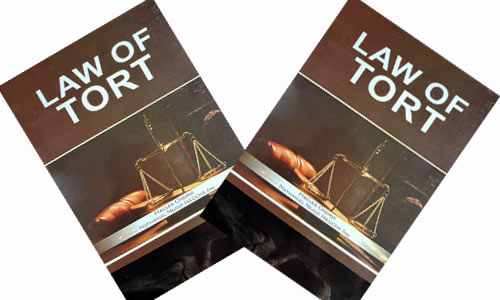 The book, titled The Law of Torts in Nigeria: A Functional Approach, authored by Professor Hagler Sunny Okorie Ph.D and Ikeocha, Nathaniel Ngozi Esq, offers law students, practitioners, and academics a comprehensive guide to understanding and applying tort law in Nigerian courts. Interested buyers can place orders via the following contact numbers: 08028636615, 08037667945, 08032253813, or +234 902 196 2209.
_______________________________________________________________________
The book, titled The Law of Torts in Nigeria: A Functional Approach, authored by Professor Hagler Sunny Okorie Ph.D and Ikeocha, Nathaniel Ngozi Esq, offers law students, practitioners, and academics a comprehensive guide to understanding and applying tort law in Nigerian courts. Interested buyers can place orders via the following contact numbers: 08028636615, 08037667945, 08032253813, or +234 902 196 2209.
_______________________________________________________________________
 ARTIFICIAL INTELLIGENCE FOR LAWYERS: A COMPREHENSIVE GUIDE
Reimagine your practice with the power of AI “...this is the only Nigerian book I know of on the topic.” — Ohio Books Ltd
Authored by Ben Ijeoma Adigwe, Esq., ACIArb (UK), LL.M, Dip. in Artificial Intelligence, Director, Delta State Ministry of Justice, Asaba, Nigeria.
Bonus:
Get a FREE eBook titled “How to Use the AI in Legalpedia and Law Pavilion” with every purchase.
ARTIFICIAL INTELLIGENCE FOR LAWYERS: A COMPREHENSIVE GUIDE
Reimagine your practice with the power of AI “...this is the only Nigerian book I know of on the topic.” — Ohio Books Ltd
Authored by Ben Ijeoma Adigwe, Esq., ACIArb (UK), LL.M, Dip. in Artificial Intelligence, Director, Delta State Ministry of Justice, Asaba, Nigeria.
Bonus:
Get a FREE eBook titled “How to Use the AI in Legalpedia and Law Pavilion” with every purchase.
How to Order: 📞 Call, Text, or WhatsApp: 08034917063 | 07055285878 📧 Email: benadigwe1@gmail.com 🌐 Website: www.benadigwe.com
Ebook Version: Access directly online at: https://selar.com/prv626
________________________________________________________________________ The Law And Practice Of Redundancy In Nigeria: A Practitioner’s Guide, Authored By A Labour & Employment Law Expert Bimbo Atilola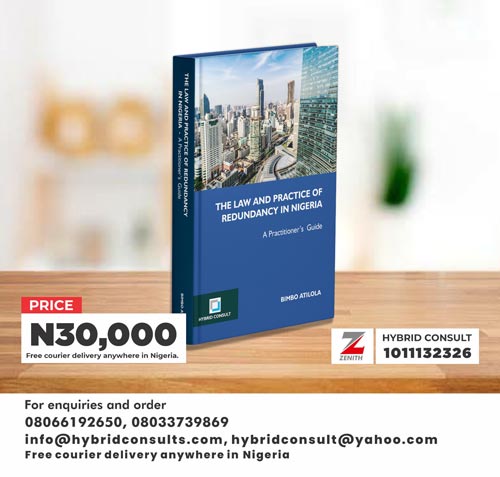 _______________________________________________________________________
[A MUST HAVE] Evidence Act Demystified With Recent And Contemporary Cases And Materials
_______________________________________________________________________
[A MUST HAVE] Evidence Act Demystified With Recent And Contemporary Cases And Materials