By Umar Sanusi Garba Kalambaina

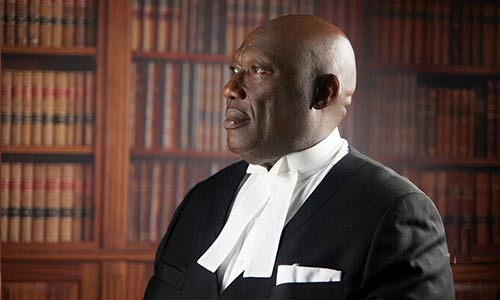
This article by Umar Sanusi Garba Kalambaina examines the questions arising after the Legal Practitioners Disciplinary Committee (LPDC) directed that Chief J-K Gadzama, OFR, SAN, be suspended for three years. The immediate controversy is where an appeal from that Direction now lies, the Supreme Court having closed the old direct route, while the Appeal Committee of the Body of Benchers remains, for practical purposes, unavailable.
Introduction
A few weeks ago, I wrote an article following the decision of the Legal Practitioners Disciplinary Committee (LPDC) to suspend Chief J-K Gadzama, OFR, SAN, for three years.
At the time, the major question that caught my attention was simple but, to me, very important:
Where does the appeal lie?
Gadzama had rejected the decision of the LPDC and announced his intention to appeal directly to the Supreme Court. This immediately generated debate because of the recent position of the Supreme Court on appeals arising from the LPDC.
I wrote about the apparent institutional vacuum created by the absence of a functional Appeal Committee of the Body of Benchers, and I asked whether the Body of Benchers could be compelled by an order of mandamus to perform its statutory duty of constituting the Appeal Committee. I thought that was where the next major legal debate would be. But I was wrong. Yes, I was wrong.
Another development has now emerged, and this was not what I was expecting.
The matter has moved to the Federal High Court.
According to the enrolled order reported by TheNigeriaLawyer, the Federal High Court sitting in Abuja, presided over by Hon. Justice Obiora-Atuegwu Egwuatu, on 20 August 2026, granted Chief J-K Gadzama, SAN, leave to apply for judicial review and to seek an order of certiorari to quash the Direction of the LPDC delivered on 29 July 2026. The suit is FHC/ABJ/CS/1954/2026.
The substantive application was to be filed within seven days, and the matter was adjourned to 4 September 2026, subject to service on the Respondents.
The Federal High Court has not quashed the LPDC Direction. The Court has only granted leave to seek judicial review. That distinction matters. Leave is not judgment. Leave is not a finding that the LPDC acted unlawfully. Leave is not an order setting aside the three-year suspension.
Rather, it permits the Applicant to proceed with the substantive judicial review application. The Respondents will still have an opportunity to contest the application.
And this is where, as a law student curious about what is happening, I began to ask myself another set of questions.
Can the Federal High Court Quash an LPDC Direction by Certiorari?
This, to me, is now one of the major questions arising from the Gadzama case.
Certiorari is not simply another form of appeal. It is a judicial review remedy through which the High Court may call up the decision of a body exercising judicial or quasi-judicial functions and, where appropriate grounds are established, quash that decision.
The question, therefore, becomes:
Is the LPDC a body whose Direction can be subjected to certiorari?
And if the answer is yes, another question immediately follows:
Under what circumstances can the Federal High Court interfere with an LPDC Direction? Is it where there is a want or excess of jurisdiction? Is it a breach of natural justice? Is it an error of law? Is it procedural unfairness? Or is Gadzama asking the Court to go beyond judicial review and reconsider the actual merits of the LPDC’s findings?
These are questions that, in my view, should be carefully distinguished because judicial review is not an appeal.
A court exercising judicial review does not simply substitute its own opinion for that of the body whose decision is being challenged. The purpose is to examine the legality of the decision-making process and the jurisdiction within which the decision was made.
But Then, What Happens to the Statutory Right of Appeal?
This is where the matter becomes even more interesting.
The LPDC disciplinary system has its own statutory framework for challenging its Directions. But we have already seen the controversy surrounding the appellate route.
The earlier position in Okike v LPDC (2005) 15 NWLR (Pt. 949) 471 was that an appeal from the LPDC could lie directly to the Supreme Court. That position was subsequently departed from in Aladejobi v NBA (2013) LPELR-SC.121/2011, where the Supreme Court rejected the direct route. Recent Supreme Court authorities have further complicated the issue and brought the question of the proper appellate mechanism back to the centre of legal discussion.
This is precisely why I previously asked:
If the Supreme Court says the practitioner cannot come directly to it, and the statutory appellate mechanism is unavailable or not operational, what is the remedy?
Now we have a possible answer before us:
Judicial review.
But is it really that simple? I do not think so.
The Respondents may very well argue that judicial review should not be used as a substitute for a statutory appeal, particularly where legislation provides an appellate mechanism.
And that raises a fundamental question:
Can a practitioner invoke certiorari where an alternative statutory remedy exists, but that remedy is itself unavailable, ineffective or constitutionally uncertain?
That, to me, is one of the most interesting questions in this entire controversy.
Then What About the Body of Benchers?
Another thing that immediately caught my attention is the parties to the Federal High Court proceedings.
The Defendants include:
The Body of Benchers;
The LPDC;
The Chief Registrar of the Supreme Court;
Chris Alashi, Esq.; and
Ocha P. Ulegede, Esq.
And I began to ask myself:
Why these parties? In particular, why is the Chief Registrar of the Supreme Court joined?
The reported order does not disclose the substantive grounds of Gadzama’s application or the complete reasoning behind the joinder. The report itself notes that the joinder appears significant, potentially because of the effect or transmission of the LPDC Direction, but I would rather wait for the actual substantive processes before reaching a definite conclusion.
As lawyers and law students, we should distinguish between what we know and what we are merely speculating about.
Another Question: Who Exactly Was the LPDC Complaint Against?
There is another point that caught my attention.
The complaint is recorded as:
Chris Alashi, Esq. v Ocha P. Ulegede, Esq. & Anor.
Yet, Gadzama is the Applicant before the Federal High Court.
This immediately raises another question:
What is the precise legal basis of Gadzama’s standing to seek judicial review of the Direction? Of course, the LPDC Direction directly affects him if he has been suspended for three years. But the procedural history and the relationship between the parties deserve to be properly understood.
How did the complaint evolve into a disciplinary proceeding against Gadzama? What was the precise allegation against him? What was the nature of his involvement? And what is the legal relationship between the Complainant, Ocha Ulegede and Gadzama in the underlying Zaki Biam compensation dispute?
These are not questions to be answered by social media headlines. They require the actual LPDC Direction and the processes filed before the Federal High Court.
Interestingly, reports on the underlying dispute indicate a complicated history involving the representation of judgment creditors, competing claims of authority, professional fees, court proceedings and the eventual ₦8 billion settlement.
That history makes the case much more complicated than simply saying:
“A SAN was suspended for professional misconduct.”
Then, the Federal High Court’s Own Jurisdiction
Another question came to my mind:
Is the Federal High Court the appropriate court to review the LPDC?
The Federal High Court’s jurisdiction is largely defined by Section 251 of the Constitution and other enabling legislation. So, can the LPDC and the Body of Benchers properly be subjected to the supervisory jurisdiction of the Federal High Court in this particular circumstance? Is the LPDC a federal body or agency for this purpose? Does the nature of its statutory functions bring the matter within the jurisdiction of the Federal High Court?
These are questions that may now have to be answered.
And perhaps this is one of the reasons why this case is becoming more interesting than I initially expected.
The Institutional Vacuum Hasn’t Disappeared
One thing I do not think we should lose sight of is the issue I raised in my previous article.
The institutional vacuum has not suddenly disappeared simply because Gadzama has approached the Federal High Court.
If the statutory appellate route is problematic and judicial review is now being invoked as an alternative route, we still have to ask:
What happens to other legal practitioners who have received LPDC Directions? What happens to cases that are already pending? What happens to a practitioner who wants to challenge an LPDC Direction but does not have the resources to embark on another round of constitutional and administrative litigation?
And, most importantly:
Should an effective appellate mechanism depend upon the willingness of an aggrieved practitioner to find another route through the courts?
To me, this is bigger than the Gadzama case. It is about the architecture of professional discipline in Nigeria.
A disciplinary system must not only have the power to punish professional misconduct; it must also have a clear, effective and legally certain mechanism through which an aggrieved practitioner can challenge an adverse decision.
The Body of Benchers itself describes one of its core functions as the discipline of erring lawyers and the regulation of the legal profession.
Therefore, the system must be capable of functioning both ways: discipline where there is misconduct, and a remedy where there is a challenge to the disciplinary decision.
What Happened on 4 September?
For now, I am particularly interested in what happened when the substantive application went before the Federal High Court.
Did the Respondents challenge the jurisdiction of the Court? Did they argue that certiorari is unavailable because of the statutory appellate mechanism? Did the Court consider the effect of the Supreme Court’s recent decisions on the appellate structure? Did the Court examine the legality of the LPDC’s process? Did the issue of standing become significant? And what exactly are the grounds contained in the Statement filed pursuant to Order 34 of the Federal High Court (Civil Procedure) Rules?
These are questions I believe deserve serious legal discussion.
For now, one thing is certain: the Gadzama case has taken another turn.
What began as an LPDC disciplinary proceeding became a debate about the proper appellate route to the Supreme Court. It then exposed what I described in my earlier article as an institutional vacuum.
And now, unexpectedly, the controversy has moved to the Federal High Court through an application for judicial review and certiorari.
I am not saying that Gadzama will win. I am not saying that the Federal High Court will ultimately quash the LPDC Direction. And I am certainly not saying that the grant of leave means that the LPDC has already been found to have acted unlawfully.
The real legal battle may only be beginning.
As a law student, I find this development particularly fascinating because it raises questions far beyond the fate of one legal practitioner. It brings us back to a fundamental question of administrative and constitutional law:
“When a statutory disciplinary body makes a decision against a person, and the ordinary appellate mechanism is uncertain or unavailable, what is the proper judicial remedy?”
Perhaps the answer will emerge from the Gadzama case. Perhaps it will expose another gap in the law. Or perhaps it will force a much-needed legislative intervention.
Interesting times lie ahead in the Nigerian legal profession.
What Do You Think?
Can the Federal High Court properly entertain an application for certiorari against an LPDC Direction? And, if yes, does the present institutional vacuum strengthen the case for judicial review, or does the existence of a statutory appellate mechanism make certiorari inappropriate?
Umar Sanusi Garba Kalambaina Law Student, Northwest University, Sokoto
[A MUST HAVE] Evidence Act Demystified With Recent And Contemporary Cases And Materials

Available now for NGN 40,000 at ASC Publications, 10, Boyle Street, Onikan, Lagos. Beside High Court, TBS. Email publications@ayindesanni.com or WhatsApp +2347056667384. Purchase Link: https://paystack.com/buy/evidence-act-complete-annotation
______________________________________________________________________ “Enhance Legal Practice With Authoritative Reports” — Alexander Payne Offers Comprehensive Law Reports, Spanning Over A Century Of Nigerian Jurisprudence Interested buyers are encouraged to place their orders and enquiries via:
0704 444 4777, 0704 444 4999, 0818 199 9888
Website: www.alexandernigeria.com
Interested buyers are encouraged to place their orders and enquiries via:
0704 444 4777, 0704 444 4999, 0818 199 9888
Website: www.alexandernigeria.com