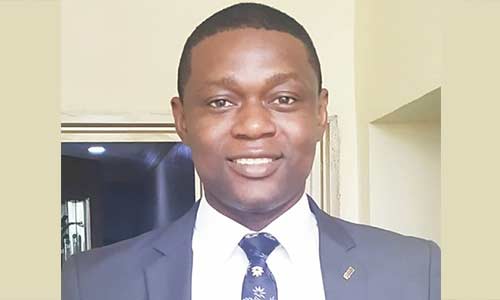
By Matthew Godfree

Introduction
June 12 is a very ‘sacred’ day for Nigerian democracy. It is of special significance to the extent that it is tagged as Democracy Day by the Nigerian Government. The June 12 is not so significance because it attracts the trust, veneration and worships of democrats in Nigeria. Rather, it is a ‘sacred day of soberness’ commemorating the rape of democracy in Nigeria. Sacred days in religious festivities are characterized with expression of joy, merry and hearty celebrations. But for some years now Democracy Day was greeted with pessimism by the masses because they did not reap the dividends of the democracy June 12 stands for. Despite these odds, political leaders kept dulling out unrealistic statements implying that there is hope in the future. The word ‘future’ has been the vehicle politicians hibernate to deceive the gullible masses of their white elephant projects. And June 12, provides politicians the opportunity for such chicanery.
The failure of the three arms of government to provide quality leadership in line with tenets of democracy made June 12, an uninterested feast to celebrate. June 12, as democracy day has lost its essence in the minds of Nigeria. To Nigerians the probing question has always been: What is democracy about June 12, when Nigeria is found wanting in most yardsticks of gauging democracy? This question is based on the facts that all indexes relating to democracy are not friendly towards Nigeria. Statics from global indexes such as World Justice Project (WJP), Rule of Law Index (ROLI), Corruption Perception Index (CPI) and others, clearly show that democracy is lagging behind in Nigeria.
Public Perceptions about June 12 and the ‘Confessions’
The Irony of June 12 is that instead of been a day for celebration, it is turning out to be a day for political penance by hijackers of Nigeria’s political destiny. The creation of June 12 as a public holiday was not done to celebrate democracy as doctrine; it was created to appease democracy for the wrongs committed against Nigeria masses on June 12 1993. It was created out of the remorse by the original enemies of Nigerian democracy, when they came to their senses and confessed ‘we have truly robbed people of their true mandate in Abiola by nullifying June 12 election of 1993. Therefore, let’s immortalize him as an epitome of democracy.’ And so the day the sacrilege was committed was committed, become the sacred day to commemorate Democracy in Nigeria. That is how we ended up having June 12, as Democracy Day.
Democracy Day means three things to Nigerians. To the elites in power it is another opportunity to churn out good state policies and regurgitate patriotic statements with no guarantee of translating them into reality. To the critics, it is another opportunity to constructively and destructively assess the government. To the masses, Democracy Day is a cliché they are used to; ‘let it come and go.’ To some of them democracy in Nigeria is an investment without dividends. Because of how Nigerian democracy distances itself from the masses, Nigerians have more solace in celebrating their birthdays and cultural festivities than celebrating Democracy Day.
The Confessions of the Bulkachuwa’s and the Parody of Rochas Okorocha
To those who truly witnessed the history of June 12, it is a day that their forgiven sin still provokes their conscience, and so they found themselves confessing unconsciously. Their confessions are prompted by two things;
- The haunting ghost of their bad roles in the nullification of the mandate of Nigerians on June 12, 1993. Like the ghost of Banquo visiting Macbeth, there are restless; they give unsolicited advice, even when not sought for.
- The second confessors are those who consciously or unconsciously without the aid of ‘truth serum’ found themselves confessing their sins against ideals of democracy in Nigeria.
Professor Henry Nwosu is one of the confessors of the evil against democracy in Nigeria that happened on June 12, 1993. While Henry Nwosu believe that Abiola was coasting to victory before the election was annulled. In his confession he said that judiciary was also instrumental in the annulment of June 12, via an order of Court by Federal High Court, Abuja, courtesy of Association for Better Nigeria (ABN). This order was later used to rationalize the annulment of June 12, 1993 as having some judicial approval.
In 2016, the then Chief Judge of the Federal High Court, Justice Dahiru Saleh(Rtd), who pronounced the annulment of June 12 election said that he should be the one to be blamed for annulment of June 12 and not Babangida. While this could be dismissed as mere attention seeking, Justice Saleh further told Nigerians that he has no regret annulling June 12, 1993 Presidential election.
From the confession of Prof Humphrey Nwosu, judiciary has conspired with the military to truncate peoples’ ‘HOPE 93’ on June 12, 1993. Perhaps, one could be tempted to believe that it was easier for judiciary to frustrate the June 12 election because it was done under a military regime. Then the further question to ask is that, is it possible that judiciary as an independent arm of government can be influence to tamper with electoral justice in Nigeria under a civilian regime? His Lordship Justice Bulkachuwa attempted to answer this question when she assured Nigerians that politics is too weak to cow-tow judicial independence. Thus, even where a husband is a politician and a wife is a judge; politics and administration of justice should not form an ideal item of discussion in the house. In an interview she granted to the Sun Newspaper on March 28, 2020, she said:
My husband is a politician, but politics is a no go area in the house. Even my Children are aware of that. No politician is invited to the house. My husband can pursue whatever he wants to pursue as a politician but we hardly discuss politics in the house. All these help to guard against any influence from any politician.
The above idealistic profession by His Lordship Binta Bulkachuwa could have remained a ‘relevant evidence that is deemed admitted unopposed and will be ascribed probative value by the court of public opinion’. However, the recent video trending show a different rendition that negated and impeached the credibility of the comments granted by His Lordship, in an interview on March 28,2022. Her husband Senator Adamu Bulkachuwa became a hostile witness when he gave a different account of what transpired involving him, his political associates and his wife (Justice Bulkachuwa, Rtd); as the central character in the drama.
During the 9th Senate valedictory session held on the 10th June, 2023, in his candid remark, Senator Adamu Bulkachuwa, appreciated his wife Justice Binta Bulkachuwa (Rtd), for assisting him and his colleagues in their political career. An interesting part of his ‘confession’ is where he referred to himself as unduly encroaching with the independence of his wife. Such candid statement has a lot of legal implications. This is because independence of judiciary implies two things; the institutional independence and individual independence. Individual independence refers to the ability of the judge as a person to discharge his duty without any interference. From the confession of Bulkachuwa, it is clear that individual judicial independence of His Lordship Bulkachuwa has been compromised. Perhaps, it could be lightly said that one of the exceptions to the concept of individual independence of the judiciary is spousal relationship. And if you beg to differ ‘go to court’.
The confession of Adamu Bulkachuwa has further exposed Nigerian judges to ridicule and ignominy. (This is quiet unfortunate to our uprights judges who are affected by this sin of Achan committed by few.) He was so bold to the extent of referring how his wife has been tolerant with him and his political colleagues in granting them ‘assistance’. The attitude of Senator Adamu Bulkachuwa is a reprehensible sacrilege tantamount to defecating in the hallow temple of democracy. It is a saga that ought to be investigated and interrogated as a way forward in sanitizing the judiciary.
By letting the cat out of the bag, Senator Bulkachuwa’s act reminds one about eating the proverbial onion, which give birth to the saying that “it is difficult to eat an onion without your neighbor knowing”. Nigerians were not there when Senator Bulkachuwa, his wife and colleagues were eating the silent onions, but after Bulkachuwa became a Senator (a public figure), Nigerians had now smell the onions oozing from his mouth during the 9th valedictory session of the Senate.
Again, the Bulkachuwas have given us two different versions of how justice and politics can dangerously intertwine. While Lady Bulkachuwa gave us the impression that politics is not a topic of discussion in her house, it a no go area in the family gist. But one is at liberty to ask if discussing politics and justice are prohibited item for discussion in parlour and dining table, does that rule still apply in ‘the other room’?
The odour of Senator Adamu’s onion is so putrid and perturbing that our Senate President has to ask him to stop. Lawan the Senate President asked Senator Adamu to stop for such act is not ideal for discussion during Senate’s sittings. It is quite ironic to know that Senator Lawan, is lecturing Senator Bulkachuwa on ‘orderliness’. When has Senator Lawan become an apostle of orderliness when under his watch corruption and malfeasance thrived? Again, by asking Senator Bulkachuwa to stop, was Senator Lawan doing that to promote orderliness in the Senate? Or was Senator Lawan is any other way affected by the malodorous onions oozing from the mouth of Adamu Bulkachuwa? Perhaps, the sarcasm of Senator Rochas Okorocha can answer this question or stimulate further questions.
The Rochas’ Sarcasm
Senator Rochas Okorocha’s sarcasm was another interesting development during the valedictory session of the 9th Assembly. In a typical style of Ibo oratorical presentation, friendly conveying his silent bullets, Senator Rochas Okorocha, while addressing Senator Ahmed Lawan, sarcastically remarked that, ‘Mr President, I want to learn from you. How you became a Senator and a Senate President is still wonderful?’This is an allusion to the fact that Lawan never contested in APC primaries for Senate, rather, he contested for presidential primaries with APC. Yet, through the ‘law’, his lawyers were able to convince the judiciary to reinstate him.
The confession of Professor Humphrey Nwosu, the candid ‘declaration of appreciation’ by Senator Adamu Bulkachuwa, and the sarcasm of Rochas Okorocha had put the Nigerian judiciary in the bad light. Professor Nwosu’s confession reveals the role judiciary played as an albatross to the realization of June 12. Senator Adamu Bulkachuwa’s (un) conscious confession is an overt evidence that all is not well in Nigerian judiciary. Senator Rochas’ sarcasm to Senator Lawan may not be only directed towards him; it is by extension an allusion to the decay in the Nigerian judiciary.
The Agbakoba’s Version
To add salt to injury, Olisa Agbakoba, SAN recently spitted out his discontentment against the remarks by Senator Bulkachuwa as “monumental disgrace for our institutions”, and urged President Tinubu to act now. Olisa Agbakoba, SAN, further stated how they lost against Bulkachuwa 3 times. Ordinarily, if Agbakoba has made this statement in normal interviews, his view will be termed subjective. However, Senator Bulkachuwa’s confession has given Agbakoba the justifiable ground for his remark. Agbakoba’s Client losing three times against Senator Adamu Bulkachuwa, and the latter’s appreciation of his wife’s role in supporting his political colleagues, clearly raise the question, could there be a network of judicial cabal in Nigeria that engaged in negotiable justice?
Some readers may think that while Nwosu was alive to confess his sins against the ‘religion’ of democracy, his colleagues in the persons of Professors Jega and Yakubu Mahmoud, should be able to make their ‘confessions’ about the outcomes of the 2015 general elections as well as that of the 2023 election. Humphrey Nwosu is graced by God to live that long to give us his own side of the story, Jega and Mahmoud should emulate him. Nigerians are eagerly awaiting their confessions.
CONCLUSION
It is common knowledge that Nigeria judiciary is facing crises of confidence from the public and the litigants. The public perception index about the judiciary is denigrating to the extent that the phrase “go to court’ has become mocking words to anyone aspiring to go to court to seek legal redress. Similarly, the phrase judiciary as the last hope of common man has now been subsumed by what Roberto Michel termed as ‘Iron law of Oligarchy’, because justice as a system appears to only favour the elites to the detriment of the common men. In Nigeria’s electoral justice, sometimes it is not the popular candidates who people wanted that end up as their leader; it is the person the courts give to them. In Nigeria’s electoral justice, there are two types of elections (a) election by the masses, and (b) election by the judges. Thus, after millions of people have exercised their franchise on who they want to their leader, the court will still vote in either the ratio of 2 majority judgements against 1 dissenting judgement, 5 majority judgments against 2 or where all the judges are in agreement over an issue. The story of Bulkachuwas and the Lawan’s incident should be addressed seriously. Judges with incumbent politician as spouses should resign their offices, especially, when such offices are likely to lead to conflicts of interests. The Bulkachuwa’s incident is a pointer to this fact. The Supreme Court should try and reverse the decision in Machina v APC & Ors. that brought Senator Ahmed Lawan into power. This will reduced bad judicial precedents in our electoral jurisprudence.

 Interested buyers are encouraged to place their orders and enquiries via:
0704 444 4777, 0704 444 4999, 0818 199 9888
Website: www.alexandernigeria.com
Interested buyers are encouraged to place their orders and enquiries via:
0704 444 4777, 0704 444 4999, 0818 199 9888
Website: www.alexandernigeria.com