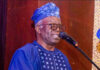
Kolawole Olaniyan, Legal Adviser at Amnesty International’s International Secretariat, has questioned the ₦100 million defamation judgment against the Socio-Economic Rights and Accountability Project, drawing attention to what he described as the irony of the organisation’s present legal battle after it previously defended National Security Adviser Nuhu Ribadu when he faced government pressure over his anti-corruption activities.

Olaniyan made the argument in an opinion article titled, “When the state turns the law against dissent under Tinubu’s watch,” in which he examined SERAP’s dispute with two officials of the State Security Service and raised broader concerns about the use of legal and security mechanisms against government critics. His characterisation of the cases as intimidation or weaponisation of the justice system represents his opinion, while the SSS has maintained that the defamation action was brought personally by the two officers rather than by the agency itself.
Olaniyan recalled that SERAP supported Ribadu in 2008 after he was removed as Chairman of the Economic and Financial Crimes Commission under the administration of the late President Umaru Yar’Adua and sent on what was then described as a “refresher course.”
According to him, SERAP condemned Ribadu’s removal, petitioned the United Nations over the development and threatened legal action concerning his replacement. He also recalled that after reported attempts on Ribadu’s life later that year, SERAP called for an investigation and greater protection for him.
Ribadu subsequently became the inaugural recipient of the Civil Society Anti-Corruption Defender Award in 2009, an initiative Olaniyan said he helped establish to recognise individuals and organisations involved in anti-corruption and human rights work.
The Wole Soyinka Centre for Investigative Journalism, which participated in the award process alongside SERAP, WARDC, HEDA and CDHR, confirmed that Ribadu received the inaugural award for his anti-corruption work and the pressure he had faced from Nigerian authorities.
Olaniyan contrasted that history with SERAP’s current legal dispute involving SSS officials Sarah John and Gabriel Ogundele.
The dispute arose from events in September 2024, when SERAP alleged that security operatives had unlawfully entered its Abuja office and demanded to see its directors, shortly after the organisation called on President Bola Tinubu to investigate allegations of corruption and mismanagement involving the Nigerian National Petroleum Company Limited.
John and Ogundele subsequently instituted a defamation action against SERAP and its Deputy Director, Kolawole Oluwadare, contending that publications concerning the incident falsely portrayed them as having invaded the organisation’s premises.
On May 5, 2026, Justice Yusuf Halilu of the High Court of the Federal Capital Territory found SERAP liable for defamation and awarded ₦100 million in damages in favour of the two officials.
The court also ordered SERAP to publish apologies, pay ₦1 million in litigation costs and pay post-judgment interest at 10 per cent annually on the damages until the judgment is satisfied.
SERAP has appealed the judgment and applied for a stay of execution.
In its appeal, the organisation argues, among other grounds, that the trial court made errors concerning jurisdiction, the evidence relied upon, identification of the claimants and the application of defamation law. SERAP is asking the Court of Appeal to set aside the judgment and dismiss the suit. Those remain grounds of appeal and have not yet been determined by the appellate court.
The SSS, however, has distanced itself institutionally from the litigation. According to the account reported by PUNCH, the agency said the action was instituted by John and Ogundele in their personal capacities after they considered themselves defamed, although they obtained approval from the Director-General before pursuing legal redress.
It was against this background that Olaniyan described SERAP’s present position as particularly striking.
“SERAP repeatedly defended Ribadu when he was targeted for confronting corruption,” he wrote.
He argued that an organisation which once defended Ribadu against alleged harassment and intimidation was now itself confronting legal proceedings arising from its human rights and accountability work. Olaniyan further contended that security institutions were increasingly using litigation and criminal processes against critics, an assessment that remains his own interpretation of the developments.
His article also referred to other disputes involving the SSS and government critics, including litigation concerning Professor Pat Utomi’s proposed “shadow government” and proceedings involving activist and journalist Omoyele Sowore.
Olaniyan linked those cases to a broader debate about civic space, freedom of expression, security agencies and the limits of legitimate criticism under the Tinubu administration.
He also recalled President Tinubu’s Democracy Day address in 2025, in which the President said criticism, including harsh criticism, should not by itself expose citizens to injustice.
“No one should bear the brunt of injustice for merely writing a bad report about me or calling me names,” Tinubu said in the address.
The President added that democracy required tolerance for “harsh words and stinging insults,” while also distinguishing criticism from malicious slander and libel. The remarks are contained in the official State House transcript of the speech.
Olaniyan argued that those remarks should be measured against the treatment of civil society organisations, journalists and activists who criticise government institutions.
[A MUST HAVE] Evidence Act Demystified With Recent And Contemporary Cases And Materials

Available now for NGN 40,000 at ASC Publications, 10, Boyle Street, Onikan, Lagos. Beside High Court, TBS. Email publications@ayindesanni.com or WhatsApp +2347056667384. Purchase Link: https://paystack.com/buy/evidence-act-complete-annotation
______________________________________________________________________ “Enhance Legal Practice With Authoritative Reports” — Alexander Payne Offers Comprehensive Law Reports, Spanning Over A Century Of Nigerian Jurisprudence Interested buyers are encouraged to place their orders and enquiries via:
0704 444 4777, 0704 444 4999, 0818 199 9888
Website: www.alexandernigeria.com
Interested buyers are encouraged to place their orders and enquiries via:
0704 444 4777, 0704 444 4999, 0818 199 9888
Website: www.alexandernigeria.com