*Examining The Impact Of Service Conditions On Judicial Officers’ Health

Introduction:
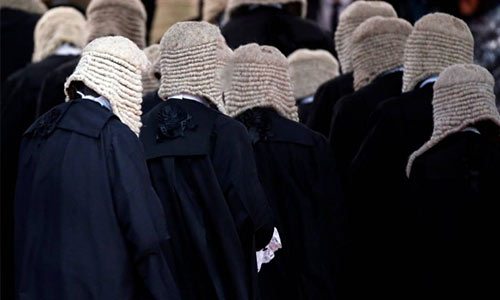
The Nigerian judiciary has been hit by a wave of tragic losses as several esteemed justices have passed away in quick succession. This spate of deaths has prompted a critical examination of the service conditions that judges endure and their potential impact on the health of these crucial figures within the justice system.
Harvest of Death in the Judiciary:
The month of July 2023 has been marred by the untimely deaths of prominent judicial figures. On July 3, Justice Raphael Agbo of the Court of Appeal passed away, followed by the death of Justice Chima Nweze of the Supreme Court of Nigeria on July 30. Tragedy struck again with the demise of Justice Hoommuk Mallong of the Federal High Court, announced on the same day. Subsequently, retired Chief Judge of Bayelsa State, Justice Kate Abiri, joined this unfortunate list on August 3, 2023.
Impact of Service Conditions on Judicial Health:
President Bola Tinubu’s recent decision to increase the retirement age of judges has sparked both approval and concern. While some view it as a positive development, others argue that the increased age could adversely affect the health of judges, given the demands of their roles. Judges are required to dedicate long hours to hearing cases, delivering rulings, and issuing judgments on a daily basis.
Burdens Faced by Judicial Officers:
Senior Advocate of Nigeria, Babatunde Fashanu, underscores the need for the government to take responsibility for the well-being of judges. He cites instances where justices of the Supreme Court faced electricity shortages, leading to stress and health issues. Fashanu advocates for a more secure and independent National Judicial Council, suggesting that funds be directed straight to the judiciary without passing through any executive arm.
Comparative Analysis: Nigerian vs. American System:
Fashanu draws a parallel with the American system, where federal judges and Supreme Court justices are appointed for life. He suggests that adopting a similar approach in Nigeria could provide judges with security of tenure, thereby enabling a more effective justice system. Currently, federal justices in Nigeria retire at 70, while high court judges retire at 70 as per the increased retirement age introduced by President Tinubu.
Lawyers’ Perspectives on Retirement Age:
Legal experts offer varying viewpoints on the retirement age for judicial officers. Victor Opara (SAN) emphasizes the importance of robust healthcare schemes for judges, linking their well-being to the preservation of democracy and good governance. Conversely, Wahab Shittu (SAN) calls for a stakeholder dialogue, involving the NJC and Nigerian Bar Association, to determine the retirement age collaboratively.
Diverse Opinions on Retirement Age and Conditions:
Legal practitioners like David Fadile express concerns about the increased retirement age, suggesting that judges should retire at 60 due to the demanding nature of their work. Ogu Ogedi argues against raising the retirement age, advocating for improved conditions of service and an increased number of judges instead. Yemi Omodele supports increasing the number of judges and court divisions to manage the overwhelming workload.
Proposals for Improving Judicial Health and Service:
Various suggestions emerge from legal experts and practitioners:
Reduction in Retirement Age: Some experts advocate for a reduction in the retirement age of judges to 60, considering the physical and mental demands of the job.
Healthcare and Welfare: Robust healthcare schemes and improved welfare packages are recommended to ensure judges’ well-being, recognizing their role in upholding democracy.
Increased Staffing: To alleviate the burden on individual judges, there are calls to increase the number of judicial officers and court divisions.
Amending Procedures: Some experts propose stricter evaluation of cases before filing, mediation or ADR for cases that can be resolved amicably, and a careful consideration of criminal charges before court involvement.
Conclusion:
The recent series of deaths among Nigerian judicial officers has thrust the working conditions and retirement age of judges into the spotlight. As legal experts and practitioners weigh in on the matter, it remains clear that the health and well-being of judges are essential not only for their personal lives but also for the effective functioning of the judiciary and the broader democratic system.
[A MUST HAVE] Evidence Act Demystified With Recent And Contemporary Cases And Materials

Available now for NGN 40,000 at ASC Publications, 10, Boyle Street, Onikan, Lagos. Beside High Court, TBS. Email publications@ayindesanni.com or WhatsApp +2347056667384. Purchase Link: https://paystack.com/buy/evidence-act-complete-annotation
______________________________________________________________________ “Enhance Legal Practice With Authoritative Reports” — Alexander Payne Offers Comprehensive Law Reports, Spanning Over A Century Of Nigerian Jurisprudence Interested buyers are encouraged to place their orders and enquiries via:
0704 444 4777, 0704 444 4999, 0818 199 9888
Website: www.alexandernigeria.com
Interested buyers are encouraged to place their orders and enquiries via:
0704 444 4777, 0704 444 4999, 0818 199 9888
Website: www.alexandernigeria.com