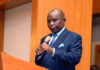
A Senior Advocate of Nigeria and the Managing Partner of Obra Legal LP, Ikechukwu Onuoma, SAN, has called on the Catholic Church to remain actively involved in promoting good governance, defending human dignity and confronting injustice without becoming an instrument of political parties or seeking to dominate government.

Onuoma maintained that the Church’s responsibility in public affairs is neither to capture political power nor withdraw from society, but to form consciences, promote ethical leadership, defend the vulnerable and ensure that public authority serves the common good.
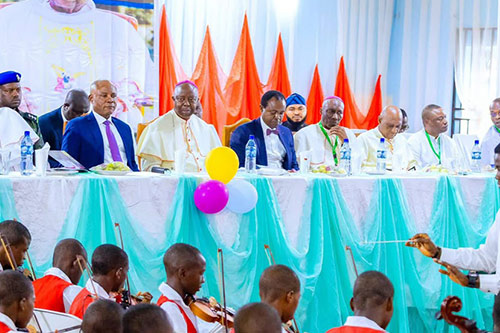
He made the call while presenting an inaugural paper titled “The Role of the Church in Governance” at the 38th Annual Convention of the Canon Law Society of Nigeria (CLSN).
In the paper, which examined governance through Catholic social teaching and the theological understanding of Jesus Christ as Rex Regum, meaning King of Kings, the Senior Advocate argued that Nigeria’s governance challenges extend beyond weak institutions and corrupt political leadership to a deeper moral crisis involving society’s understanding of the human person.
According to him, discussions about governance frequently focus on corruption, electoral malpractice, insecurity, poverty, weak institutions, poor public services, abuse of power and declining public trust without adequately addressing the moral foundations of these problems.
He stated that governance is “ultimately a question about the human person: who the person is, what the person is worth, what government exists to accomplish, and what limits ought to constrain the exercise of public authority.”
Onuoma warned that when individuals are regarded merely as voters, taxpayers, consumers, ethnic subjects, political supporters or economic units, public institutions become vulnerable to manipulation, discrimination and abuse.
He explained that Catholic social teaching approaches governance from the conviction that every human being is created in the image and likeness of God and possesses an intrinsic dignity that cannot be taken away by government.
He described the governance crisis as one commonly expressed through “corruption, weak institutions, electoral malpractice, insecurity, poor public services, abuse of power, poverty and declining public trust.”
However, he maintained that beneath those failures lies “a deeper crisis, a crisis concerning the human person, the crisis of sin.”
Drawing from the theological concept of Christ as King of Kings, Onuoma explained that the Church’s involvement in governance must be understood within its spiritual mission rather than as an attempt to establish a religious government.
He cited 1 Timothy 2:4, which teaches that God desires all people to be saved and come to the knowledge of the truth, arguing that the Church cannot remain indifferent to decisions and developments affecting human welfare.
According to him, the Church must be concerned with the moral quality of social life and the consequences of government policies for human dignity.
He nevertheless stressed that recognising Christ as King does not mean replacing Nigeria’s constitutional democracy with a theocratic state.
“The Church is not simply a religious association attempting to secure influence within the political sphere,” he said.
He explained that the Church’s contribution to governance involves helping society recognise that political authority exists for the benefit of the human person and the common good.
Referring to Romans 13:1, he maintained that public authority carries moral responsibilities that extend beyond the possession and exercise of political power.
Onuoma further argued that Christ’s kingship provides a model of leadership fundamentally different from the domination commonly associated with worldly authority.
He cited Philippians 2:11 and 1 Timothy 6:15, which acknowledge Christ’s lordship and describe Him as the King of Kings and Lord of Lords.
According to him, Christ’s authority is expressed through service, sacrifice and love rather than oppression.
“His throne is the Cross; His authority is expressed in service; and His greatness manifested in self-giving love,” he stated.
Recalling Christ’s teaching to His disciples about greatness, he added that “the Christian concept of authority therefore begins with service.”
He maintained that this understanding places every public official under a moral obligation to exercise authority responsibly and for the benefit of others.
Turning to the historical foundations of Catholic social teaching, Onuoma examined Rerum Novarum, the encyclical promulgated by Pope Leo XIII on May 15, 1891.
He explained that the document, whose title refers to revolutionary change or new things, emerged in response to industrialisation, economic inequality, labour exploitation and the concentration of wealth.
According to him, the encyclical established that the Church cannot proclaim human dignity while remaining indifferent to economic and social arrangements that undermine it.
He stated that “the Church cannot proclaim the dignity of the human person while remaining indifferent to the social structures that either protect or violate that dignity.”
Onuoma also referred to paragraph 160 of the Compendium of the Social Doctrine of the Church, published in 2004, which identifies four foundational principles of Catholic social teaching: human dignity, the common good, subsidiarity and solidarity.
He explained that these principles provide a framework for evaluating government policies, institutional conduct and the responsibilities of public officials.
According to him, the human person must remain the foundation, subject and ultimate purpose of social institutions rather than being treated merely as an instrument for achieving political or economic objectives.
“A government exists for persons, laws exist for persons, courts exist for persons, public institutions exist for persons, even the economy exists for persons,” he declared.
He argued that political authority loses its moral legitimacy when it systematically sacrifices human welfare for institutional or political interests.
Onuoma therefore urged policymakers to assess government decisions by asking: “What does this policy do to the dignity of the human person?”
He linked this principle to Section 17 of the 1999 Constitution, which provides that Nigeria’s social order is founded on freedom, equality and justice.
He noted that the constitutional provision also recognises the sanctity of the human person, requires human dignity to be maintained and enhanced, and emphasises humane government action.
Describing these constitutional principles as consistent with Catholic social teaching, he argued that the Constitution envisages governance directed towards human welfare.
However, he stressed that human dignity does not originate from the Constitution, the legislature, the judiciary or any other government institution.
“Government does not manufacture human dignity, the legislature does not create it, our judiciary does not create it, a constitution does not create it,” he stated.
“Human dignity in fact, precedes the State. The State can recognise it, protect it or violate it, but it cannot ultimately confer it.”
He explained that this distinction is essential because a government that regards dignity as something it grants may also assume the power to withdraw it.
“If dignity comes from the State, the State can take it away. If dignity comes from the nature of the human person created by God, the State is then under an obligation to protect it,” he added.
Addressing the specific responsibility of the Church in Nigeria’s governance system, Onuoma rejected the idea that religious institutions should become political organisations or instruments of partisan mobilisation.
“The Church is not the State, the state is not the Church,” he declared.
He maintained that the Church has no mandate to capture political power or become an appendage of political parties.
Referring to Christ’s declaration that His kingdom is not of this world, he explained that the Second Vatican Council recognises the distinction between the Church and the political community.
According to him, the Church’s role is primarily formative, pastoral and social rather than partisan.
He said the Church must maintain sufficient independence to commend good governance, condemn injustice, defend human rights and encourage responsible leadership without becoming part of the political machinery.
Onuoma explained that the Church “speaks truth to power because she is not created by power.”
He added that the Church “can commend good governance without becoming the government” and “can criticise injustice without becoming an opposition party.”
Similarly, he maintained that the Church “can defend human rights without becoming a political movement” and “can encourage public officials without becoming their political machinery.”
He described this independence as one of the Church’s greatest contributions to public life.
The Senior Advocate also examined the prophetic tradition in Scripture, noting that religious leaders have historically challenged injustice and abuses of authority.
He recalled how Prophet Nathan confronted King David, Elijah challenged Ahab, John the Baptist confronted Herod, and Jesus Christ challenged hypocrisy and oppression.
He argued that the Church inherits this responsibility and must continue asking difficult questions about justice, poverty, accountability and the protection of vulnerable persons.
According to him, the Church must ask who speaks for the poor, who protects the vulnerable, who defends the voiceless and who ensures that the law serves justice rather than merely protecting political power.
However, he stressed that the Church must go beyond raising concerns and take practical steps within its capacity to address social problems.
Citing Romans 15:26 and Acts 11:29, he referred to biblical examples of believers contributing resources to support people experiencing hardship.
He warned that a Church unwilling to confront injustice risks reducing Christianity to private spirituality.
Onuoma also referred to the teachings of Pope Francis, who emphasised that the Church’s public responsibilities extend beyond charity and education to matters affecting the common good and integral human development.
He maintained that religious institutions must therefore participate in shaping public morality while respecting the distinction between spiritual authority and political governance.
The Senior Advocate identified the formation of responsible citizens as one of the Church’s most important contributions to good governance.
He argued that political reforms alone cannot guarantee effective governance where citizens continue to tolerate dishonesty, corruption, discrimination and abuse of authority.
According to him, “good governance ultimately depends upon good citizens all round.”
Citing Matthew 23:23, he recalled Christ’s rebuke of religious leaders who observed minor religious obligations while neglecting justice, mercy and faith.
He argued that Christians who genuinely recognise the dignity of every human being should find it increasingly difficult to justify bribery, electoral violence, ethnic discrimination, exploitation and abuse of public office.
Onuoma therefore urged Church leaders to ensure that Catholic social teaching moves beyond academic discussion and becomes part of the everyday conduct of believers.
He called on priests and other religious leaders to consistently relate scriptural teachings to social, economic and political responsibilities.
Referring to Romans 10:14, he emphasised the importance of preaching and moral instruction in developing responsible citizens.
He identified three approaches through which the Church could influence society: disseminating its social teachings, demonstrating their practical application and encouraging professional and academic engagement with contemporary governance challenges.
According to him, Catholic professionals in economics, politics, law, media, education and other fields should apply the principles of social teaching when developing solutions to emerging societal problems.
Onuoma also discussed subsidiarity, explaining that government should create conditions that enable individuals, families and communities to participate actively in development rather than attempting to control every aspect of social life.
Drawing from Rerum Novarum, he described public office as a position of trust rather than personal ownership.
“The official who controls public resources is a steward, not an owner,” he stated.
He explained that the principle is particularly relevant to developing democracies, where public institutions must encourage citizen participation and community development.
According to him, a healthy state does not seek to control everything but creates an environment in which individuals and communities can flourish.
He noted that the Catholic Church demonstrates this principle through its schools, hospitals, charitable institutions, associations and other community-based organisations.
He maintained that governance becomes stronger when citizens are active participants in social development rather than passive recipients of government services.
Onuoma further rejected the suggestion that Christians should withdraw from political participation.
“The Church does not teach Christians to withdraw from political life,” he said.
“On the contrary, participation in public life can be an expression of Christian responsibility.”
He explained that Christian politicians, civil servants, judges, lawyers, academics and journalists have responsibilities to apply moral principles in their professional and public activities.
According to him, the relevant question is not simply whether Christians should participate in politics but what kind of politics they should pursue.
“The question is therefore not simply ‘Can Christians participate in politics?’ The better question is: ‘What kind of politics should a Christian pursue?’”
He maintained that the answer must be politics directed towards the common good rather than personal ambition, political domination or sectional interests.
The Senior Advocate also urged the Church to ensure that its internal conduct reflects the values it promotes in society.
He warned that religious institutions risk undermining their moral credibility when their activities contradict their public teachings.
According to him, the Church must not become what it criticises.
“When ecclesial platforms become political campaign platforms, the spread of the Gospel suffers,” he warned.
“The church must remember at all times that her loyalty is to Christ.”
He maintained that the Church’s ability to challenge injustice and promote responsible governance depends partly on its willingness to uphold integrity, fairness and accountability within its own institutions.
Onuoma also examined the concept of a new kingdom, explaining that it should not be interpreted as a call to replace Nigeria’s constitutional order with a theocracy.
Rather, he described it as a moral transformation in which political power becomes service, the poor are treated as human beings rather than statistics, and political opponents retain their inherent dignity.
He referred to Fratelli Tutti, Pope Francis’s encyclical of October 3, 2020, which emphasises human fraternity, social friendship and political responsibility directed towards the common good.
According to him, authentic political leadership must go beyond expressions of sympathy and work towards transforming the structures responsible for injustice and inequality.
He maintained that Nigeria’s governance crisis cannot be resolved solely by replacing political leaders without addressing the social values that encourage corruption and dishonesty.
“The deeper message is conversion,” he stated.
“The problem is not only corrupt politicians, but corrupt culture. Our society cannot consistently condemn corruption in government while tolerating dishonesty in private life.”
He explained that moral transformation must begin with individuals but ultimately influence institutions and social structures.
“The new Kingdom begins with the conversion of the human heart, but it does not end there. Converted people must also seek the transformation of social structures,” he said.
Addressing the role of lay Catholics, Onuoma explained that while priests and bishops have pastoral and spiritual responsibilities, lay members of the Church are particularly positioned to influence governance through their professional activities.
He noted that Catholics working in government, law, medicine, business, academia, journalism and civil society participate directly in shaping public institutions and social development.
According to him, their responsibilities include promoting justice, protecting human dignity, resisting corruption and ensuring that professional decisions reflect ethical values.
He emphasised that the Church’s social mission would be more effective when lay members translate its teachings into practical action within their respective fields.
Summarising his position, Onuoma declared that “governance must become human again.”
He explained that this requires a justice system that recognises the human being behind every case number, a correctional system that recognises the dignity of every inmate and a healthcare system that treats patients as persons rather than statistics.
He also called for a government that recognises citizens beyond their electoral value and public servants who regard their positions as responsibilities rather than personal entitlements.
According to him, the Church must similarly recognise the dignity of every individual and reflect that conviction in its teachings and activities.
“This is what the dignity of the human person demands,” he stated.
Concluding his presentation, Onuoma maintained that more than a century after the publication of Rerum Novarum, Catholic social teaching has developed into a coherent framework for addressing governance challenges through human dignity, the common good, subsidiarity and solidarity.
He argued that Nigeria’s challenge is no longer simply identifying appropriate policies but developing leaders and citizens with the moral discipline to implement them.
“Nigeria does not merely need new policies, rather leaders who are well formed and struggle to acquire the virtues and practice them,” he declared.
He urged the Church to continue proclaiming the Gospel, forming consciences, defending human dignity, promoting responsible citizenship and standing with the poor and vulnerable.
Citing James 1:27, he recalled the biblical teaching that genuine religion involves caring for orphans and widows in their affliction while remaining morally upright.
“The Church’s task, therefore, is to keep reminding the world of this truth, and to embody it,” he concluded.
[A MUST HAVE] Evidence Act Demystified With Recent And Contemporary Cases And Materials

Available now for NGN 40,000 at ASC Publications, 10, Boyle Street, Onikan, Lagos. Beside High Court, TBS. Email publications@ayindesanni.com or WhatsApp +2347056667384. Purchase Link: https://paystack.com/buy/evidence-act-complete-annotation
______________________________________________________________________ “Enhance Legal Practice With Authoritative Reports” — Alexander Payne Offers Comprehensive Law Reports, Spanning Over A Century Of Nigerian Jurisprudence Interested buyers are encouraged to place their orders and enquiries via:
0704 444 4777, 0704 444 4999, 0818 199 9888
Website: www.alexandernigeria.com