The European Union is planning new restrictions on young children’s access to social media across its 27 member states as part of a major effort to protect minors from online dangers.

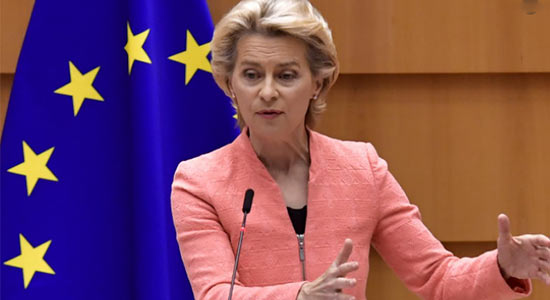
European Commission President, Ursula von der Leyen, disclosed the plan on Monday in Brussels, saying the question was no longer whether children face risks online, but what governments could do to give them a safer start on the internet.
Von der Leyen said the European Commission had received a paper from two experts recommending a tiered approach to children’s use of social media.
Under the proposal, children under the age of 13 would only be allowed to use social media for limited periods and under the supervision of parents, caregivers and teachers.
The restrictions would then be gradually relaxed as teenagers grow older.
“It is clear we need age-appropriate restrictions to platforms,” Von der Leyen told journalists in Brussels.
“The question is no longer if children face risks online, but what can we do to give them a safer start online,” she added.
The European Commission President indicated that she was likely to follow the experts’ recommendations, with a concrete proposal expected after the summer. She is expected to announce the proposal during her State of the Union address in September.
Von der Leyen said the EU must first determine the categories of online platforms considered harmful to children.
According to her, while social media platforms are the main concern, other digital services with addictive or age-inappropriate features may also fall within the scope of the proposed restrictions.
“We first need to consider the type of platforms that are harmful to our children. The evidence shows that this is mainly social media platforms, but there are other providers with age-inappropriate and addictive features.
“So, think of it as social media plus.
“When we have this clearly defined category, I believe we need to consider phased and gradual access for different age ranges,” she said.
The planned restrictions are expected to affect major platforms such as TikTok, YouTube, Instagram and Facebook, although the companies did not immediately respond to requests for comment.
Social media companies have repeatedly argued that they already have measures in place to protect younger users, including age restrictions, parental controls and content moderation tools.
However, governments and regulators across the world have continued to raise concerns about children’s exposure to harmful content, addictive platform design, predatory algorithms, cyberbullying and mental health risks. The Guardian reported that the EU expert recommendations also focused on features such as infinite scroll, autoplay and personalised content feeds.
The EU’s planned move follows similar efforts in several countries, including Australia, Britain, China, India and the United States, where authorities have either imposed or are considering restrictions on children’s access to social media.
In April, the EU also announced that its age verification app for online platforms was ready as European countries continued to explore ways to curb children’s access to social media.
The latest proposal could become one of the European Union’s most far-reaching interventions in online child safety, especially if adopted across all member states.
Supporters of the move argue that children need stronger protection from harmful digital environments, while critics are expected to raise concerns about privacy, enforcement, age verification and whether children may find ways to bypass restrictions.
The European Commission is expected to release further details after the summer.
[A MUST HAVE] Evidence Act Demystified With Recent And Contemporary Cases And Materials

Available now for NGN 40,000 at ASC Publications, 10, Boyle Street, Onikan, Lagos. Beside High Court, TBS. Email publications@ayindesanni.com or WhatsApp +2347056667384. Purchase Link: https://paystack.com/buy/evidence-act-complete-annotation
______________________________________________________________________ “Enhance Legal Practice With Authoritative Reports” — Alexander Payne Offers Comprehensive Law Reports, Spanning Over A Century Of Nigerian Jurisprudence Interested buyers are encouraged to place their orders and enquiries via:
0704 444 4777, 0704 444 4999, 0818 199 9888
Website: www.alexandernigeria.com
Interested buyers are encouraged to place their orders and enquiries via:
0704 444 4777, 0704 444 4999, 0818 199 9888
Website: www.alexandernigeria.com