SETTING UP A BUSINESS IN NIGERIA Setting up as a business in a new country can sometimes be a daunting possibility for businesses. You are moving into a terrain which you know very little about, there are all the business challenges which you would normally face, and on top of that a lot of potential legal hoops which you would need to jump through in order to be properly set up as a new business. In Nigeria, the process is fairly straightforward, and we get a number of requests for information about how foreign companies can set up their businesses or their brands in Nigeria. In order to assist these companies and other companies or individuals who may have similar queries, we have decided to write this quick article explaining what the process for setting up as a foreign owned business in Nigeria. For a foreign company to set up in Nigeria, there are basically 5 mandatory steps: Step 1 Incorporation of a Limited Liability company with a share capital of N10m (Ten Million Naira) at the Nigerian Corporate Affairs Commission (CAC). All companies intending to operate in Nigeria must be registered with the CAC. The minimum share capital which a company must have is N10,000. However, for Foreign owned companies, the minimum share capital is N10,000,000 (Ten Million Naira). The process to register is fairly straightforward, and normally takes about 2-4 weeks. Step 2 Obtain a Tax Identification Number and register for Value Added Tax at the Federal Inland Revenue Service – TIN and VAT Registration. The Nigerian authorities take tax paying as a very serious thing (as it should be), so the first action for every company after incorporation is to obtain a tax identification number. This number is what the company will use when paying for corporate tax and all other taxes, also important is registering for VAT, companies are agents of the tax authorities when collecting VAT on goods and services, and as such, registering for VAT is important. Also, companies are expected to file monthly VAT returns to the tax authorities. The process for tax registration takes between 1-2 weeks depending on the location of the tax office. Step 3 Open Domiciliary Bank Account with a Commercial Bank in Nigeria and obtain Certificate of Capital Importation. Once a foreign company sets up in Nigeria, the nest thing after registering for tax is to open a corporate bank account, the bank account is where the founders will pay the minimum paid up share capital. Once this is done, the company will need to obtain a certificate of capital importation from its bankers. This document certifies that the funds have been remitted into the bank account, and it is also necessary for future purposes when the company wants to repatriate profits of the company outside of the country. The documents required and timelines depend on the bank where the account is opened. Step 4 Registration at the Nigerian Investment Promotion Council (NIPC). The NIPC is a body set up by the Federal Government of Nigeria with the aim of encouraging, promoting and monitoring foreign investment into Nigeria. It is in fulfilling this role of investment monitoring that the NIPC requires that all foreign owned companies in Nigeria should be registered with it. The NIPC requires some documentation, including data about of the company and the founders, and also tax and banking details. Step 5 Obtain a Business Permit from the Nigerian Ministry of Internal Affairs. The final step for a 100% foreign owned company is that it needs to be registered with the Federal Ministry of Internal Affairs, and obtain a business permit. This permit is important not only because the company cannot commence trading without it, but also because it is a precondition for the company to obtain an Expatriate Quota and commence work permit applications if it intends to hire foreign workers. And there you have it, the 5 steps to setting up a foreign owned business in Nigeria. Once this is done, the next phase is to ensure that you comply with all business operation regulations. For instance, depending on the nature of the business you have set up, you might be required to register with certain regulatory bodies. This will be specific to each business, and therefore it is impossible to cover all the regulatory procedures in this post.]]>

 Interested buyers are encouraged to place their orders and enquiries via:
0704 444 4777, 0704 444 4999, 0818 199 9888
Website: www.alexandernigeria.com
Interested buyers are encouraged to place their orders and enquiries via:
0704 444 4777, 0704 444 4999, 0818 199 9888
Website: www.alexandernigeria.com
 Reimagine your practice with the power of AI “...this is the only Nigerian book I know of on the topic.” — Ohio Books Ltd
Authored by Ben Ijeoma Adigwe, Esq., ACIArb (UK), LL.M, Dip. in Artificial Intelligence, Director, Delta State Ministry of Justice, Asaba, Nigeria.
Bonus:
Get a FREE eBook titled “How to Use the AI in Legalpedia and Law Pavilion” with every purchase.
Reimagine your practice with the power of AI “...this is the only Nigerian book I know of on the topic.” — Ohio Books Ltd
Authored by Ben Ijeoma Adigwe, Esq., ACIArb (UK), LL.M, Dip. in Artificial Intelligence, Director, Delta State Ministry of Justice, Asaba, Nigeria.
Bonus:
Get a FREE eBook titled “How to Use the AI in Legalpedia and Law Pavilion” with every purchase.
How to Order: 📞 Call, Text, or WhatsApp: 08034917063 | 07055285878 📧 Email: benadigwe1@gmail.com 🌐 Website: www.benadigwe.com
Ebook Version: Access directly online at: https://selar.com/prv626
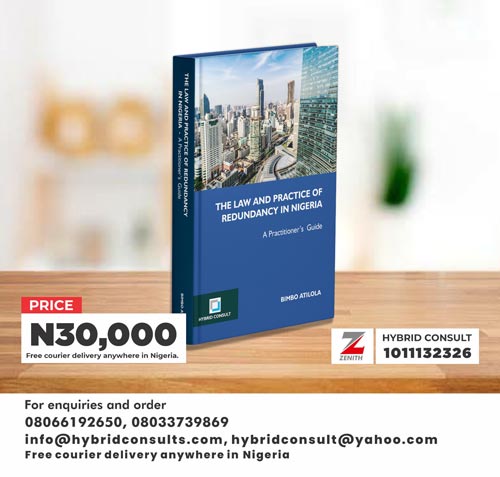
_______________________________________________________________________ [A MUST HAVE] Evidence Act Demystified With Recent And Contemporary Cases And Materials
 ______________________________________________________________________
“Bridging Theory And Courtroom Practice” — Hagler Sunny Okorie, Nathaniel Ngozi Ikeocha Unveil ‘Functional’ Tort Law Book For Nigerian Legal System
______________________________________________________________________
“Bridging Theory And Courtroom Practice” — Hagler Sunny Okorie, Nathaniel Ngozi Ikeocha Unveil ‘Functional’ Tort Law Book For Nigerian Legal System
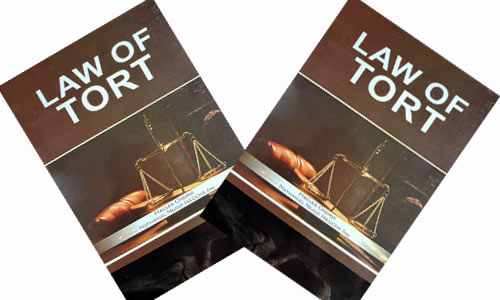 The book, titled The Law of Torts in Nigeria: A Functional Approach, authored by Professor Hagler Sunny Okorie Ph.D and Ikeocha, Nathaniel Ngozi Esq, offers law students, practitioners, and academics a comprehensive guide to understanding and applying tort law in Nigerian courts. Interested buyers can place orders via the following contact numbers: 08028636615, 08037667945, 08032253813, or +234 902 196 2209.