*Challenges Osigwe SAN, Says Association Is More Than a Regulatory Body

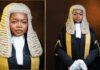
Legal practitioner John Aikpokpo-Martins has issued a detailed statement challenging NBA President Afam Osigwe SAN’s refusal to condemn Lagos socialite Pretty Mike’s lawyer costume parade, arguing that while no law may have been violated, the NBA’s response itself has inflicted a deeper wound on the dignity of the legal profession than the stunt it declined to condemn.
In a statement titled “Statement in Support of the Position That the Unauthorized Wearing of Lawyers’ Wig and Gown Undermines the Dignity and Nobility of the Legal Profession,” Aikpokpo-Martins acknowledged that Prof. Ernest Ojukwu’s legal analysis is correct and that no Nigerian law expressly criminalises the wearing of legal attire by non-lawyers, but argued that the question transcends legality and enters the territory of professional dignity, institutional custodianship, and the NBA’s responsibility to protect traditions handed down “in their purity by our predecessors.”
Aikpokpo-Martins began by conceding the legal point that has anchored the positions of both the NBA President and Prof. Ojukwu.
“It may be correct, as observed by Prof. Ernest Ojukwu, SAN, that no Nigerian law expressly criminalises the wearing of lawyers’ wigs and gowns by non-lawyers. Unlike military, police, and certain public service uniforms, legal robes are not protected by specific statutory provisions such as those in the Criminal Code, Police Act, Penal Code, or Armed Forces Act. For that reason, comparisons with military or police uniforms are not entirely apt. Legally, Pretty Mike’s stunt may not have violated any law,” Aikpokpo-Martins stated.
However, he immediately pivoted to what he described as the real issue: “Legality is not the end of the inquiry. The central question is one of appropriateness and respect for the dignity of the legal profession.”
He argued that the wig and gown are not mere costumes but symbols of the administration of justice, of officers of the court, and of a profession entrusted with serious responsibilities to society. “To deploy them as props for entertainment, spectacle, or social media attention inevitably diminishes the esteem in which those symbols are held,” Aikpokpo-Martins stated.
In what may be the most intellectually significant passage of his statement, Aikpokpo-Martins argued that the debate has been unnecessarily framed as a binary choice between legal permissibility and moral condemnation, when in fact both positions can be held simultaneously without contradiction.
“It is entirely possible, and intellectually honest, to hold two positions simultaneously: that no law was violated, and that the conduct was disrespectful and degraded the dignity of the profession. These positions are not contradictory,” he stated.
The argument is directed squarely at the NBA President’s framing, which presented the question as one where the absence of a legal prohibition foreclosed the possibility of institutional concern. Aikpokpo-Martins is saying that Osigwe created a false dichotomy: the NBA could have acknowledged that no law was broken while simultaneously expressing concern about the trivialisation of legal attire. The two statements are not mutually exclusive.
Aikpokpo-Martins then exposed what he described as a double standard in the NBA’s approach, using a hypothetical that strikes close to the profession’s most prized distinctions.
“I have no doubt that an explosive reaction would have followed if the same clowns had worn the Senior Advocate’s or a Justice’s wig and gown,” he stated.
The observation highlights a potential inconsistency. If Pretty Mike’s entourage had appeared in the distinctive silk gowns worn by Senior Advocates of Nigeria or the ceremonial robes of a Justice of the Supreme Court, the reaction from the NBA and the judiciary would almost certainly have been swift and forceful, regardless of whether any law was technically violated. The fact that the NBA would likely react differently depending on which specific legal attire was used undermines the argument that the absence of a legal prohibition is the only relevant consideration.
Aikpokpo-Martins further cited the NBA’s own history of protecting its symbols: “The NBA has, in the past, vigorously opposed the conferment and use of the ‘blue silk’ outside established criteria, yet now sees no wrong in allowing miscreants to debase the symbols of the profession.”
The “blue silk” reference relates to the NBA’s longstanding opposition to the award of Senior Advocate rank outside the established criteria, a position the association has defended not because any criminal law prohibits alternative silk conferments, but because the NBA views the SAN rank as a professional symbol whose integrity must be protected. If the NBA is willing to defend the integrity of the silk gown on grounds of professional dignity rather than criminal law, the same principle should apply to the defence of the ordinary legal robe.
Aikpokpo-Martins reserved his most pointed criticism for the NBA President personally, describing Osigwe’s response as more damaging to the profession than Pretty Mike’s stunt.
“I am deeply disappointed by the NBA President’s reaction. In my view, the NBA President’s statement inflicts a deeper cut on the dignity of the profession than the stunt itself,” Aikpokpo-Martins stated.
The argument is that Pretty Mike is an entertainer whose theatrical stunts, while attention-grabbing, carry limited institutional weight. But when the President of the Nigerian Bar Association, the highest officer of the profession, publicly declares that the association sees nothing wrong with the use of legal attire as party costumes, that declaration carries institutional authority and effectively signals to the public that the profession itself does not value its own symbols.
In other words, Pretty Mike’s stunt said: “legal robes can be used for entertainment.” The NBA President’s response said: “the profession agrees.” It is the second statement, Aikpokpo-Martins argues, that does the greater damage.
Aikpokpo-Martins directly challenged the NBA President’s stated principle that the association is “guided by laws not morals,” arguing that this formulation understates the NBA’s role and responsibilities.
“While fidelity to the law is essential, the NBA is more than a regulatory body. It is the custodian of the image, traditions, and integrity of the legal profession,” Aikpokpo-Martins stated.
He argued that there would have been nothing wrong with the NBA expressing concern about the trivialisation of legal attire while simultaneously acknowledging that no criminal offence was committed. The two positions, as he had earlier argued, are not contradictory and could have been communicated in a balanced statement that upheld both legal accuracy and professional dignity.
In his most expansive argument, Aikpokpo-Martins challenged the NBA President’s reliance on written law as the sole basis for institutional action, arguing that the legal profession’s identity and authority rest on traditions, practices, and procedures that predate many of Nigeria’s written laws.
“The NBA must recognise that it is the custodian of centuries-old traditions, practices, and procedures rooted in fidelity to professional ideals more than in written laws alone. This sudden penchant for relying solely on written law for validation loses sight of the history and foundations of the legal profession,” Aikpokpo-Martins stated.
The argument positions the legal profession’s traditions as a source of authority and identity that exists alongside, but independently of, statutory law. The wig and gown did not originate from any Nigerian statute. They were inherited from the English legal tradition and maintained in Nigeria as symbols of the court’s authority, the lawyer’s duty, and the solemnity of the justice process. Their significance derives from custom, tradition, and professional consensus, not from criminal legislation.
By suggesting that the NBA can only act where a written law has been violated, Osigwe is, in Aikpokpo-Martins’ view, abandoning the very traditions that give the profession its distinctive character.
Aikpokpo-Martins closed with a direct appeal to the association’s institutional conscience, calling on the NBA to protect the dignity and nobility of the profession regardless of the personal inclination of any individual president.
“The NBA cannot and must not strip the profession of its vestiges of dignity, aura, respect, and nobility by condoning actions directed at the nobility and dignity of the profession handed over to us in its purity by our predecessors. The NBA must be circumspect and protect the dignity and nobility of the profession, notwithstanding the personal inclination of a sitting President,” he concluded.
The closing phrase, “notwithstanding the personal inclination of a sitting President,” is a direct challenge to Osigwe, suggesting that the NBA President’s refusal to condemn the stunt reflects a personal philosophical position that may not be shared by the broader membership and should not be imposed on the profession as institutional policy.
Aikpokpo-Martins’ statement represents the most detailed and intellectually rigorous counter-argument to the positions taken by both the NBA President and Prof. Ojukwu on the Pretty Mike controversy.
The debate now features three clearly defined positions. The NBA President and Prof. Ojukwu hold that no law was broken, the NBA has no regulatory authority over non-lawyers wearing legal attire, and issuing a condemnation would make the association look intolerant. Aikpokpo-Martins holds that no law was broken but professional dignity was degraded, the NBA has a custodial responsibility that goes beyond legal regulation, and the failure to express concern has caused more damage than the stunt itself. And the original critics of Pretty Mike’s stunt hold that the use of legal attire as party costumes is inherently disrespectful, regardless of legality.
What began as a reaction to a socialite’s birthday party entrance has now evolved into a fundamental debate about the identity of the Nigerian legal profession: whether it is defined primarily by written law, by tradition and custom, or by some combination of both, and whether the NBA’s institutional voice should be confined to matters of legality or should extend to the broader defence of professional dignity and public respect.
[A MUST HAVE] Evidence Act Demystified With Recent And Contemporary Cases And Materials

Available now for NGN 40,000 at ASC Publications, 10, Boyle Street, Onikan, Lagos. Beside High Court, TBS. Email publications@ayindesanni.com or WhatsApp +2347056667384. Purchase Link: https://paystack.com/buy/evidence-act-complete-annotation
______________________________________________________________________ “Enhance Legal Practice With Authoritative Reports” — Alexander Payne Offers Comprehensive Law Reports, Spanning Over A Century Of Nigerian Jurisprudence Interested buyers are encouraged to place their orders and enquiries via:
0704 444 4777, 0704 444 4999, 0818 199 9888
Website: www.alexandernigeria.com
Interested buyers are encouraged to place their orders and enquiries via:
0704 444 4777, 0704 444 4999, 0818 199 9888
Website: www.alexandernigeria.com