“There can be no real growth without healthy populations. No sustainable development without tackling disease and malnutrition. No international security without assisting crisis-ridden countries. And no hope for the spread of freedom, democracy and human dignity unless we treat health as a basic human right”.

These were the words of a Norwegian female politician, Gro Harlem Brundtland who served three terms as Prime Minister of Norway and as Director-General, World Health Organization (WHO) from 1998 to 2003. Prior to the latter, she was appointed by United Nations as chairperson of the Brundtland Commission which presented the Brundtland Report on Sustainable Development formally known as the World Commission on Environment and Development (WCED) in 1983.
Without digressing, malnutrition as a critical disorder occurs when a person’s diet doesn’t contain the right amount of nutrients. It simply means ‘poor nutrition’ and can refer to undernutrition – not getting enough nutrients or overnutrition – getting more nutrients than necessary for normal growth, development and metabolism.
However, there are four sub-forms of undernutrition – wasting (low weight for height), stunting (low height for age), underweight (children with low weight for age), and micronutrient deficiencies.
Instructively, malnutrition results from a poor diet; when the intake of nutrients or energy is too high, too low, or poorly balanced. By implications, malnutrition can occur in poor families as well as rich families that are ignorant of diets. Emaciated or obese, it is still malnutrition.
Arguably, the best way to prevent malnutrition is to eat a healthy, balanced diet. To achieve these, eating a variety of foods from the four main food groups especially sufficient fruits and vegetables is indispensable.
UNICEF in her interventionist nature takes lead in the advocacy particularly through the procurement of Ready-To-Use-Therapeutic Food (RUTF), a special therapy formulated to treat children suffering from severe acute malnutrition.
Lately, two prominent moguls; Bill Gates and Aliko Dangote have joined the crusade against malnutrition. This is commendable as nutrition remains the bedrock of child survival and development.
Nonetheless, the most rewarding beyond treatment is to conscientiously activate the popular maxim by a Dutch philosopher, Desiderius Erasmus which said, “Prevention is better than cure”. Ultimately, taking proper care of health prevents lots of health challenges and also saves money by reducing the number of illnesses and medications.
Hence, parents and custodians should ineludibly be acquainted with knowledge on the best feeding practices especially for infants and young children. This will ensure that children are properly cared for and fed to prevent malnutrition.
And this is where governments, non-government and corporate organizations have crucial roles to play. To articulate policies that support poor families in managing underlying factors affecting child’s nutritional intake is without doubt a step forward.
Typically, the human body requires six essential nutrients to function properly which according to WHO classifications are macronutrients: water, protein, carbohydrates and fats, and micronutrients: vitamins and minerals. Whilst the body requires macronutrients in large amounts, micronutrients are needed in smaller measures.
Beyond nutrients, malnutrition can be caused by infections, psychosocial and environmental factors. Vitally important! Good water supply, sanitation and hygiene are vital for their direct impact on infectious diseases. Incidentally, these demands cannot be met by chance but concerted efforts and self-discipline.
Thus, organizing and supporting community awareness workshops possibly through the Local Government Areas (LGAs) structures to expose women in both rural and urban areas on suitable feeding practices for the family may lend a helping hand.
Likewise, self-care is crucial as it reduces the heavy costs of healthcare associated with diseases. The reason is that many diseases are preventable, and also can be managed much better if identified in time. Self-care treatment of malnutrition may involve dietary changes, such as eating foods high in energy, nutrients and other non-dairy sources of protein.
And the fact remains that well-nourished children are better able to grow resiliently. Undernourished children on the other hand have weaker immune systems, thus susceptible to infections and illnesses. Therefore, an investment in nutrition is relatively a premium long-term socioeconomic security.
For emphasis, malnutrition slows economic growth and perpetuates poverty by deterring people from reaching their full potentials. Equally, the mortality and morbidity associated with malnutrition constitute a direct loss in human capital and productivity to any economy, as undernutrition in early childhood makes victims prone to non-communicable diseases including diabetes and heart disease.
From records, it was estimated that malnutrition could cost a society up to US$3.5 trillion a year, with overweight and obesity alone costing US$500 billion per annum. Likewise, economists maintained that in total, the cost of malnutrition could range from 2 to 3 percent of Gross Domestic Product (GDP). Of course, the education gap and consequent lower outputs of workforce can shake any country affected by malnutrition.
Correspondingly, an American physician, Dr. Nathan H. Heiligman (1907 – 1997) in “A strong Nation is a healthy Nation: Letter from the Lehigh Country Tuberculosis Society” (National Library of Medicine) in 1940 elaborately emphasized on healthiness in nation-building. In addition, the effects of poor intelligent quotient and reduced school attainment that originate in early childhood undernutrition are grievous.
Thus, malnutrition has long-term implications which can ensnare generations of people in a vicious circle of poverty. Preventing malnutrition is therefore critical in eradicating poverty and positioning an economy for giant strides.
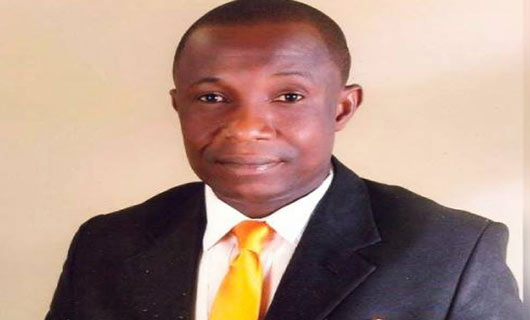
Umegboro is a public affairs analyst and Associate, Chartered Institute of Arbitrators (United Kingdom). 08023184542 – SMS only. Https:carlumegboro.com

 ARTIFICIAL INTELLIGENCE FOR LAWYERS: A COMPREHENSIVE GUIDE
Reimagine your practice with the power of AI “...this is the only Nigerian book I know of on the topic.” — Ohio Books Ltd
Authored by Ben Ijeoma Adigwe, Esq., ACIArb (UK), LL.M, Dip. in Artificial Intelligence, Director, Delta State Ministry of Justice, Asaba, Nigeria.
Bonus:
Get a FREE eBook titled “How to Use the AI in Legalpedia and Law Pavilion” with every purchase.
ARTIFICIAL INTELLIGENCE FOR LAWYERS: A COMPREHENSIVE GUIDE
Reimagine your practice with the power of AI “...this is the only Nigerian book I know of on the topic.” — Ohio Books Ltd
Authored by Ben Ijeoma Adigwe, Esq., ACIArb (UK), LL.M, Dip. in Artificial Intelligence, Director, Delta State Ministry of Justice, Asaba, Nigeria.
Bonus:
Get a FREE eBook titled “How to Use the AI in Legalpedia and Law Pavilion” with every purchase.
How to Order: 📞 Call, Text, or WhatsApp: 08034917063 | 07055285878 📧 Email: benadigwe1@gmail.com 🌐 Website: www.benadigwe.com
Ebook Version: Access directly online at: https://selar.com/prv626
________________________________________________________________________ The Law And Practice Of Redundancy In Nigeria: A Practitioner’s Guide, Authored By A Labour & Employment Law Expert Bimbo Atilola _______________________________________________________________________
"You Don't Need To Be Rich, You Just Need To Start" — Victoria Ezeigwe, Esq Launches Investment Handbook For Nigerians Starting With ₦5,000
_______________________________________________________________________
"You Don't Need To Be Rich, You Just Need To Start" — Victoria Ezeigwe, Esq Launches Investment Handbook For Nigerians Starting With ₦5,000
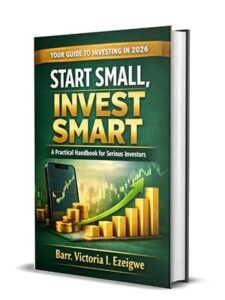
Get your copy today and take the first step toward financial growth:👉 https://selar.co/4f16676016
_______________________________________________________________________