Nigeria will receive $3.35 billion as the International Monetary Fund (IMF) announced the deployment of special drawing rights (SDRs) equivalent to $650 billion (about SDR 456bn).

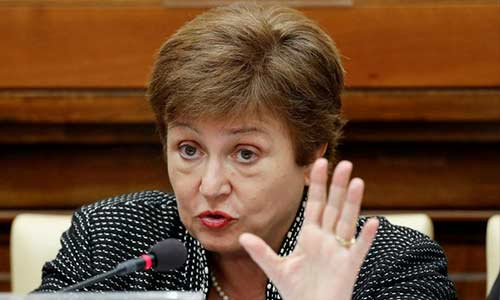
Kristalina Georgieva, managing director of the IMF, announced the deployment in a statement on Monday.
SDR is an international reserve asset created by the United Nations specialised agency to supplement its member countries’ official reserves.
The value of the SDR is based on a basket of five currencies – the U.S. dollar, the euro, the Chinese renminbi, the Japanese yen, and the British pound sterling. They are units of account for the IMF, not a currency per se.
Georgieva said the SDRs will be distributed to countries in proportion to their quota shares in the IMF.
She said $275 billion will go to emerging and developing countries, of which low-income countries will receive about $21 billion.
“The largest allocation of Special Drawing Rights (SDRs) in history—about US$650 billion—comes into effect today. The allocation is a significant shot in the arm for the world and, if used wisely, a unique opportunity to combat this unprecedented crisis,” the statement reads.
“The SDR allocation will provide additional liquidity to the global economic system – supplementing countries’ foreign exchange reserves and reducing their reliance on more expensive domestic or external debt. Countries can use the space provided by the SDR allocation to support their economies and step up their fight against the crisis.
“SDRs are being distributed to countries in proportion to their quota shares in the IMF. This means about $275 billion is going to emerging and developing countries, of which low-income countries will receive about US$21 billion – equivalent to as much as 6 percent of GDP in some cases.”
The IMF boss said countries should ensure that decisions on the use of SDRs “should be prudent and well-informed”.
She further stated that IMF would provide a framework for assessing the macroeconomic implications of the new allocation, its statistical treatment and governance, and how it might affect debt sustainability.
The bank would also provide regular updates on all SDR holdings, transactions, and trading – including a follow-up report on the use of SDRs in two years’ time.
“To magnify the benefits of this allocation, the IMF is encouraging voluntary channeling of some SDRs from countries with strong external positions to countries most in need,” the statement adds.
“Over the past 16 months, some members have already pledged to lend US$24bn, including US$15 billion from their existing SDRs, to the IMF’s Poverty Reduction and Growth Trust, which provides concessional loans to low-income countries. This is just a start, and the IMF will continue to work with our members to build on this effort.
“This SDR allocation is a critical component of the IMF’s broader effort to support countries through the pandemic, which includes: US$117 billion in new financing for 85 countries; debt service relief for 29 low-income countries; and policy advice and capacity development support to over 175 countries to help secure a strong and more sustainable recovery.”
The new SDR allocation is the highest in the history of the IMF.
In June, Akinwumi Adesina, president of the African Development Bank (AfDB), said G7 countries had also agreed to reallocate $100 billion in their IMF SDR to African states by October.
[A MUST HAVE] Evidence Act Demystified With Recent And Contemporary Cases And Materials

Available now for NGN 40,000 at ASC Publications, 10, Boyle Street, Onikan, Lagos. Beside High Court, TBS. Email publications@ayindesanni.com or WhatsApp +2347056667384. Purchase Link: https://paystack.com/buy/evidence-act-complete-annotation
______________________________________________________________________ “Enhance Legal Practice With Authoritative Reports” — Alexander Payne Offers Comprehensive Law Reports, Spanning Over A Century Of Nigerian Jurisprudence Interested buyers are encouraged to place their orders and enquiries via:
0704 444 4777, 0704 444 4999, 0818 199 9888
Website: www.alexandernigeria.com
Interested buyers are encouraged to place their orders and enquiries via:
0704 444 4777, 0704 444 4999, 0818 199 9888
Website: www.alexandernigeria.com