*Says It Is Time To Abolish Wigs And Gowns

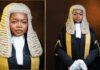
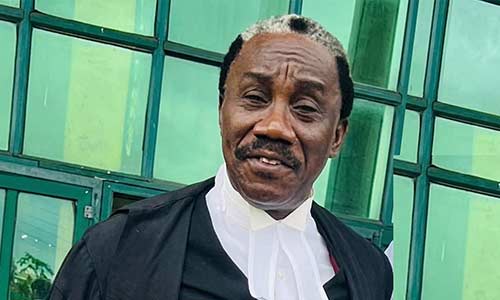
Senior Advocate of Nigeria, Prof. Ernest Ojukwu, has endorsed NBA President Afam Osigwe SAN’s refusal to condemn Lagos socialite Pretty Mike’s lawyer-themed birthday party stunt, declaring that “the President got this right,” before going significantly further than the NBA President by calling for the outright abolition of the wearing of wigs and gowns by Nigerian lawyers, describing the legal attire as “anachronistic.”
In a detailed Facebook post, Ojukwu also addressed lawyers who had compared the legal profession’s robes to military and police uniforms, arguing that the comparison is fundamentally flawed because while multiple provisions of Nigerian criminal law explicitly prohibit non-military and non-police personnel from wearing those uniforms, no equivalent law exists for lawyers’ wigs and gowns.
To prove his point, Ojukwu cited six specific statutory provisions that criminalise the unauthorised wearing of military and police uniforms, demonstrating through a comprehensive legal analysis that the law treats military and police attire entirely differently from legal professional dress.
Ojukwu opened by quoting the NBA President’s position that the association is “guided by laws not morals” and cannot condemn an issue that the law does not prohibit, and offered his unequivocal endorsement.
“The President got this right!” Ojukwu declared.
He then went beyond endorsement to advocacy, using the Pretty Mike controversy as a launchpad for a call that will itself generate significant debate within the profession.
“The Lawyers’ robes in Nigeria is even anachronistic! Time to abolish the wearing of the wigs and gowns!” Ojukwu stated.
The call to abolish wigs and gowns, coming from a former General Secretary of the NBA and one of the most respected voices in the profession, adds a new and provocative dimension to a debate that began as a reaction to a socialite’s birthday party stunt but has now expanded into a broader conversation about the symbols, traditions, and identity of the Nigerian legal profession.
Ojukwu directly addressed lawyers who had criticised Osigwe’s position by comparing the legal profession’s robes to military and police dress, arguing that non-military and non-police personnel are prohibited by law from wearing those uniforms and that the same principle should apply to lawyers’ robes.
Ojukwu dismantled this comparison with characteristic precision, drawing a clear distinction between the legal protection afforded to military and police uniforms and the absence of any such protection for lawyers’ attire.
“No law forbids anyone wearing lawyers’ wigs and gowns. Only lawyers themselves are forbidden by their own Rules from wearing the robes other than in permitted professional environments where they are used,” Ojukwu stated.
“But there are laws making it criminal to adorn military, police or other public officers’ uniforms and official dresses if one does not belong,” he added.
The distinction is legally critical. The Rules of Professional Conduct for Legal Practitioners, which regulate how and where lawyers may wear their robes, are internal professional rules that bind lawyers. They do not create criminal offences for non-lawyers who wear similar attire. By contrast, the criminal provisions governing military and police uniforms apply to everyone, creating offences that can result in imprisonment and fines for non-military and non-police personnel who wear those uniforms.
To support his analysis, Ojukwu cited six specific provisions of Nigerian criminal law that criminalise the unauthorised wearing of military, police, and other public service uniforms, demonstrating that the legislature has deliberately chosen to protect those uniforms through criminal sanctions while making no equivalent provision for lawyers’ robes.
First, Section 109 of the Criminal Code Act, LFN 2004, which criminalises “personating members of armed forces or police.” The provision makes it a misdemeanour punishable by one year’s imprisonment for any person who is not serving in the armed forces or police to wear any part of the uniform of, or any garb resembling any part of the uniform of, a person serving in those forces, with intent to be taken for such a person.
Second, Section 110 of the Criminal Code Act, which criminalises the “unlawful wearing of the uniform of the armed forces.” The provision creates an offence punishable by one month’s imprisonment or a fine for any person who, not being a member of the armed forces, wears the uniform or any distinctive marks of such forces, or who, not holding any office under the government, wears any uniform, badge, or mark calculated to convey the impression that they hold such office. Notably, this section contains a proviso that exempts “the wearing of any uniform or dress in the course of a stage play or in any bona fide public entertainment,” an exception that would itself appear to cover Pretty Mike’s theatrical stunt even if lawyers’ robes were protected by a similar provision.
Third, Section 251 of the Criminal Code Act, which criminalises “bringing contempt on uniform.” The provision makes it a simple offence punishable by three months’ imprisonment or a fine for any person who, not serving in the armed or police forces, wears the uniform of those forces in a manner likely to bring contempt on the uniform.
Fourth, Section 101 of the Police Act 2020, which criminalises “impersonation of a police officer.” The provision creates an offence punishable by a fine of at least N100,000 or imprisonment of at least one year or both for any person who puts on or assumes the apparel, name, designation, or description of any police officer, or pretends to be a police officer for the purpose of gaining admission to premises or doing any act they would not otherwise be entitled to do.
Fifth, Section 133 of the Penal Code, which applies in Northern Nigeria and criminalises the wearing of any dress or carrying of any token resembling those used by a class of public servant, with the intention that it may be believed the person belongs to that class. The punishment is up to six months’ imprisonment or a fine.
Sixth, Section 252 of the Armed Forces Act, LFN 2004, which criminalises the “unauthorised use of and dealing in decorations.” The provision makes it an offence to use or wear a service decoration, badge, wound stripe, or emblem without authority, or to use one so closely resembling an authorised decoration as to be calculated to deceive.
The cumulative effect of Ojukwu’s statutory citations is devastating for those who sought to equate lawyers’ robes with military and police uniforms. The Nigerian legislature has enacted at least six separate provisions across different statutes specifically criminalising the unauthorised wearing of military, police, and other public service uniforms. No equivalent provision exists anywhere in Nigerian law for lawyers’ wigs, gowns, or legal collars.
This is not an oversight. The law distinguishes between uniforms that represent the coercive power of the state, which are protected by criminal sanctions because their misuse could enable deception, intimidation, or the unlawful exercise of authority, and professional attire worn by private practitioners, which carries no such coercive power and whose regulation is left to the profession’s own internal rules.
As Ojukwu stated: “Only lawyers themselves are forbidden by their own Rules from wearing the robes other than in permitted professional environments where they are used.” Pretty Mike is not a lawyer. The Rules of Professional Conduct do not apply to him. And no criminal law prohibits him or anyone else from wearing wigs and gowns at a birthday party.
Ojukwu’s most consequential statement, however, is not his legal analysis of the Pretty Mike stunt but his call for the abolition of wigs and gowns altogether. By describing the legal attire as “anachronistic,” the former NBA General Secretary has positioned himself on one side of a debate that has simmered within the Nigerian legal profession for decades.
The wigs and gowns worn by Nigerian lawyers are inherited from the English legal tradition, a colonial legacy that has been maintained in Nigeria long after many other Commonwealth jurisdictions have either abolished or significantly modified the practice. Critics of the tradition argue that the attire is impractical in Nigeria’s tropical climate, culturally incongruous, and a remnant of colonial subservience that modern African lawyers should not be compelled to maintain.
Defenders of the tradition argue that the wig and gown carry symbolic weight, representing the dignity of the court, the authority of the law, and the equality of all advocates before the bench. They argue that removing the attire would diminish the solemnity of court proceedings and weaken the public perception of the legal profession’s gravitas.
Ojukwu’s call to abolish the wigs and gowns is not new in Nigerian legal discourse, but coming from a former General Secretary of the NBA in the context of the Pretty Mike controversy, it adds fresh momentum to a debate that the profession has repeatedly deferred.
There is an irony in the sequence of events that has produced this debate. Pretty Mike’s stated intention was to honour the legal profession. “To the legal profession… The backbone of order, justice and structure in society, I have deep respect for lawyers,” the socialite wrote. His stunt was meant as a tribute, not an insult.
Yet the reaction to his tribute has triggered a more searching conversation about the legal profession’s relationship with its own symbols and traditions than any formal reform proposal has managed to generate. The question is no longer merely whether Pretty Mike should have dressed his entourage in legal attire at a birthday party. The question, as Ojukwu has now framed it, is whether lawyers themselves should still be wearing that attire in 2026.
[A MUST HAVE] Evidence Act Demystified With Recent And Contemporary Cases And Materials

Available now for NGN 40,000 at ASC Publications, 10, Boyle Street, Onikan, Lagos. Beside High Court, TBS. Email publications@ayindesanni.com or WhatsApp +2347056667384. Purchase Link: https://paystack.com/buy/evidence-act-complete-annotation
______________________________________________________________________ “Enhance Legal Practice With Authoritative Reports” — Alexander Payne Offers Comprehensive Law Reports, Spanning Over A Century Of Nigerian Jurisprudence Interested buyers are encouraged to place their orders and enquiries via:
0704 444 4777, 0704 444 4999, 0818 199 9888
Website: www.alexandernigeria.com
Interested buyers are encouraged to place their orders and enquiries via:
0704 444 4777, 0704 444 4999, 0818 199 9888
Website: www.alexandernigeria.com