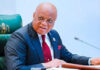
Senior Advocate of Nigeria (SAN) Adeyinka Olumide-Fusika has emphasized that Nigeria’s battle against corruption demands strong political will from leaders, warning that institutions like the Economic and Financial Crimes Commission (EFCC) cannot single-handedly address the nation’s entrenched systemic issues. In an interview on Arise TV morning show, Fusika responded to allegations by the African Democratic Congress (ADC) that the EFCC is being used by the ruling All Progressives Congress (APC)-led federal government to witch-hunt opposition figures.

The discussion stemmed from recent EFCC actions, including summonses to former Senate President David Mark and former Imo State Governor Emeka Ihedioha, which the ADC described as selective persecution and media trials aimed at intimidating opposition leaders. The ADC also highlighted the formation of their party and the targeting of figures like former Sokoto Governor Aminu Tambuwal as evidence of political bias.
EFCC Chairman Ola Olukoyede dismissed these claims as “self-serving, diversionary, and an attempt to whitewash individuals with corruption questions to answer.” He asserted that the agency’s investigations span both ruling and opposition parties, citing ongoing probes into seven governors, ministers, and senior APC figures. Olukoyede maintained that the EFCC’s mandate is non-partisan, focusing solely on corruption regardless of political affiliation.
Fusika, joining the show, began with a general statement: “These institutions serve Nigeria and Nigerians, and if we have feedback, Nigerians should give them feedback.” He advised the EFCC to respond to criticisms constructively without adversarial language, suggesting the agency project itself better and explain its actions transparently. “There’s nothing wrong in that, and it is for the institution to try and project itself better, make its explanation without necessarily making it so adversarial,” he said.
Rejecting the notion of targeted persecution, Fusika argued: “I would not come here to say that I disagree with… the EFCC going after what we call in local parlance ‘Yahoo boys’.” However, he criticized the agency’s focus on minor fraudsters, noting that convictions often involve small-scale offenders like those scamming foreigners online, while major economic crimes go unaddressed. “The problems of Nigeria are beyond that,” he added, questioning the intelligence value in prioritizing such cases.
Fusika dismissed the ADC’s claims, pointing out that the party includes other prominent figures like governors who have not been summoned. “If the EFCC is targeting the organization as it is being said, then why are these ones not also picked up?” He suggested that investigations into Tambuwal, Mark, and Ihedioha likely stem from specific findings requiring explanations, not political motives. “It must be because there’s something they found that they need to make explanations about.”
He acknowledged perceptions of inconsistency, where cases against high-profile individuals simmer down after political shifts. “We’re not seeing anything reach its final conclusion. We’re not seeing convictions or acquittals,” Fusika noted, citing examples like raids on gatherings at the Olusegun Obasanjo Presidential Library or hotels, despite EFCC’s stated policy against night stings. He criticized the parading of suspects, particularly young people, without due process leading to finality.
Fusika highlighted systemic failures: “Every aspect of our criminal justice system in Nigeria is broken.” He pointed to political interference, such as state pardons for convicted officials or cases dropping when suspects align with the ruling party. “That’s political… the system itself has been overtaken, overwhelmed by corruption.”
Addressing internal EFCC issues, Fusika noted Olukoyede’s admission of “bad eggs” being flushed out but urged transparency: “Why are you not letting the public know who these bad elements are? What offenses did they commit?” He commended the good elements within the EFCC but stressed that corruption is an “infestation” requiring a comprehensive overhaul, not “tokenism.” “We need to look at the whole infrastructure… it’s a big problem that we have.”
Fusika blamed lawyers partially: “Lawyers are part of the problem.” He defended his role, stating he only takes cases where he believes the client has a defense, citing his brief prosecution stint for the EFCC and his preference for defense work. “The money is in defense… but it’s about skill.”
On solutions, Fusika reiterated the need for political will: “The effectiveness of the organization depends more on the political will of the people in power to ensure that the organization is independent.” He traced criticisms back to the EFCC’s inception under Olusegun Obasanjo, calling it a “standing criticism.” Fusika urged sincerity: “We know what goes on… the corruption both at the federal, state, and all… but let’s ask ourselves how many of these people have been convicted since we started fighting this war? No casualties.”
He concluded that Nigeria’s corruption crisis is catastrophic, requiring collective effort beyond selfish interests: “It is our duty to save our country… prevent these things from happening.” Fusika assured that if innocent, evidence in court would vindicate the accused, emphasizing: “Go to court… the judges are not targeting you.”
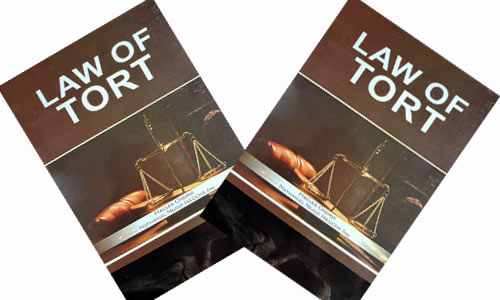 The book, titled The Law of Torts in Nigeria: A Functional Approach, authored by Professor Hagler Sunny Okorie Ph.D and Ikeocha, Nathaniel Ngozi Esq, offers law students, practitioners, and academics a comprehensive guide to understanding and applying tort law in Nigerian courts. Interested buyers can place orders via the following contact numbers: 08028636615, 08037667945, 08032253813, or +234 902 196 2209.
______________________________________________________________________
[A MUST HAVE] Evidence Act Demystified With Recent And Contemporary Cases And Materials
The book, titled The Law of Torts in Nigeria: A Functional Approach, authored by Professor Hagler Sunny Okorie Ph.D and Ikeocha, Nathaniel Ngozi Esq, offers law students, practitioners, and academics a comprehensive guide to understanding and applying tort law in Nigerian courts. Interested buyers can place orders via the following contact numbers: 08028636615, 08037667945, 08032253813, or +234 902 196 2209.
______________________________________________________________________
[A MUST HAVE] Evidence Act Demystified With Recent And Contemporary Cases And Materials

 ARTIFICIAL INTELLIGENCE FOR LAWYERS: A COMPREHENSIVE GUIDE
Reimagine your practice with the power of AI “...this is the only Nigerian book I know of on the topic.” — Ohio Books Ltd
Authored by Ben Ijeoma Adigwe, Esq., ACIArb (UK), LL.M, Dip. in Artificial Intelligence, Director, Delta State Ministry of Justice, Asaba, Nigeria.
Bonus:
Get a FREE eBook titled “How to Use the AI in Legalpedia and Law Pavilion” with every purchase.
ARTIFICIAL INTELLIGENCE FOR LAWYERS: A COMPREHENSIVE GUIDE
Reimagine your practice with the power of AI “...this is the only Nigerian book I know of on the topic.” — Ohio Books Ltd
Authored by Ben Ijeoma Adigwe, Esq., ACIArb (UK), LL.M, Dip. in Artificial Intelligence, Director, Delta State Ministry of Justice, Asaba, Nigeria.
Bonus:
Get a FREE eBook titled “How to Use the AI in Legalpedia and Law Pavilion” with every purchase.
How to Order: 📞 Call, Text, or WhatsApp: 08034917063 | 07055285878 📧 Email: benadigwe1@gmail.com 🌐 Website: www.benadigwe.com
Ebook Version: Access directly online at: https://selar.com/prv626
________________________________________________________________________ The Law And Practice Of Redundancy In Nigeria: A Practitioner’s Guide, Authored By A Labour & Employment Law Expert Bimbo Atilola _______________________________________________________________________
“Enhance Legal Practice With Authoritative Reports” — Alexander Payne Offers Comprehensive Law Reports, Spanning Over A Century Of Nigerian Jurisprudence
_______________________________________________________________________
“Enhance Legal Practice With Authoritative Reports” — Alexander Payne Offers Comprehensive Law Reports, Spanning Over A Century Of Nigerian Jurisprudence
 Interested buyers are encouraged to place their orders and enquiries via:
0704 444 4777, 0704 444 4999, 0818 199 9888
Website: www.alexandernigeria.com
Interested buyers are encouraged to place their orders and enquiries via:
0704 444 4777, 0704 444 4999, 0818 199 9888
Website: www.alexandernigeria.com