Editors Note; Originally published in icirnigeria Written by Bankole ABE
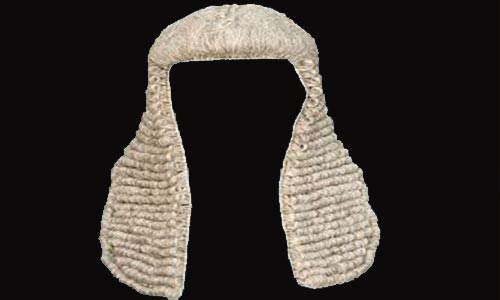
CONTROVERSY is trailing the advice offered to Area Court Judges without law degrees in Nasarawa State by the State House of Assembly.
On Thursday, May 4, the Assembly asked Judges without law degrees to obtain the required credentials within ten years of employment or risk expulsion from the Bench.
The Speaker of Nasarawa State House Assembly, Ibrahim Abdullahi, during a plenary session in Lafia, the state capital, said if the law for appointment/employment of judicial officers is to be implemented, it will lead to the sack of some staff of the judiciary. To avoid such a development, he said there was a need to amend the law.
Abdullahi spoke when the House deliberated on the report of its Standing Committee on Judiciary, Ethics and Privileges on a ‘Bill For a Law to Amend the Nasarawa State Area Courts Law 2022 and For Other Matters Related Therewith’.
“The principal law provides that for one to be a Judge of the Upper Area Court, one must be a legal practitioner with at least four years post-call.
“And for one to be a Judge of an Area Court, you must be a legal practitioner with at least three years post-call.
“The Committee strongly recommends that a window period of 10 years be granted to the affected staff to enrol into a degree programme of Law to be called to Bar for them to fit in,” Abdullahi stated.
The announcement shocked many who thought that to be a Judge in any court, one must have a law degree.
The question on many lips was – Did the advice by the Assembly imply that some judges in Nigeria lacked legal education?
The House of Assembly’s advice to the area court judges has generated a lot of controversy on Twitter, with many commenting on the issue.
Judges in Nasarawa State have been warned to obtain law degrees or lose their jobs.
Nigeria is an unimaginable place. A judge without a law degree or having attended law school ?
My goodness.
— Raymond (@IamTheIroko) May 4, 2023
I don’t understand.
How did they become judges without a law degree? https://t.co/tpQWI5EAf1— oвongawan👑 (@thepepisco) May 4, 2023
However, checks by The ICIR shows that there are certain categories of judges in Nigeria without a law degree.
A Human Rights Lawyer, Frank Tietie, in a chat with The ICIR, said it is indeed possible to be a Judge in a court in Nigeria without being a lawyer, having a law degree or being qualified to practice law.
According to him, however, such types of Judges are only allowed to head an inferior court.
“Well, you must understand that yes, it is possible to be a Judge in a court in Nigeria without being a lawyer, that is, without having a law degree or being qualified to practice law, by a call to the Nigerian Bar after attending the mandatory vocational training at the Law School.
“Now there are certain courts in Nigeria that are created by the warrant of the Chief Judge of any of the 36 states and the Federal Capital Territory (FCT) and such courts, for example, Customary Court, which are also equated in Northern Nigeria by Sharia Court, can actually be manned by persons that appear to the Chief Judge that they are well versed in either the custom of the people of the locality or they are well versed in certain Islamic laws, particularly of the Maliki School and in that case it means that the Chief Judge merely appointed them and those courts are given the jurisdiction that is attached to them also created by the Chief Judge’s warrant,” the lawyer said.
Tietie added that many such inferior courts exist across Southern and Northern Nigeria.
“Across Southern Nigeria and Northern Nigeria alike are many of such inferior courts that deal with very serious matters that have to do with customs or Islamic law.”
He said the recent directive by the Nasarawa State House of Assembly that all such Judges must now have law degrees is not new.
“It has been a development that has been on in many states, particularly in Southern Nigeria, Delta State for example, in the recent past has made it mandatory that persons who manned such inferior courts, whether Area Courts or Sharia Court, must have law degrees.
“To answer your question, certain persons who do not possess law degrees and do not have the license to practice law can actually be appointed as Judges but only Judges of inferior courts like Sharia courts and Customary Court.”
Also speaking on the issue, another legal practitioner, Abiola Kolawole, agreed with Tietie that an individual without a law degree can become a Judge.
He said: “It is possible that an individual with no law degree can be a Judge in a Sharia Court, Area Court and Customary Court. But they can’t be a Judge in a court of record.”
Court of Records in Nigeria are Magistrate Court, High Court, Federal High Court, National Industrial Court, Court of Appeal and Supreme Court.
He added that to be a Judge in any Court of Record, in addition to other qualifications, one must be called to the Nigerian Bar.
“For the Court of Records, it’s not enough that you have a law degree. You must be called to the Nigerian Bar, which must be approved by the Council of Legal Education,” Kolawole added.
A Court of Record is a court that keeps a record of the proceedings for a potential appeal. A court reporter or court clerk records oral proceedings.
On the other hand, the credentials of the members, President or Judge of the Area or Customary Court differ from state to state depending on the specific customary laws in each jurisdiction.
These courts are created by individual states and only have local people as their subject matter.
In both criminal and civil proceedings, the Judges in these courts use local laws and customs, and the penalties or rulings are fair and reasonable.
[A MUST HAVE] Evidence Act Demystified With Recent And Contemporary Cases And Materials

Available now for NGN 40,000 at ASC Publications, 10, Boyle Street, Onikan, Lagos. Beside High Court, TBS. Email publications@ayindesanni.com or WhatsApp +2347056667384. Purchase Link: https://paystack.com/buy/evidence-act-complete-annotation
______________________________________________________________________ “Enhance Legal Practice With Authoritative Reports” — Alexander Payne Offers Comprehensive Law Reports, Spanning Over A Century Of Nigerian Jurisprudence Interested buyers are encouraged to place their orders and enquiries via:
0704 444 4777, 0704 444 4999, 0818 199 9888
Website: www.alexandernigeria.com
Interested buyers are encouraged to place their orders and enquiries via:
0704 444 4777, 0704 444 4999, 0818 199 9888
Website: www.alexandernigeria.com