*Says “I Cannot Say Chinda Will Not Be On The Ballot; I Have Not Seen Their Registers”

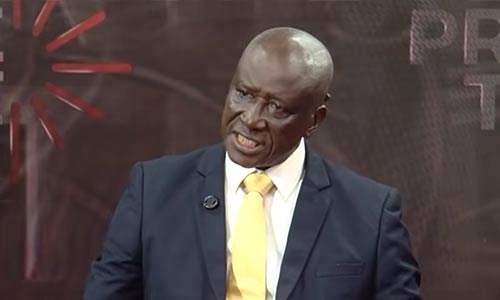
A senior Nigerian lawyer, Dr. Oba Maduabuchi, has said that the Supreme Court’s restoration of the membership register and nomination provisions of the Electoral Act 2026 follows directly from the constitutional power of the Independent National Electoral Commission to organise, administer and supervise elections, and that nothing in the decision interferes with the internal affairs of political parties.
He spoke on Arise Television’s The Morning Show, in a discussion of what the judgment means for candidates who may face challenges if evidence establishes that their names were not on the relevant register.
The restored provisions require parties to rely on the membership register submitted to the commission at least 21 days before conducting their primaries, prohibit the use of a different register, and require nominations to be made through direct primaries or by consensus.
The lawyer framed the decision by reference to what the Court of Appeal had held.
“It is a judgment of the Supreme Court on the decision of the Court of Appeal concerning the Zenith Labour Party in respect of section 77, subsections 5, 6 and 7 of the Electoral Act, and section 84 subsection 2 of the same Act, which the Court of Appeal had declared unconstitutional,” he said.
“Now the Supreme Court says, no, that is not correct. It says those sections are constitutional in respect of the membership register, how primaries are conducted, the timing relating to the names in the membership register, and which register is valid and which is not.”
Asked about the implications beyond the confirmation of the steps the commission had already taken, he set out the constitutional footing.
“Section 77, as you mentioned, subsections 5, 6 and 7, provides for the membership register of voters and so on. You must submit within 21 days. And the last limb is that if you do not do so, if you do not submit the register, you will not have candidates,” he said.
“We must interpret this Supreme Court decision in the light of the provisions of the Constitution which gave the electoral commission the power to organise, administer and supervise elections. So if the commission must organise, and the law says submit your membership register to them, I don’t think there is anything unconstitutional in that.”
“If the commission must administer or supervise, I don’t see. The law says submit your register 21 days before conducting any primaries. I don’t see what is wrong with that, or how it can be unconstitutional.”
He recalled a previous appearance on the same programme. “I remember the last time we spoke when we were on The Morning Show, when I said the electoral commission is the supreme authority as far as elections are concerned. I still remember Rufai Oseni’s outcry that day. But it seems we are returning to recognising that the commission is the actual body that runs elections in Nigeria.”
Asked whether the judgment was therefore an ideal outcome, he agreed, with one qualification.
“The Supreme Court is perfect in my view. Yes, it is perfect, except that it does not determine who is a member of a political party. Determining who is a member of a political party lies in the hands of the political parties themselves,” he said.
“But once you decide who your political party is, tell me who your members are. Even when I organise my election, I will know who I am dealing with. That is the simple thing the Supreme Court said.”
“And when you want to choose your candidates, or whatever you call it, do it openly for everyone to see what you have done. Whether directly or by consensus. Those are the two things the Supreme Court said. And anyone who says they are unconstitutional is wrong.”
He added a warning about the intervening period. “And if anyone acted on the strength of the Court of Appeal decision, that would be unfortunate, because they are now bound by this Supreme Court decision, and it is a judgment of the full court. Seven justices. You need seven justices to overturn it.”
Put to him that the courts have historically avoided interfering in the internal democracy of political parties, and asked whether the decision overrides party supremacy and transfers power to regulatory bodies, he disagreed.
“I don’t seem to agree with you. Because it does not tell you how to become a member of a political party. The Supreme Court never said anything about that. How do you become a member of a political party?” he said.
“The furthest the Supreme Court went is when it permitted or upheld the provision that obliges you to use direct primaries, or indirect, or consensus, in choosing your candidate.”
He explained the policy behind the nomination provision.
“The reason for their concern is that the logic is very simple. We want to eliminate money politics in Nigeria. If you have delegates, the big men will buy the delegates, and the will of the masses, or the will of the people, will not prevail.”
“But when they say everyone must come out to elect their preferred candidate, despite its defects, I think it conforms more with democracy than using delegates as was previously the case.”
He returned to the autonomy question and drew the line where he said it falls.
“So on the question of interference in internal democracy or in the affairs of a political party, that decision does not in any way affect the internal activities and positions of the party,” he said.
“If you want to hold an election, you decide how you want to elect your candidates, you decide who your chairman is, you decide who your members are. The law says that if you have taken that decision, inform me 21 days before conducting the primaries. Let me know the identity of your members.”
“That is not interference in the internal affairs of any party. And you must notify me 21 days ahead. And it did not specify how we arrive at that, so I don’t see how this is interference.”
Asked who the judgment will affect, and whether it can operate retrospectively against candidates who moved parties, he rejected the framing of the question.
“A judicial decision takes effect from the day the suit was filed, and what we declare is the law as it is today. What was the state of the law when the primaries were conducted? That is the law you interpret. If the law is as the Supreme Court said today, that is the law that will apply.”
“It is not a question of retrospective or prospective application. That belongs to the legislature. The legislature is what does that kind of legislation, whether progressive or retrogressive. The legislation has already been made.”
“The effect of the judgment takes effect according to the state of the law at the date on which the matter in question occurred. What was the law, as now interpreted by the Supreme Court in the light of the Constitution?”
Asked whether that meant candidates in that position had been affected, he answered: “They must have been affected. They must have been affected.”
Pressed to say whether that meant a named candidate would not appear on the ballot, he declined, and set out the three facts he said would decide it.
“No, Rufai, I cannot say that. Because first, I do not know when he joined the political party. Secondly, I do not know when they sent their records to the Independent National Electoral Commission. Those two things are of the utmost importance. And thirdly, I do not know whether his name was in the register of political parties as submitted by the party.”
“So those are the three things. I cannot now get up and say that he will not be on the ballot. That the Kwara Central senatorial candidate will not be on the ballot. That a candidate who moved from one party to another will not be,” he said.
“I cannot say that, because I have not seen their registers. I do not know when they submitted them. And I do not know what names are in them.”
Asked what he would say to those who consider that the 21-day notice period places a sudden strain on the internal workings of parties, he rejected the suggestion.
“No, it is not sudden. The law was enacted, and I believe it was passed early this year too. So everyone knew what the law was. That is why they even went to court to challenge it. The 21-day notice issue was there,” he said.
“I think I raised it for the first time in 2011 or 2012, when Sullivan was governor of my state. I said they did not give sufficient notice, and I went to court.”
“The 21-day notice issue is not even new. Not new at all.”
[A MUST HAVE] Evidence Act Demystified With Recent And Contemporary Cases And Materials

Available now for NGN 40,000 at ASC Publications, 10, Boyle Street, Onikan, Lagos. Beside High Court, TBS. Email publications@ayindesanni.com or WhatsApp +2347056667384. Purchase Link: https://paystack.com/buy/evidence-act-complete-annotation
______________________________________________________________________ “Enhance Legal Practice With Authoritative Reports” — Alexander Payne Offers Comprehensive Law Reports, Spanning Over A Century Of Nigerian Jurisprudence Interested buyers are encouraged to place their orders and enquiries via:
0704 444 4777, 0704 444 4999, 0818 199 9888
Website: www.alexandernigeria.com
Interested buyers are encouraged to place their orders and enquiries via:
0704 444 4777, 0704 444 4999, 0818 199 9888
Website: www.alexandernigeria.com