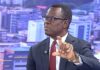
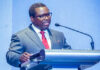
Prof. Chidi Anselm Odinkalu on Tuesday in Uyo warned that Nigeria is drifting into a prolonged crisis marked by mass violence, institutional weakness, and collapsing public trust, urging the country’s legal community to help pull it back from the brink. He made the remarks in his keynote address at the Nigerian Bar Association’s Section on Public Interest and Development Law (NBA-SPIDEL) conference.

Speaking under the theme “A Banner Without Stain: Justice, Accountability, Development,” Odinkalu delivered a stark assessment of Nigeria’s trajectory, describing a country “at war or in a very active state of non-international armed conflict” and struggling to provide basic security to its citizens. The former chairman of Nigeria’s National Human Rights Commission said the situation demands urgent intervention, particularly from the legal profession, which he noted carries civic responsibilities at the core of its existence.
“Civilian government is now in its 26th year, the longest unbroken stretch in our history,” he said. “Yet citizens are entitled to ask whom this longevity has actually rewarded beyond politicians themselves.”
Citing data from Nigeria Mourns, a coalition that tracks nationwide violence, Odinkalu said 4,410 people were killed and 1,011 abducted between January and June 2025. Among the dead were at least 189 security personnel. The figures, he said, mirror those of a country in an undeclared civil conflict.
He noted that October alone saw the killing of a Nigerian Army general and several soldiers in Borno State, along with separate attacks that forced school closures across several states. More than 339 students and teachers were abducted from schools in Kebbi and Niger States within weeks. The result, he said, is a growing climate of fear that is making education increasingly untenable.
“These are not abstract statistics,” he told the hall. “They represent our neighbours, our colleagues, our fellow citizens.” He urged attendees to pause in silence to honour victims nationwide.
The escalating insecurity, Odinkalu argued, exposes “levels of governmental incapacity reminiscent of Weimar Germany,” with non-state armed groups contesting the authority of the state to enforce laws, guarantee safety, or collect taxes. He noted that nearly half of federal unity schools have been shut because the state cannot guarantee the safety of students.
He described the trend as a direct attack on enlightenment ideals in Nigeria, warning that extremist violence is undermining national identity.
Tracing the crisis to long-standing structural problems, Odinkalu recalled that political scientist Peter Lewis described Nigeria as a dysfunctional state in 2006. That assessment, he said, has only deepened.
“In governance, elections, the economy, security, institutions, and civic ethics, the sense is clear that the country is not doing well,” he said. Nigeria’s extractive economic system, he added, continues to reward rent-seeking and promotes a political culture in which the wrong way of doing things faces little consequence.
He referenced the 1975 Supreme Court case of Rauph Gaji v. State to illustrate how Nigeria once had stronger cross-regional cohesion. “What are the chances of a similar case being prosecuted at all in today’s Nigeria?” he asked.
Odinkalu recounted the founding of SPIDEL in 2008 under former NBA President Olisa Agbakoba, noting that the section was created to provide a platform for addressing national issues beyond internal professional matters. Seventeen years later, he said, the need for such engagement has only grown. The country now faces a triple crisis of state fragility and legitimacy, institutional incapacity, and multi-dimensional impunity.
He argued that the legal profession must help rebuild the shared ownership needed to give meaning to Nigeria’s national banner. Without collective identity, he said, “the banner is guaranteed to suffer stain” from competing ethnic and regional interests.
A significant part of Odinkalu’s speech focused on the justice system. He argued that Nigeria’s democratic legitimacy is undermined by elections that are regularly disputed in court, leaving ordinary voters sidelined while the judiciary and “judicial consultants” decide outcomes.
The courts, he said, suffer from delays, poor case management, and declining public confidence. He urged SPIDEL to push for judicial reforms, including tracking and publishing case timelines. “It is no use going into court if you are stuck there until the day after eternity,” he said.
He also called for the revival of recommendations from the 2008 Mohammed Uwais Electoral Reform Panel, many of which were championed by early SPIDEL advocates and remain unimplemented.
Odinkalu said Nigeria must acknowledge the fact that it is engaged in multiple non-state armed conflicts. While politically uncomfortable, he argued that such recognition would allow authorities to invoke the Geneva Conventions Act of 1960 and try insurgents under military law rather than continue what he described as a strategy of “appeasement.”
“Appeasement will not end this reign of atrocities,” he warned. “We must move toward genuine accountability.”
He linked Nigeria’s identity crisis to its colonial formation, pointing to the 1898 Selborne Committee Report and the 1914 amalgamation as the roots of a political entity lacking organic unity. Today, he said, Nigerians remain more attached to ethnic and regional identities than to national citizenship.
He warned that federal appointments, security positions, university admissions, and public resources are increasingly viewed through zero-sum ethnic lenses. “The most endangered minorities in the country,” he observed, “are those willing to identify themselves as Nigerians.”
Odinkalu called for comprehensive reforms in legal education, arguing that current programmes are built on inherited colonial frameworks that erase African legal traditions and fail to prepare students for a globalised legal profession shaped by the African Continental Free Trade Area.
“The rank of Senior Advocate of Nigeria may one day fall into disuse,” he predicted, citing the impact of global market forces and technology on legal practice.
He closed with a warning that impunity poses an existential threat to the country. Public officials respond to atrocities with silence, denial, or “gaslighting,” he said, leaving citizens to negotiate their own safety. He urged the NBA and SPIDEL to lead with reforms capable of slowing or reversing the country’s deterioration.
[A MUST HAVE] Evidence Act Demystified With Recent And Contemporary Cases And Materials

Available now for NGN 40,000 at ASC Publications, 10, Boyle Street, Onikan, Lagos. Beside High Court, TBS. Email publications@ayindesanni.com or WhatsApp +2347056667384. Purchase Link: https://paystack.com/buy/evidence-act-complete-annotation
______________________________________________________________________ “Enhance Legal Practice With Authoritative Reports” — Alexander Payne Offers Comprehensive Law Reports, Spanning Over A Century Of Nigerian Jurisprudence Interested buyers are encouraged to place their orders and enquiries via:
0704 444 4777, 0704 444 4999, 0818 199 9888
Website: www.alexandernigeria.com
Interested buyers are encouraged to place their orders and enquiries via:
0704 444 4777, 0704 444 4999, 0818 199 9888
Website: www.alexandernigeria.com