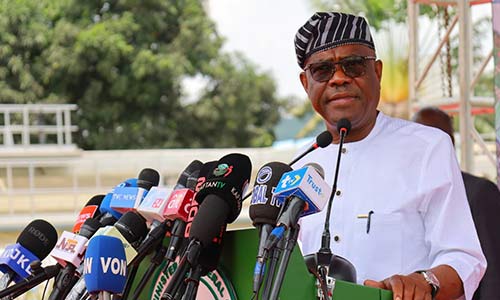
Global human rights watchdog Amnesty International has strongly condemned the Minister of the Federal Capital Territory, Nyesom Wike, following his “reckless and violent” outburst where he suggested he would have shot a journalist during a live television broadcast.

The chilling statement has raised a fundamental question: Is Minister Wike a killer, or does he simply speak like one?
The minister, known for his abrasive rhetoric, made the comments during a live interaction with Arise TV, sparking immediate backlash from civil rights advocates who say the remarks endanger the lives of media practitioners in Nigeria.
“I Would Have Shot Him” — Is Wike A Killer? “Worse Than Abacha’s Regime” — Nigerians React As Minister Threatens Journalist’s Life On Live Television, Ask: Where Is NBC? pic.twitter.com/4GqJmnoFsL
— The Nigeria Lawyer (@Nigerialawyers) April 4, 2026
During the broadcast, Wike expressed his irritation at a journalist’s line of questioning, stating: “If there’s anyway to broke (sic) the screen, I would have shot him…”
The statement, made on live television by a sitting cabinet minister, has sent shockwaves through the media community and raised serious concerns about the safety of journalists in Nigeria.
In a statement shared via its official X handle on Saturday, Amnesty International described the minister’s language as a dangerous incitement to violence that violates both domestic laws and international human rights standards.
“Amnesty International strongly condemns the reckless and violent language of the Minister of Federal Capital Territory Mr. Nyesom Wike in which he stated that he can respond to a statement by a journalist with shooting,” the organisation stated.
“Apart from inciting violence, Wike’s remarks violated Nigeria’s broadcasting code that the Nigerian Broadcasting Commission (NBC) is supposed to be enforcing.”
Amnesty International warned that such violent intent, coming from a high-ranking member of the federal cabinet, carries the risk of “normalising violence” and painting a bullseye on the backs of journalists simply for performing their professional duties.
“This level of violent intent coming from a member of Nigeria’s federal cabinet is unlawful and unacceptable. Mr. Wike must withdraw his violent statement immediately and apologise,” the statement added.
The minister’s threat raises a disturbing question that many Nigerians are now asking: Is Nyesom Wike capable of carrying out such violence, or does he simply use the language of killers to intimidate those who question him?
For a man who holds one of the most powerful positions in the Nigerian government controlling the Federal Capital Territory where the seat of power is located — such language is not merely rhetorical. It carries weight, it sends signals, and it creates an atmosphere of fear.
When a minister says he would “shoot” a journalist for asking questions, what does that tell other journalists? What does it tell the security operatives who work under his authority? What does it tell the public about how this government views press freedom?
The practice of journalism in Nigeria has always been fraught with danger, especially for those who dare to tell the truth.
From the assassination of Dele Giwa by a letter bomb in 1986 to the numerous journalists who have been arrested, beaten, and detained for their work, the Nigerian press has paid a heavy price for holding power to account.
In this environment, when a sitting minister casually speaks of shooting a journalist on live television, it is not merely offensive — it is potentially deadly.
Such statements embolden those who would silence the press through violence. They signal that those in power view journalists not as essential pillars of democracy, but as enemies to be eliminated.
The incident has put the Nigerian Broadcasting Commission in the spotlight, with critics questioning why the regulator — often quick to sanction stations for perceived infractions — has remained silent on the minister’s televised threat.
The same NBC that has fined broadcast stations millions of naira for airing content it deemed inappropriate has said nothing about a cabinet minister threatening to kill a journalist on live television.
The silence speaks volumes about the selective application of broadcasting standards in Nigeria.
The minister’s statement has sparked outrage on social media, with Nigerians condemning his remarks.
@Ebube_5 asked: “Why is Wike so pained, and what did Seun really say that got Wike this pained? I think Seun should not stop yet; he needs to continue doing that thing that got Wike this angry.”
@Godswillluv wrote: “He actually threatened on live broadcast to shot a journalist! This Tinubu’s government is worse than Abacha’s regime.”
@chinechere52831 asked: “So disagreement now deserves bullets? That’s where we are?”
@akonamokoli questioned: “Is this actionable? Purportedly on live TV too?”
@dea86b7cb7ae46c observed: “See as person dey serious dey threaten person life for Live TV and nothing is happening.”
@OmoKadupe05 stated simply: “This man is just a nuisance.”
@kelvinonos wrote: “This man needs to be in NDLEA lab for test.”
@ObiObaji stated: “Wike is a drunkard.”
@Hannyrons called him: “A useless and disgusting minister.”
@Erabose suggested: “This man don drink again.”
@Digitalbarister asked incredulously: “You would have shot him?”
Wike’s tenure as FCT Minister has been marked by several controversies, but this latest threat against a member of the press marks a new low in the government’s relationship with the media.
The minister has previously been known for his combative style and willingness to engage in public confrontations with critics. But threatening to shoot a journalist crosses a line that should be unacceptable in any democracy.
Minister Wike’s statement “If there’s anyway to broke the screen, I would have shot him” is not a joke. It is not banter. It is a cabinet minister expressing, on live television, his desire to kill a journalist for asking questions.
In a country where journalists are already vulnerable to attack, such statements from those in power create a climate of impunity that endangers lives.
The question “Is Wike a killer?” may seem provocative, but it is one that his own words have invited. When a man in his position speaks of shooting journalists, the public has every right to ask what kind of person they are dealing with.
Amnesty International has called on Wike to withdraw his statement and apologise. That is the minimum he should do.
But the larger question is whether President Bola Tinubu will tolerate such behaviour from a member of his cabinet. Will there be consequences for a minister who threatens journalists with death? Or will this, like so many other outrages, simply fade from the headlines while the culture of impunity continues?
For Nigerian journalists, the message is clear: telling the truth in this country remains a dangerous occupation. And when those dangers are amplified by the violent rhetoric of cabinet ministers, the future of press freedom and democracy itself hangs in the balance.
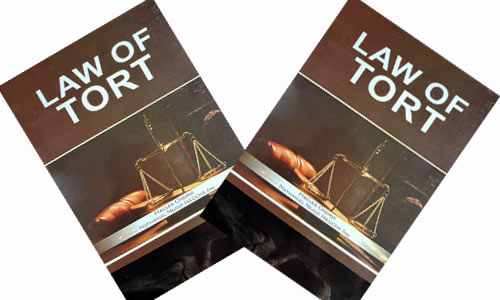 The book, titled The Law of Torts in Nigeria: A Functional Approach, authored by Professor Hagler Sunny Okorie Ph.D and Ikeocha, Nathaniel Ngozi Esq, offers law students, practitioners, and academics a comprehensive guide to understanding and applying tort law in Nigerian courts. Interested buyers can place orders via the following contact numbers: 08028636615, 08037667945, 08032253813, or +234 902 196 2209.
______________________________________________________________________
[A MUST HAVE] Evidence Act Demystified With Recent And Contemporary Cases And Materials
The book, titled The Law of Torts in Nigeria: A Functional Approach, authored by Professor Hagler Sunny Okorie Ph.D and Ikeocha, Nathaniel Ngozi Esq, offers law students, practitioners, and academics a comprehensive guide to understanding and applying tort law in Nigerian courts. Interested buyers can place orders via the following contact numbers: 08028636615, 08037667945, 08032253813, or +234 902 196 2209.
______________________________________________________________________
[A MUST HAVE] Evidence Act Demystified With Recent And Contemporary Cases And Materials

 ARTIFICIAL INTELLIGENCE FOR LAWYERS: A COMPREHENSIVE GUIDE
Reimagine your practice with the power of AI “...this is the only Nigerian book I know of on the topic.” — Ohio Books Ltd
Authored by Ben Ijeoma Adigwe, Esq., ACIArb (UK), LL.M, Dip. in Artificial Intelligence, Director, Delta State Ministry of Justice, Asaba, Nigeria.
Bonus:
Get a FREE eBook titled “How to Use the AI in Legalpedia and Law Pavilion” with every purchase.
ARTIFICIAL INTELLIGENCE FOR LAWYERS: A COMPREHENSIVE GUIDE
Reimagine your practice with the power of AI “...this is the only Nigerian book I know of on the topic.” — Ohio Books Ltd
Authored by Ben Ijeoma Adigwe, Esq., ACIArb (UK), LL.M, Dip. in Artificial Intelligence, Director, Delta State Ministry of Justice, Asaba, Nigeria.
Bonus:
Get a FREE eBook titled “How to Use the AI in Legalpedia and Law Pavilion” with every purchase.
How to Order: 📞 Call, Text, or WhatsApp: 08034917063 | 07055285878 📧 Email: benadigwe1@gmail.com 🌐 Website: www.benadigwe.com
Ebook Version: Access directly online at: https://selar.com/prv626
________________________________________________________________________ The Law And Practice Of Redundancy In Nigeria: A Practitioner’s Guide, Authored By A Labour & Employment Law Expert Bimbo Atilola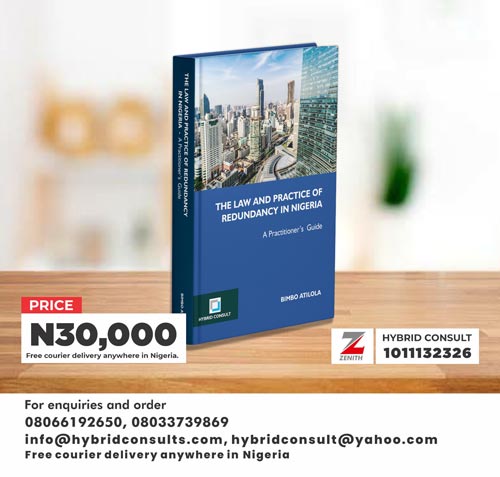 _______________________________________________________________________
“Enhance Legal Practice With Authoritative Reports” — Alexander Payne Offers Comprehensive Law Reports, Spanning Over A Century Of Nigerian Jurisprudence
_______________________________________________________________________
“Enhance Legal Practice With Authoritative Reports” — Alexander Payne Offers Comprehensive Law Reports, Spanning Over A Century Of Nigerian Jurisprudence
 Interested buyers are encouraged to place their orders and enquiries via:
0704 444 4777, 0704 444 4999, 0818 199 9888
Website: www.alexandernigeria.com
Interested buyers are encouraged to place their orders and enquiries via:
0704 444 4777, 0704 444 4999, 0818 199 9888
Website: www.alexandernigeria.com